




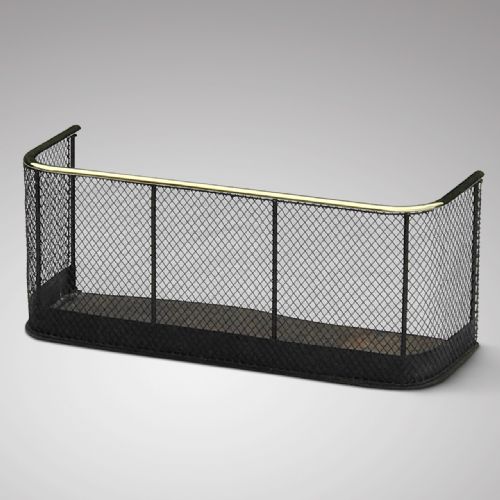
Brass Nursery Fireguard
A brass nursery fireguard protects children from hearths while bringing solid metalwork into domestic rooms.
Brass Nursery Fireguard
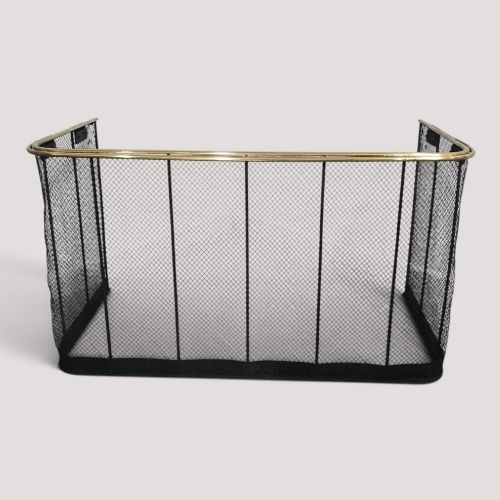
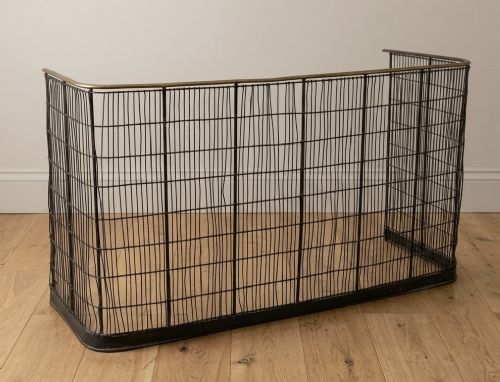
A brass nursery fireguard is a hearth accessory designed to keep children safely away from open fires. The pieces seen here span the Regency and Victorian periods, bringing domestic safety equipment into the realm of decorative metalwork.
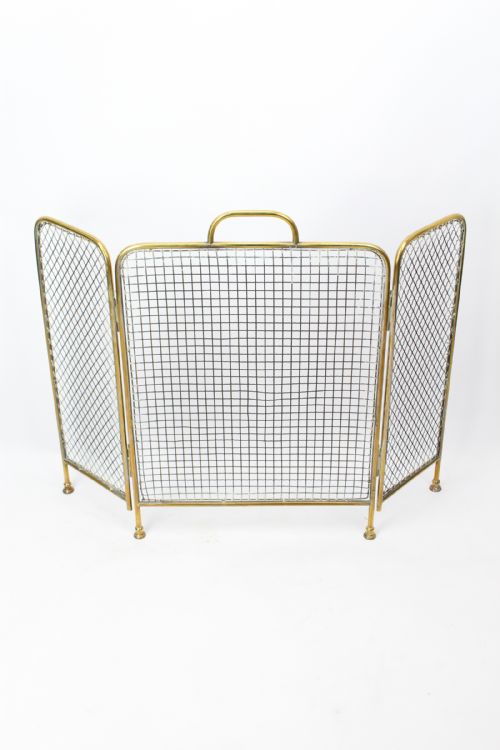
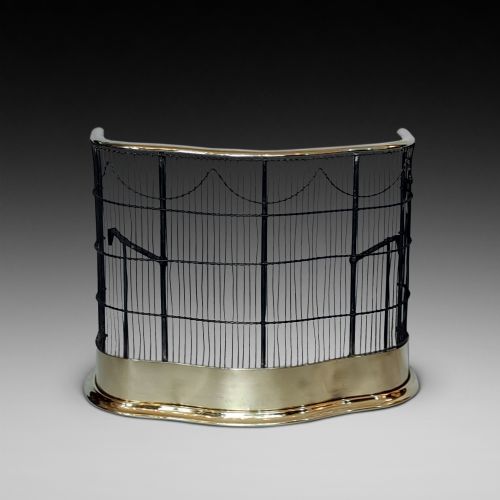
Most examples encountered on this page date to the nineteenth century, including specific items from around eighteen ninety. These guards take various forms, from bowed and serpentine profiles to folding designs and versions incorporating clothes rails.
The objects combine protective mesh with substantial metal frames, functioning simultaneously as safety barriers and room furnishings. Buyers look for these items to anchor a period fireplace while fulfilling their original domestic purpose.
How they were made
Makers constructed these fireguards using brass for frames and top rails, combined with iron, steel, and wire mesh to form the protective barrier. The contrast between bright brass rimming and darker wire mesh is a defining structural characteristic.
Wrought iron and steel wire provided the rigid framework and fine woven panels necessary to contain sparks while maintaining visibility of the fire. Craftsmen joined these mixed metals using traditional methods suited to nineteenth-century workshop production.
Listings for this phrase feature nineteenth-century items, including specific pieces from the Regency and Victorian eras, built from brass, iron, and wire mesh.
What varies in quality
Quality in a brass nursery fireguard rests on the weight of the metal framing and the tightness of the wire mesh weave. Finer pieces display substantial brass top rails and robust serpentine or bowed frames that retain their rigid geometry.
The Brass Nursery Fireguard Glossary
- Fender
- A low metal guard placed around the hearth to contain ash and burning embers. In nursery contexts, it often serves as the base for an extended wire guard.
- Serpentine
- A curved shape curving outward in the centre and inward at the sides. This contour appears on finer nineteenth-century fire guards to fit neatly around hearths.
- Wire mesh
- A barrier woven from iron or steel wire to stop sparks. It forms the protective wall of the guard.
- Clothes rail
- A horizontal bar fitted to the top of some nursery fenders. It allowed damp garments to be dried safely near the warmth of the fire.
Brass Nursery Fireguard: Frequently Asked Questions
What is a brass nursery fireguard?
A brass nursery fireguard is a tall protective screen placed around an open fireplace to keep children and stray sparks safely contained.
These nineteenth-century pieces combine metal wire mesh with brass frames and top rails to balance domestic safety with period craftsmanship.
How do I date a fireguard?
Dating relies on materials, construction methods, and stylistic cues such as Regency lines or Victorian serpentine shapes.
Nineteenth-century examples often feature heavy brass rims combined with iron wire mesh and sometimes incorporate practical additions like clothes rails.
Are these guards suitable for modern fires?
These guards were built for nineteenth-century hearths and domestic requirements, but many buyers continue to use them with open fires today.
Buyers should check the dimensions and stability of the frame to ensure it fits the hearth space securely.
What is the difference between a fender and a fireguard?
A fender sits directly on the floor around the hearth boundary, while a nursery fireguard includes a tall mesh screen extending upward.
Some nineteenth-century pieces combine both functions into a single fender with an integrated wire spark guard.