




Traditional Mesh Fire Guard
A traditional mesh fire guard brings practical protection and warm metalwork to the hearth, spanning Victorian, Edwardian, and Regency periods.
Traditional Mesh Fire Guard
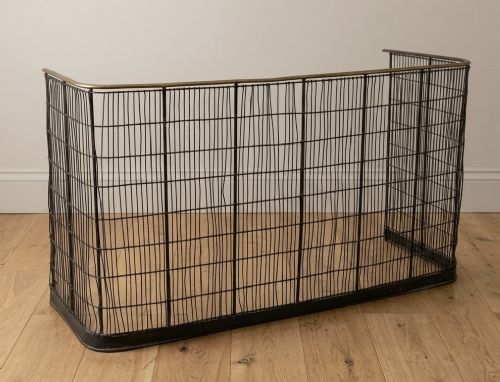
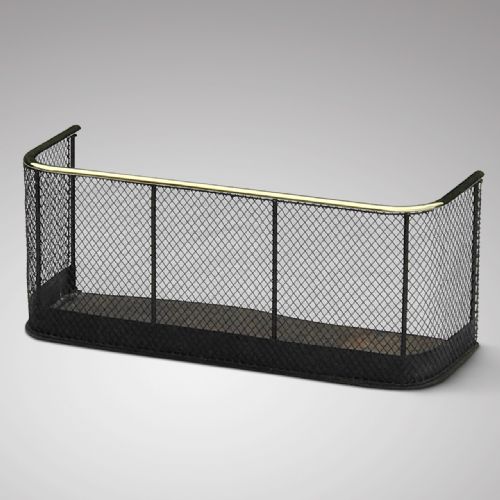
When you search for a traditional mesh fire guard, you are looking at functional hearth furniture designed to catch sparks and keep rooms safe. These pieces range from simple nursery fenders to folding screens with several hinged sections.
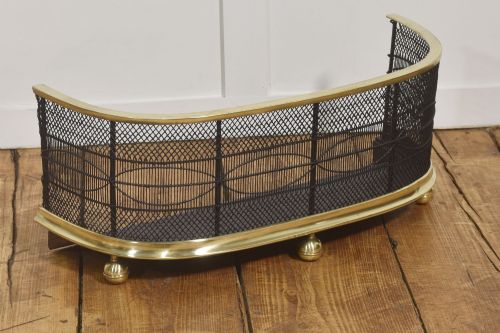
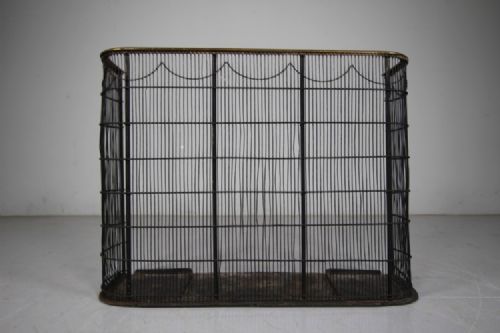
You are most likely to meet Victorian and Edwardian examples on this page, often featuring robust frames with fine wirework. Many pieces combine protective wire mesh with decorative brass top rails and rims.
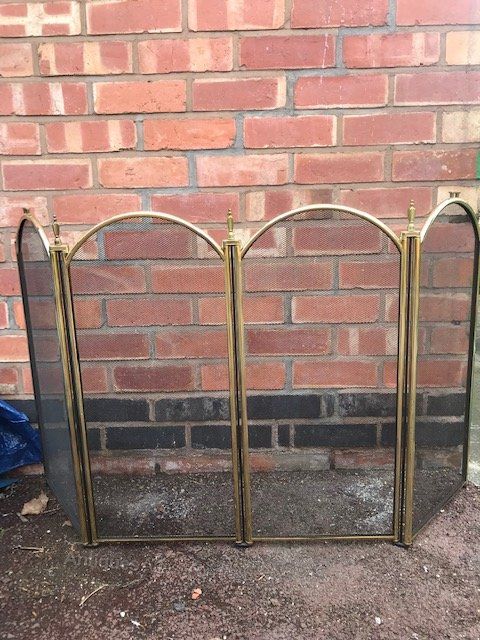
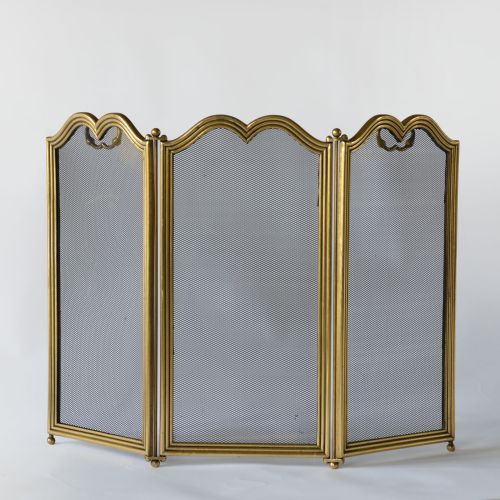
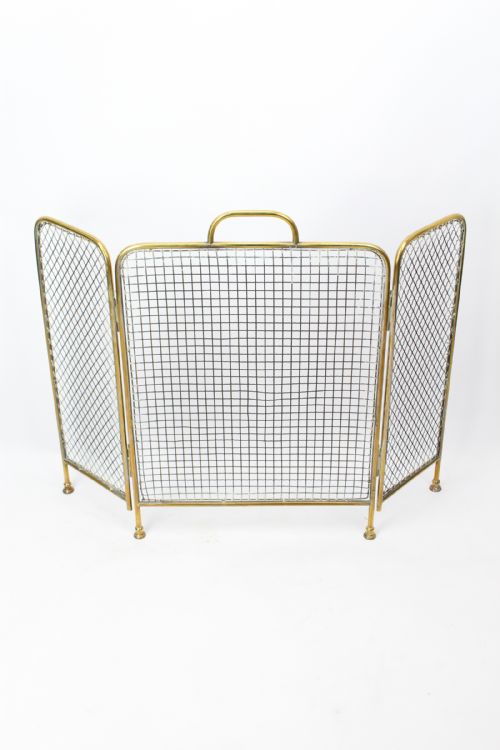
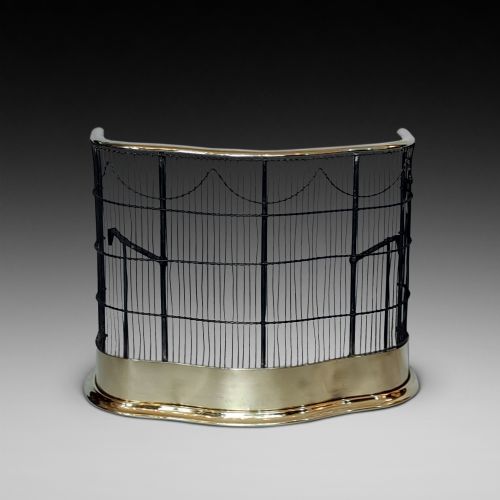
The forms vary from serpentine and demi-lune curves to flat tripartite folding screens and larger nursery fenders. Origins span the nineteenth century through the early decades of the twentieth century.
How they were made
Makers constructed these fire guards using iron, steel, and wrought iron for sturdy structural frames and support. Fine woven iron wire and wire mesh were then secured to create the protective barrier against stray sparks.
Brass featured heavily for top rails, rims, and decorative framing elements, often paired with black finishes or copper sections. Folding variants relied on functional hinges to allow the side panels to adjust around the hearth.
Some nursery fenders doubled as clothes rails, proving that Victorian laundry drying happened as close to the fire as possible.
What varies in quality
The distinction between standard examples and superior pieces rests on the weight of the metal and the tightness of the mesh weave. Heavier gauge wire and solid brass framing provide longevity and stability that lighter production lacks.
Craftsmanship shows in the neatness of the wirework attachment and the smooth movement of folding sections. Finer pieces display considered proportions, such as well-balanced serpentine curves and secure, clean joints.
The Traditional Mesh Fire Guard Glossary
- Nursery fender
- A low protective barrier designed to enclose the hearth area completely, keeping children and pets at a safe distance from the fire.
- Spark guard
- A fine mesh screen placed immediately in front of the fireplace opening to catch flying embers and sparks.
- Tripartite folding
- A screen constructed with three hinged sections that can angle inwards or outwards to fit the fireplace surround.
- Serpentine
- A gentle undulating curved shape often seen along the top rail or base of Regency and Victorian guards.
- Demi-lune
- A half-moon shape that curves outwards from the fireplace opening, providing a compact footprint for hearth protection.
Traditional Mesh Fire Guard: Frequently Asked Questions
What is a traditional mesh fire guard?
A traditional mesh fire guard is a metal screen or low fender designed to prevent sparks from escaping the fireplace into the room.
These pieces typically combine iron or steel wire mesh with brass frames and rails, dating from the nineteenth and early twentieth centuries.
How do I choose the right size?
Measure the width and height of your fireplace opening or hearth space carefully before selecting a guard. Consider whether you need a flat screen, a demi-lune curve, or a folding tripartite design to fit the hearth area.
Were these guards used in nurseries?
Many larger examples were specifically built as nursery fenders to surround the entire hearth and protect young children.
These often included higher barriers and occasionally integrated top rails, functioning as robust safety enclosures.
What metals are commonly used?
Brass, iron, steel, and copper appear frequently across these listings, often used in combination. The frame usually employs heavier iron or brass, while the protective screen relies on fine woven iron wire.
How do I date these pieces?
Dating relies on stylistic clues and material combinations associated with periods such as the Victorian, Edwardian, and Regency eras.
Design details like serpentine curves, brass top rails, and specific hinge types help assign items to these distinct historical windows.