




Nursery Spark Guard
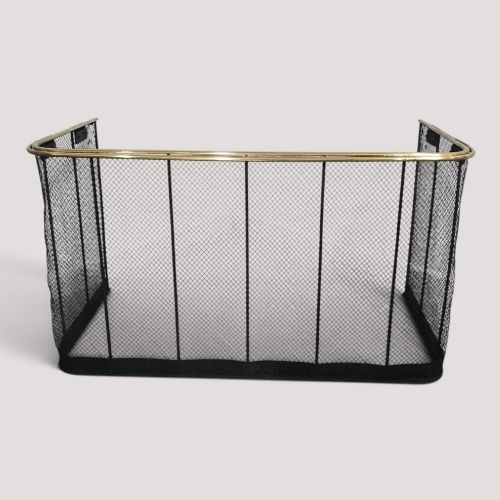
These nursery spark guard pieces are sturdy protective screens built to keep children safe from hearth embers.
Nursery Spark Guard
A nursery spark guard protects hearths and keeps young children safely away from open fires. You will frequently find pieces designated as nursery fenders or fire guards spanning the nineteenth century through the Edwardian period.
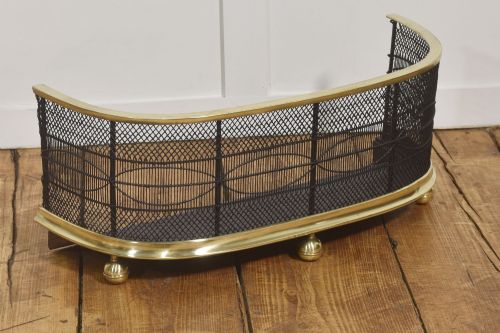
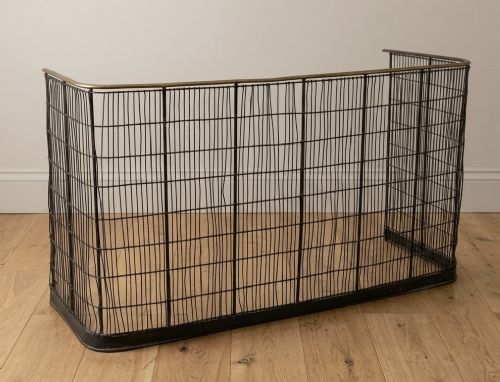
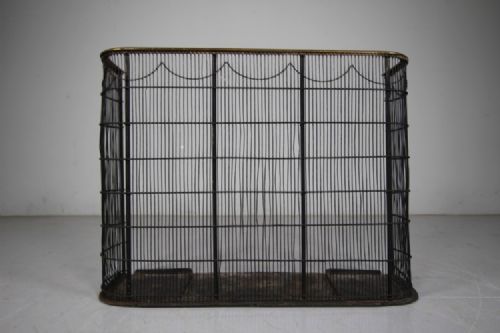
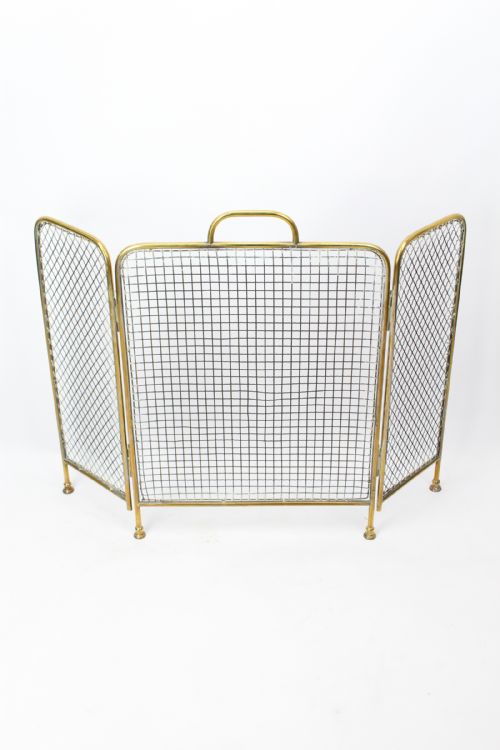
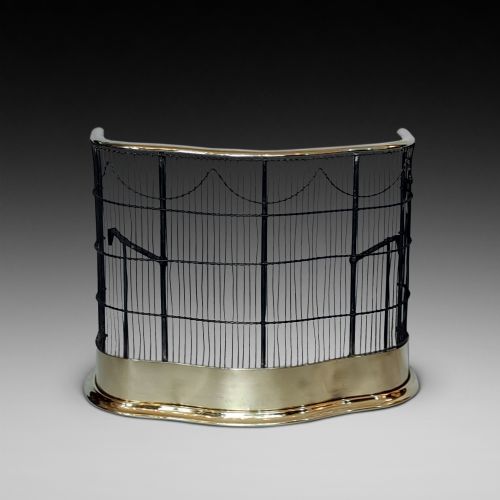
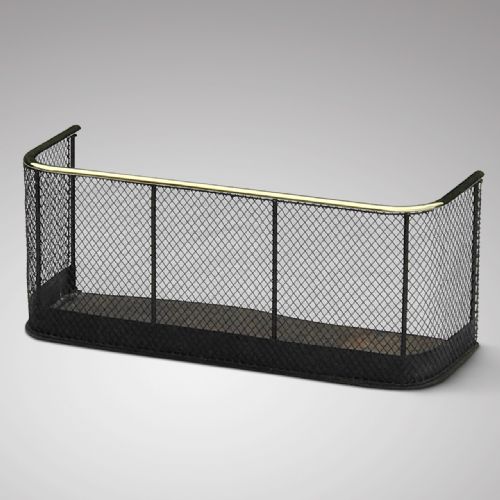
The forms range from simple folding screens to large bowed or serpentine fenders, often incorporating a top rail or a built-in clothes rail. These structures combine low metal barriers with fine mesh bodies to block spitting embers completely.
Most examples originate from the Victorian, Regency, and Edwardian eras, reflecting the domestic safety concerns of those periods. They appear as substantial architectural barriers designed to enclose the hearth area securely.
How they were made
Makers constructed these guards using durable metals including brass, iron, and steel wire. Frames utilise solid brass or wrought iron for structural rigidity around the hearth.
Fine wire mesh and woven iron wire form the protective body panels, allowing heat to radiate into the room while catching flying sparks. Many pieces feature polished brass top rims or rails riveted or joined to the iron framework.
Listings feature pieces spanning the nineteenth century, Regency, Victorian, and Edwardian periods, constructed in brass, iron, and wire mesh.
What varies in quality
Quality shows in the weight of the metal framework and the tightness of the wire mesh weave. Finer pieces demonstrate careful joining of brass rims to iron structures without loose wire strands.
The complexity of the shape also distinguishes examples, moving from straight wirework frames to elegant bowed or serpentine designs with integrated clothes rails.
The Nursery Spark Guard Glossary
- Nursery fender
- A low protective barrier placed around a fireplace to prevent young children from getting too close to the fire. These often include mesh guards or rails.
- Wire mesh
- A barrier material made of interwoven metal wires that lets warmth pass through while stopping sparks. It forms the main body of many fire guards.
- Serpentine
- A gently curving shape that waves outward and inward, often seen on the front frames of Victorian brass-rimmed spark guards.
- Clothes rail
- An additional metal bar fitted to the top of a nursery guard, originally used for airing or drying children's garments near the warmth of the hearth.
Nursery Spark Guard: Frequently Asked Questions
How do I use a nursery spark guard?
Place the guard firmly on the floor enclosing the hearth area before lighting the fire. Ensure the mesh barrier sits evenly to block any stray embers.
Keep the surrounding floor clear so the heavy iron and brass base rests securely. The attached rails can also hold items away from direct flames.
What is the difference between a fender and a spark guard?
A fender is typically a low metal frame that sits directly on the hearth to contain logs and ash. A spark guard incorporates taller wire mesh panels designed specifically to stop flying embers.
Many nineteenth-century pieces combine both functions into a single nursery fender equipped with a tall wirework screen.
How do I date a brass wire mesh guard?
Examine the construction methods, materials, and overall style to determine the period. Pieces from the Regency era feature distinct neoclassical lines, while Victorian and Edwardian examples often use heavy brass frames and fine wire mesh.
Archival records show similar brass-rimmed and woven iron designs appearing across the nineteenth century up to nineteen hundred.
Are these guards safe for modern fireplaces?
These antique guards provide a physical barrier around open hearths, though historical wire mesh may require careful inspection for stability. They suit traditional coal or wood-burning setups where child safety is a priority.
Measure your hearth space carefully to ensure the bowed, serpentine, or folding frame fits the floor dimensions properly.