




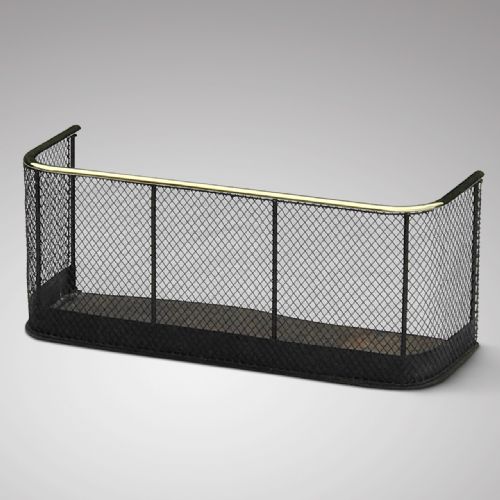
Curved Wire Fire Guard
A curved wire fire guard protects a room from stray embers while keeping hearth warmth visible.
Curved Wire Fire Guard
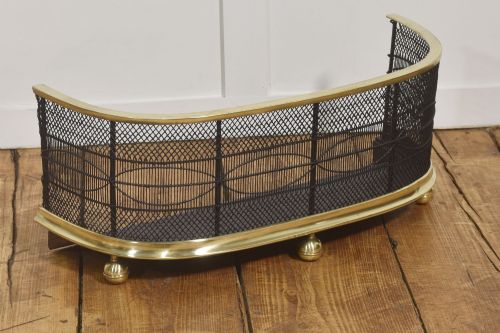
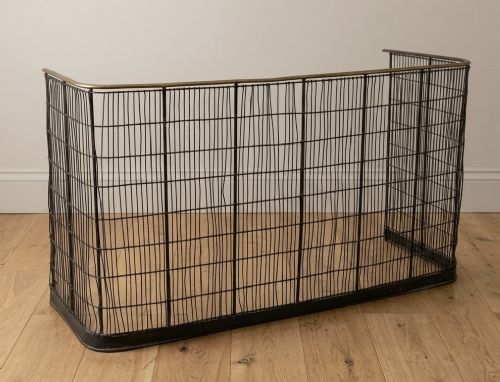
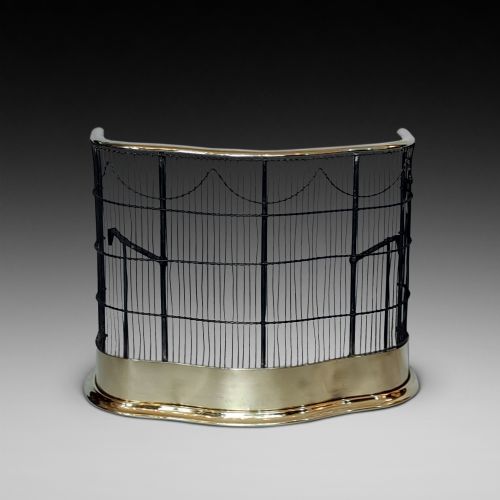
A curved wire fire guard is a domestic hearth accessory designed to contain sparks and protect children or interiors from open flames. The form typically presents a bowed or serpentine profile that extends outward from the fireplace opening.
Visitors browsing this page most frequently encounter Victorian and Edwardian examples featuring wire mesh panels framed by polished brass top rails. These pieces combine utilitarian safety requirements with period metalwork aesthetics.
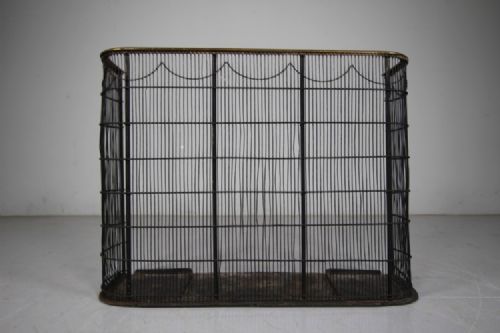
The objects appear under various historical designations including nursery fenders, spark guards, and fire screens. Earlier Regency and nineteenth-century iterations utilise robust iron wire structures alongside brass framing elements.
How they were made
The construction relies on woven iron or steel wire mesh tensioned within rigid metal frames. Brass top rails and rims are frequently incorporated to provide structural reinforcement and a finished appearance.
Smiths shaped wrought iron and steel into curved bows, securing the fine wire mesh by hand. Brass components were cast and polished to create the distinct upper borders seen on nursery fenders.
Materials documented across these listings include brass, iron, wire mesh, wrought iron, and steel wire.
What varies in quality
Quality rests in the weight of the frame and the tightness of the wire weave. Heavier gauge wire and substantial brass top rails denote superior construction compared to lighter, purely decorative alternatives.
The sophistication of the silhouette defines the upper tier of pieces, with serpentine and bowed shapes requiring greater skill in metal shaping than straightforward flat designs.
The Curved Wire Fire Guard Glossary
- Nursery fender
- A protective metal barrier placed around a fireplace to keep small children at a safe distance from the fire. These guards are typically taller than standard hearth fenders.
- Serpentine
- A gentle undulating curve resembling a snake's movement, often seen in the plan view of eighteenth and nineteenth-century hearth furniture. This shape allows the guard to project outward in the centre.
- Wire mesh
- A barrier material constructed from interwoven metal strands that permits heat and light to pass through while stopping sparks. In period pieces, this mesh is usually iron or steel.
- Top rail
- The uppermost horizontal member of a fire guard, frequently cast in brass to provide a decorative handhold or finished edge.
Curved Wire Fire Guard: Frequently Asked Questions
What is a nursery fender?
A nursery fender is a tall protective enclosure designed to surround a fireplace completely. It prevents children and pets from approaching too close to burning coals.
These pieces typically incorporate a sturdy metal frame with fine wire mesh panels. The top rail is often fashioned from polished brass.
How do I date a fire guard?
Dating relies upon observing material combinations, construction methods, and stylistic cues present in the frame. Nineteenth-century examples often feature heavy brass top rails and hand-woven iron wire.
Later Edwardian versions tend toward lighter steel wire construction. Regency pieces display distinct neoclassical framing characteristics.
Are these guards safe for modern fires?
Period fire guards provide a physical barrier against large embers and sparks from open solid-fuel fires. They act primarily as spark guards rather than total containment systems.
Buyers should verify the stability and dimensions of the specific guard against their hearth opening. The fine wire mesh effectively blocks flying debris while radiating heat.
What metals were used?
Maker materials typically include brass, wrought iron, steel wire, and woven iron wire. Brass appears frequently in the top rails and decorative frames.
The mesh itself is generally constructed from iron or steel wire to withstand high temperatures. Combinations of brass and iron are standard across Victorian designs.