




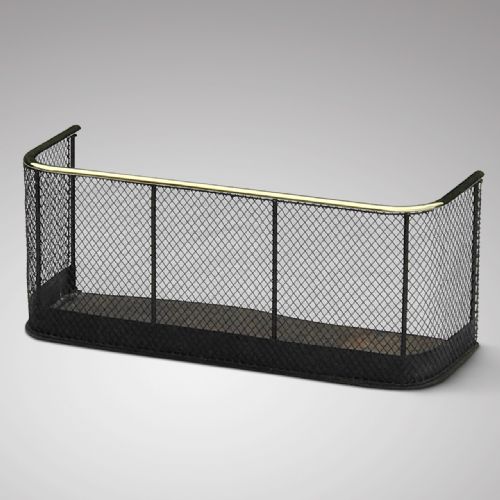
Antique Brass Top Fender
An antique brass top fender brings structure and warmth to a hearth, combining sturdy iron or wirework bases with gleaming metal rails.
Antique Brass Top Fender
When you search for an antique brass top fender, you encounter hearth furniture designed to contain embers and protect rooms from sparks while offering a seat or a decorative boundary. The examples gathered here span the nineteenth century, the Victorian and Edwardian eras, and the early twentieth century.
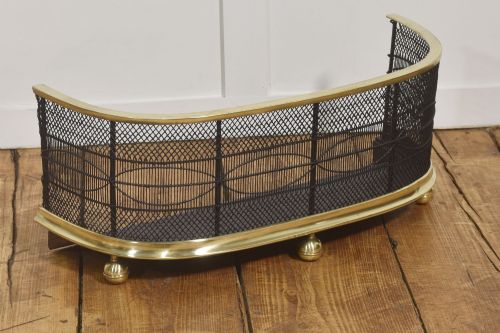
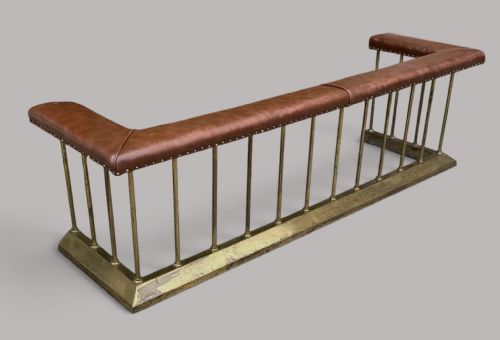
You are most likely to meet club fenders featuring upholstered leather seats alongside nursery guards built with fine wire mesh and solid brass top rails. These pieces originate from domestic settings where fires were the centre of daily life, requiring both practical safety and comfortable fireside seating.
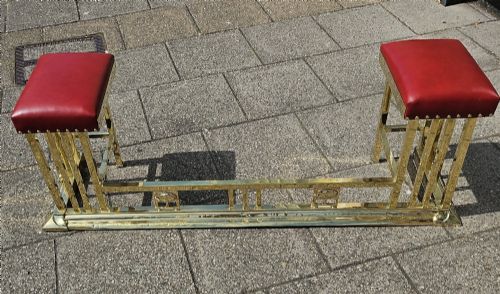
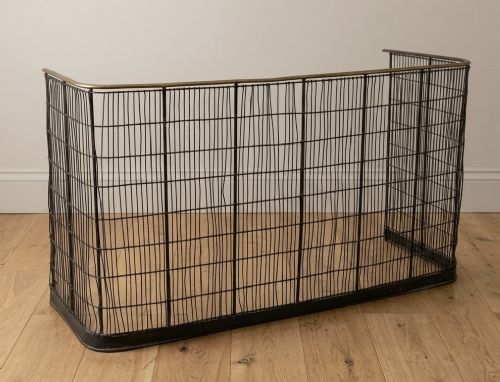
The forms range from substantial club fenders covered in mature tan leather to dainty Art Deco designs and large nursery fenders fitted with clothes rails. Each variation reflects the specific domestic needs of its period, from child safety to formal entertaining around the hearth.
Materials and construction methods
Makers built these pieces using a combination of heavy structural metals and polished finishes, pairing iron, wrought iron, and steel frames with bright brass top rails. Wire mesh and woven iron wire were soldered or framed into sturdy guards to ensure durability against intense hearth heat.
Upholstered club fenders incorporate durable leather stretched over internal padding, secured to substantial brass and iron foundations. Copper accents also appear alongside brass to introduce tonal contrast in nineteenth-century and Victorian examples.
Some nursery fenders doubled as indoor clothes dryers, meaning the family socks spent the evening hovering inches from the flames.
Assessing quality and craftsmanship
The distinction between standard utility items and finer pieces lies in the weight of the metalwork and the integrity of the joinery. Substantial frames with thick brass components and tightly woven wire mesh represent higher workshop standards than lighter, purely functional guards.
Leather upholstery quality alters the character of club fenders, where mature patination and traditional hand-stitching elevate the piece. The precision with which brass top rails are polished and fitted to the underlying iron or wire structure demonstrates the skill of the original maker.
The Antique Brass Top Fender Glossary
- Club fender
- A low, padded fireside seat built around an open hearth, allowing people to sit close to the fire. These typically combine brass framework with leather upholstery.
- Wire mesh
- A flexible lattice of interwoven metal wires used in fire guards to contain sparks while maintaining visibility of the fire. This material forms the protective barrier in many Victorian nursery pieces.
- Clothes rail
- A horizontal bar incorporated into the upper frame of a nursery fender, historically used for airing garments near the warmth of the fire. This practical addition turns the hearth guard into a multi-purpose household fixture.
Antique Brass Top Fender: Frequently Asked Questions
What is a club fender?
A club fender is a low hearth guard featuring padded leather seats on either side of the fireplace. It allowed Victorians and Edwardians to sit comfortably right at the edge of the fire.
These pieces combine structural iron or brass bases with upholstered tops, serving both as a safety barrier and a social seating area.
What materials were used?
These hearth accessories are constructed primarily from brass, iron, wrought iron, and steel. Many examples incorporate copper details or woven iron wire to build robust frames.
Upholstered club fenders add leather seating surfaces, while fire guards rely on wire mesh panels to contain sparks safely.
How do I date these pieces?
Dating relies on stylistic clues and material combinations spanning the nineteenth and early twentieth centuries. Victorian and Edwardian examples show distinct shifts from heavy, substantial ironwork to lighter Art Deco forms.
Patination on the brass and leather also helps indicate age, showing decades of domestic use around coal and wood fires.