



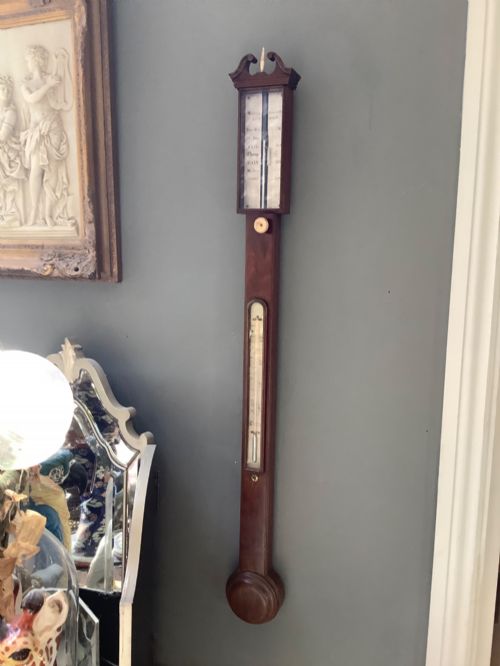


Vintage Mercury Weather Instrument
These vintage mercury weather instruments combine practical atmospheric measurement with fine cabinetmaking.
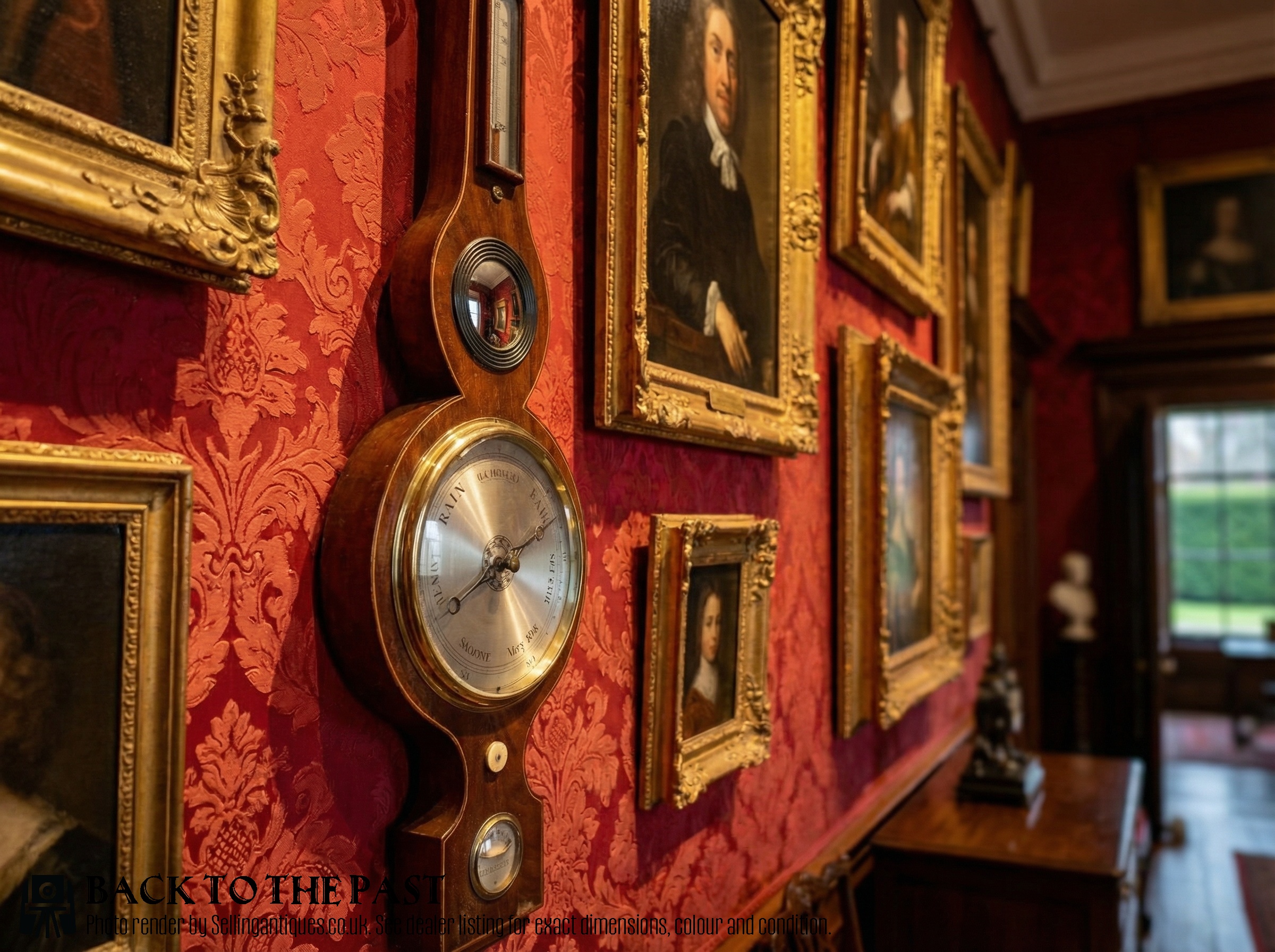
Vintage Mercury Weather Instrument
When you search for vintage mercury weather instruments, you encounter barometers, thermometers and weather stations designed to measure atmospheric pressure and temperature. These pieces span the Georgian, Regency and Victorian periods, reflecting shifting domestic and scientific tastes across two centuries.
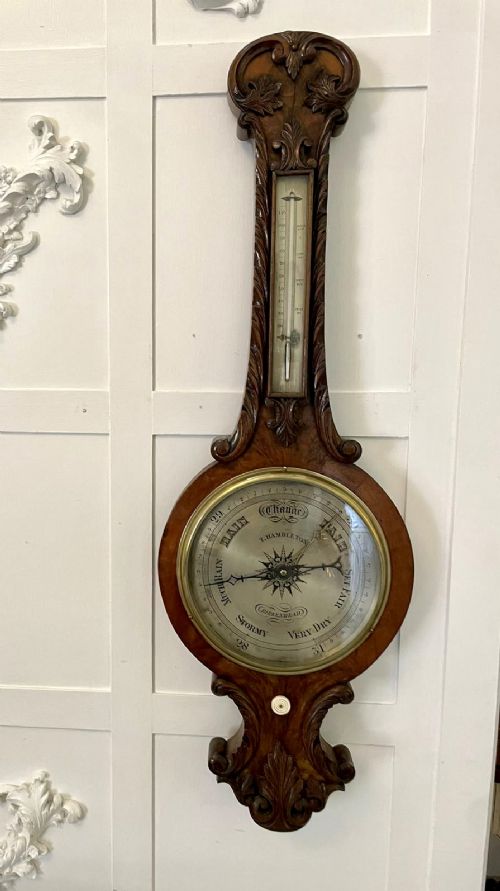
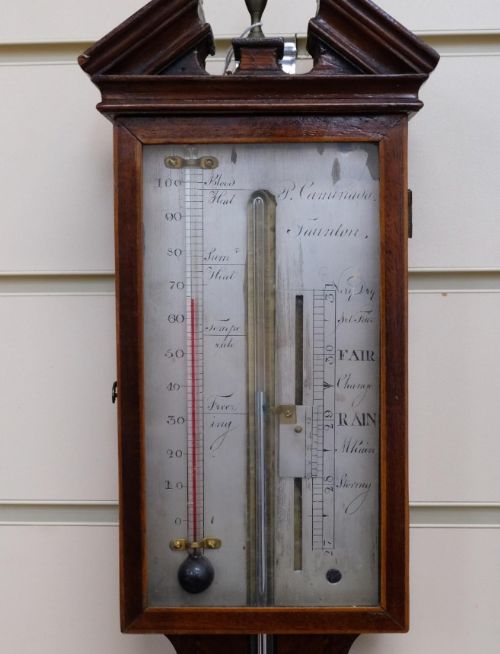
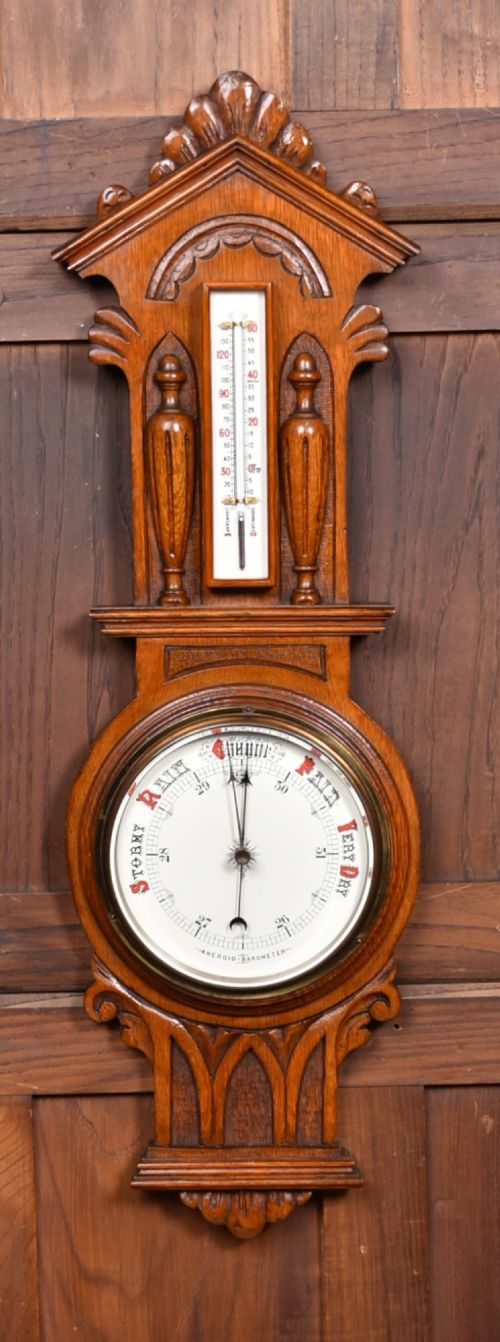
The versions you are most likely to meet on this page are stick barometers and wheel barometers housed in timber frames. Makers constructed these instruments using rich woods like mahogany, rosewood, oak and burr walnut, frequently incorporating silvered metal dials and bone scales.
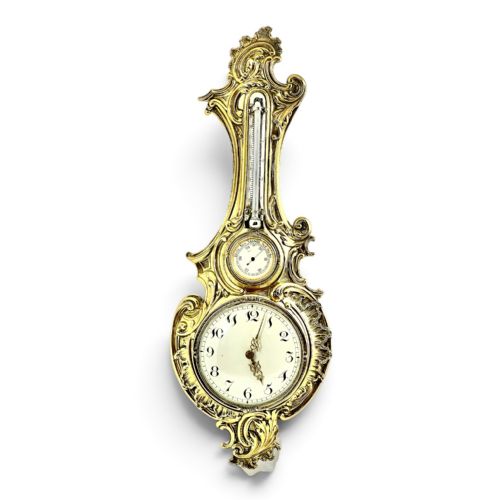
Many examples combine multiple functions, uniting a barometer with a thermometer or clock in a single case. These instruments range from plain domestic stick barometers to elaborate Victorian Gothic and Rococo Revival weather stations.
What varies in quality
The refinement of the cabinetmaking sets individual pieces apart, seen in the selection of figured veneers, precise string inlay and crisp wood carving. Plain utilitarian stick barometers differ markedly from heavily ornamented Victorian banjo and clock combinations.
The legibility and execution of the silvered metal scale elevate an instrument, particularly when signed by a notable maker with crisp, deep engraving. The integration of auxiliary instruments like thermometers and clocks alters the sophistication of the piece.
Proportion and case design determine visual balance, with robust architectural mouldings or delicate bow fronts distinguishing superior examples from standard production.
Vintage Mercury Weather Instrument Retail Price Guide 2026
Typical asking prices for vintage mercury weather instrument among the pieces listed under this phrase on Sellingantiques today, from the lower quarter to the upper quarter. They describe what is for sale here now, not the wider market.
Makers occasionally engraved detailed weather predictions directly onto the dials, offering domestic optimism alongside barometric pressure.
P Caminada·Negretti and Zambra·Dollond of London·Ganthony of London·James H Kelly
The Vintage Mercury Weather Instrument Glossary
- Stick barometer
- A vertical instrument that measures atmospheric pressure using a long glass tube filled with mercury, enclosed in a narrow wooden case. These tall, slender pieces offer precise readings and straightforward design.
- Wheel barometer
- A circular dial instrument, often called a banjo barometer, that translates mercury movement via a pulley and float system. These domestic pieces frequently feature hygrometers and thermometers.
- Silvered brass
- A metal alloy treated with a silver compound to create a matte, reflective surface for engraved dials and scales. This material provides clear contrast for numerical readings.
- Aneroid barometer
- A non-liquid barometer measuring pressure through the contraction and expansion of a flexible metal box. While these appear alongside mercury instruments, traditional pieces utilise liquid columns.
- Marine barometer
- A specialised stick barometer designed for use at sea, gimbal-mounted to remain vertical during vessel movement. These robust instruments often feature sturdy brass cisterns and protective wooden housings.
Vintage Mercury Weather Instrument: Frequently Asked Questions
How do I read a mercury barometer?
Observe the height of the mercury column inside the glass tube against the marked scale on the silvered dial. Rising mercury generally indicates improving weather, while a falling column points towards approaching unsettled conditions.
Many wheel barometers use a pointer connected to a pulley system to display these pressure changes more visibly. Match the reading with the subsidiary thermometer or weather inscriptions on the face for a complete atmospheric overview.
Where should I hang a stick barometer?
Mount the instrument on an interior wall away from direct sunlight, radiators and draughty doorways to ensure steady temperature conditions. Stable placement prevents artificial expansion of the mercury and protects the sensitive timber case from warping.
Ensure the wall provides a secure fixing point to support the full length of the wooden trunk safely. Height placement should allow eye-level viewing of the silvered dial and vernier scale.
How do I identify the period of a barometer?
Examine the timber species, case silhouette and dial design to determine the era of manufacture. Georgian and Regency pieces typically favour clean stick configurations in mahogany, whereas Victorian examples introduce heavier carvings, rosewood veneers and wheel or banjo shapes.
Maker signatures and engraved styles on the silvered brass dial offer further chronological clues. Early instruments often display minimal ornamentation compared to later Victorian Gothic or Rococo Revival revivals.
Can these instruments still be shipped safely?
Transporting mercury instruments requires tilting or securing the cistern to prevent the glass tube from fracturing under the weight of the moving metal. Professional carriers experienced in scientific antiques usually lock the mercury column or remove the fluid entirely for transit.
Consulting a specialist ensures the delicate internal mechanism and exterior wood case arrive undamaged. Once positioned in a new location, the instrument may require professional resetting before use.