



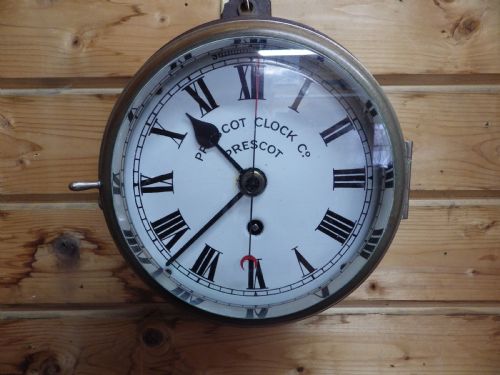


Vintage Maritime Clock
When you handle a vintage maritime clock, you hold precision instruments built to withstand the rolling deck of a ship.
Vintage Maritime Clock
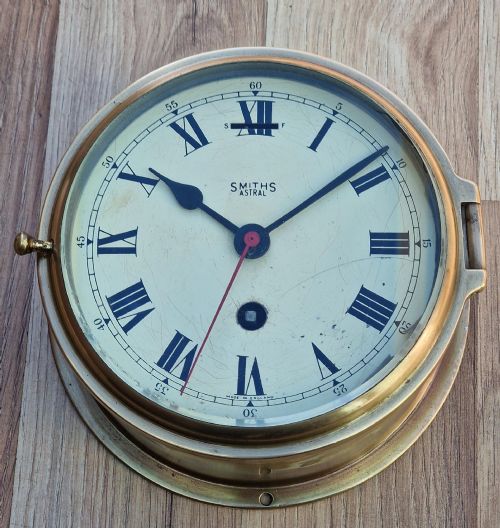
A vintage maritime clock spans various forms from bulkhead wall timepieces to precision marine chronometers and portable scientific instruments. These pieces originate from periods including the 18th century, 19th century, and mid-20th century, reflecting centuries of seafaring utility.
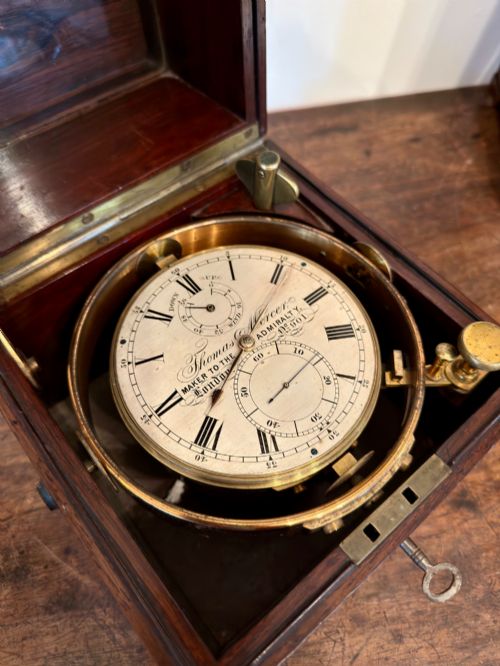
Wall clocks and bulkhead models designed for ships dominate the pieces you meet here, alongside mantel clocks and desk variations. Makers and retailers such as Thomas Mercer, Litherland Davies, and Kelvin White & Hutton appear among the selection.
Styles range from Victorian maritime and Georgian to industrial and mid-century examples. You will also encounter specialised items like radio room clocks and marine chronometers housed in brass cases.
Materials and construction
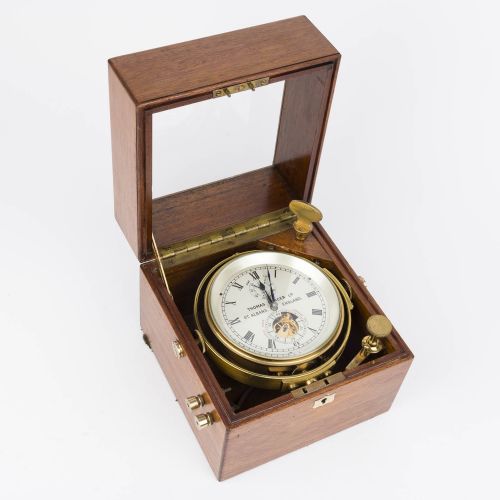
Brass and glass form the primary housing for bulkhead clocks, providing durable protection against damp conditions at sea. Wooden elements such as mahogany and Welsh oak appear in chronometer boxes and longcase or mantel variants.
Movements often utilise fusee mechanisms and chain fusee systems to maintain consistent tension as the mainspring unwinds. Enamel dials and silvered metal faces offer clear legibility, while steel and chrome components reinforce the mechanical integrity.
Vintage Maritime Clock Retail Price Guide 2026
Typical asking prices for vintage maritime clock among the pieces listed under this phrase on Sellingantiques today, from the lower quarter to the upper quarter. They describe what is for sale here now, not the wider market.
Some radio room clocks feature distinct red and green dial segments for timing emergency wireless transmissions.
Distinguishing quality in marine timepieces
The refinement of the movement separates standard utility timepieces from high-precision instruments like twin fusee mechanisms and certified marine chronometers. Maker signatures from notable houses indicate superior workshop standards and precision engineering.
The choice of housing materials, from solid brass frames to finely figured mahogany and oak cabinets, influences the character of the piece. Intact enamel dials and original mechanical components preserve the historical integrity of the clock.
Thomas Mercer·Litherland Davies·Kelvin White Hutton·James McCabe·Jaeger Le Coultre
The Vintage Maritime Clock Glossary
- Bulkhead clock
- A timepiece designed to be mounted directly onto the interior wall of a ship's cabin or bridge. These clocks typically feature heavy brass bezels and secure fastening systems to resist vibration.
- Fusee movement
- A conical pulley device connected to the mainspring by a chain or cord, designed to equalise the torque as the spring unwinds. This mechanism ensures consistent timekeeping accuracy.
- Marine chronometer
- A highly accurate portable timekeeper used at sea to determine longitude by celestial navigation. They are often mounted in gimbals to keep the dial horizontal regardless of ship movement.
- Silvered metal
- A brass or copper dial surface treated with a silver compound to produce a matte white metallic finish. Numbers and graduations are typically engraved and filled with black wax for contrast.
- Diurnal compass
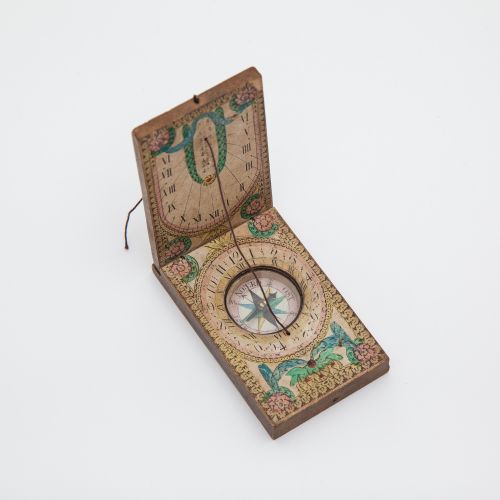
- A portable navigational instrument combining a sun dial and magnetic compass in a hinged wooden or metal case. Examples often date to the late 18th century.
Vintage Maritime Clock: Frequently Asked Questions
What is a bulkhead clock?
A bulkhead clock is a heavy-duty timepiece designed to be secured to the wall of a ship's cabin or chart room.
These clocks feature robust brass or metal cases meant to endure moisture and vibration at sea.
How do fusee movements work?
A fusee movement uses a conical pulley and a chain to regulate the power delivered from the mainspring.
This clever mechanical design ensures the clock receives even force as the spring winds down, improving accuracy.
Where were marine chronometers used?
Marine chronometers were utilised aboard ships to determine precise longitude during long ocean voyages.
Navigators relied on their extreme accuracy alongside sextant readings to plot exact positions at sea.
How do I care for a brass clock case?
Brass clock cases require gentle dusting with a soft, dry cloth to maintain their natural metallic finish.
Avoid using harsh chemical polishes that can strip away the aged patina built up over decades.