


Vintage Marine Chronometer
A vintage marine chronometer is a precision timekeeper designed for navigation at sea, offering the rigorous mechanical reliability collectors prize today.
Vintage Marine Chronometer
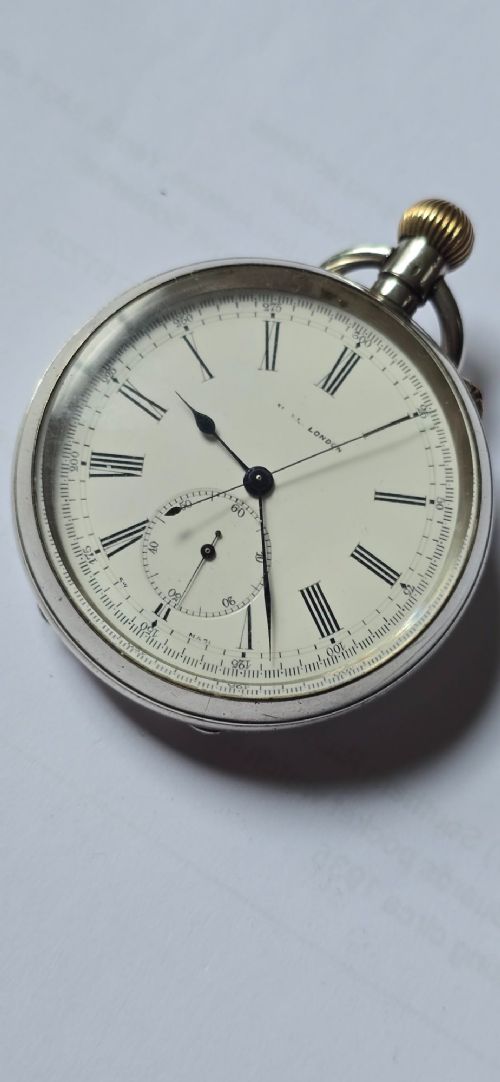
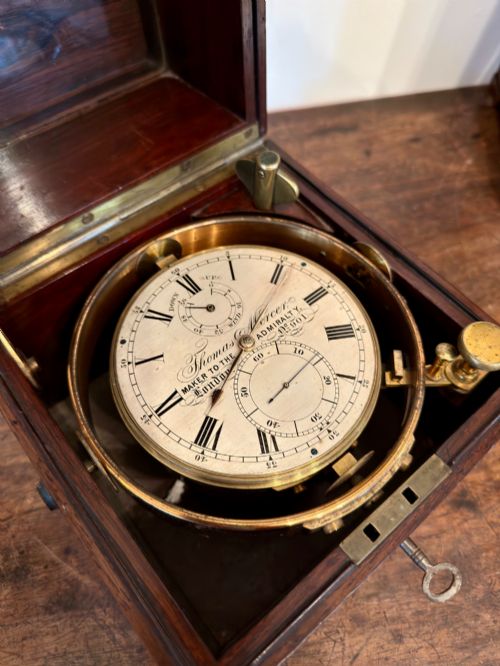
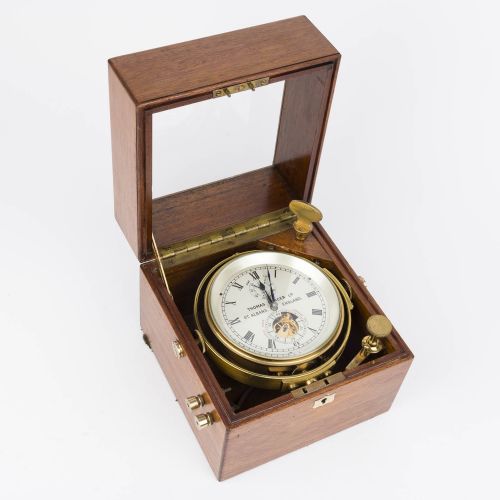
When you search for a vintage marine chronometer, you encounter high-precision mechanical instruments originally built to determine longitude on ocean-going vessels. These precision objects range from heavy desktop chronometers housed in fitted wooden boxes to bulkhead wall clocks and deck watches.
The versions most frequently met on this page span the Victorian era through the mid-twentieth century, encompassing makers from London and Liverpool. They appear in brass, mahogany, and silvered metal, reflecting their working maritime origins.
How they were made
These instruments rely on heavy brass cases and substantial mahogany housings designed to absorb shipboard vibrations and protect delicate internal movements. Glass covers allow visibility of the silvered metal dials and enamelled chapters.
Internal mechanisms frequently utilise chain fusee movements to ensure steady power delivery as the mainspring winds down. Steel and brass components are finished with precision engineering to maintain exact time under difficult conditions at sea.
Some bulkhead clocks retain faint traces of salt air trapped in their heavy brass bezels from decades on the North Atlantic.
What varies in quality
Quality in these navigational instruments rests upon the reputation of the maker and the complexity of the escapement and movement. Signed dials by notable makers command greater attention from serious collectors than unmarked pieces.
The finish of the cabinetry, from polished mahogany boxes to heavy brass bezels, indicates the original grade of the instrument. Preserved silvered metal dials and crisp engraving on the movement plates separate standard utility clocks from finer examples.
Thomas Mercer·Litherland Davies Of Liverpool·James McCabe·Sestrel·Kelvin White Hutton London·Tissot
The Vintage Marine Chronometer Glossary
- Fusee
- A conical pulley used in older clocks and chronometers to equalise the torque of the mainspring as it unwinds. This mechanism ensures consistent force is applied to the gear train.
- Chronometer
- A portable, highly accurate timekeeper that maintains precision despite motion and temperature changes. These were essential tools for celestial navigation.
- Bulkhead clock
- A rugged timepiece designed to be mounted directly onto the interior wall of a ship cabin. They usually feature heavy brass bezels and secure latching mechanisms.
- Deck watch
- A portable precision watch carried by navigators on deck to take time sights. They serve as a secondary standard linked to the main chronometer.
Vintage Marine Chronometer: Frequently Asked Questions
How do marine chronometers work?
These instruments use specialised spring detent escapements and compensated balances to keep exact time regardless of temperature fluctuations at sea.
They were kept in gimballed boxes to remain level as the ship rolled on the waves.
Where were these clocks used?
Navigators utilised them in the chart rooms and captain's cabins of commercial and naval vessels for longitude calculations.
Later versions found placement on the bulkheads of various ships or served as portable deck watches.
How should I clean the brass?
Heavy polishing should be avoided to preserve the authentic aged patina built up over decades of maritime service.
A soft, dry cloth is usually sufficient for routine maintenance of the metal and glass surfaces.
Are these clocks still accurate?
Many vintage mechanical pieces retain good working order if they have been serviced by a specialist familiar with fusee movements.
Daily operation requires careful manual winding and proper placement away from magnetic interference.