


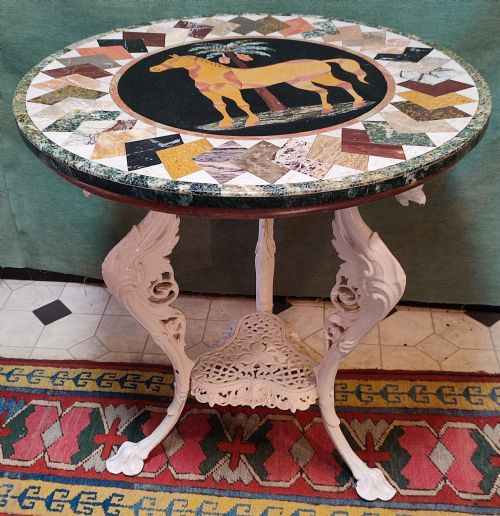

Vintage Marble Inlaid Table
A vintage marble inlaid table brings a cool stone surface and meticulous marquetry together, offering a functional centrepiece with lasting decorative weight.
Vintage Marble Inlaid Table
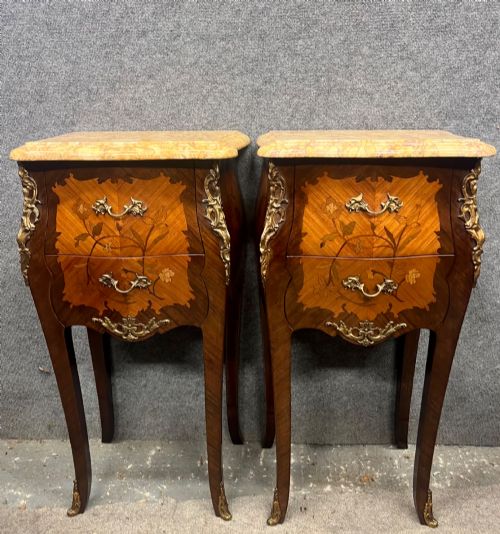
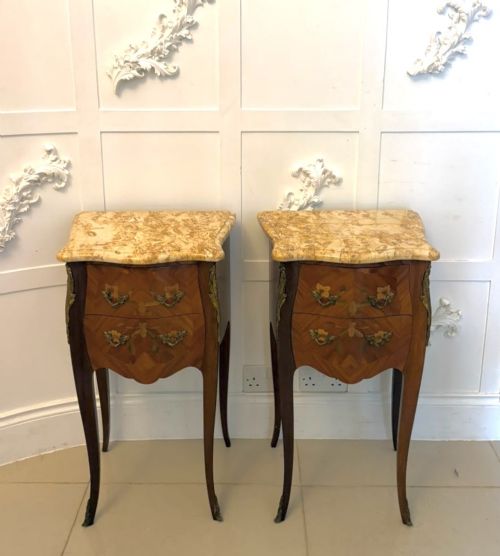
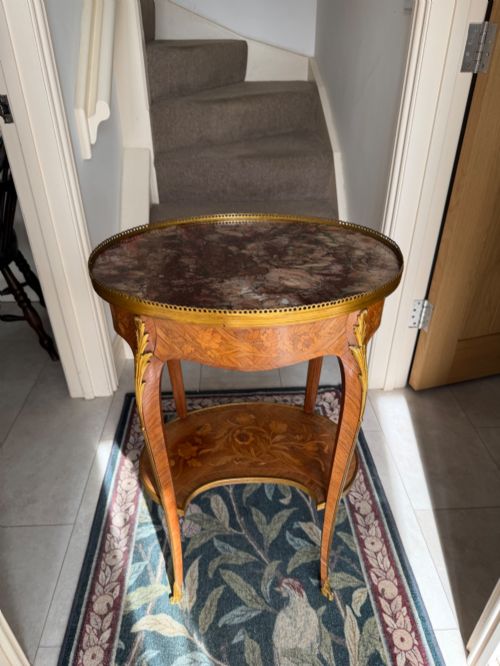
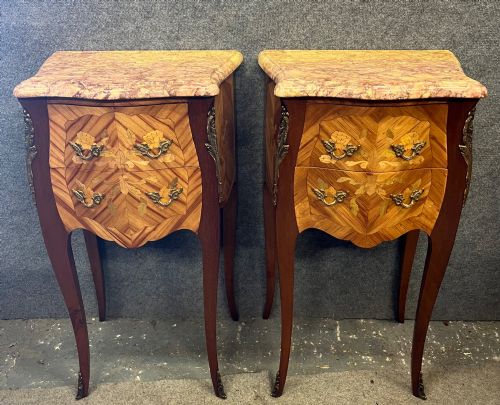
A vintage marble inlaid table combines natural stone with intricate surface decoration, ranging from bedside cabinets to larger occasional and centre pieces. These items appear across various periods, including Edwardian and 1920s examples alongside nineteenth-century works.
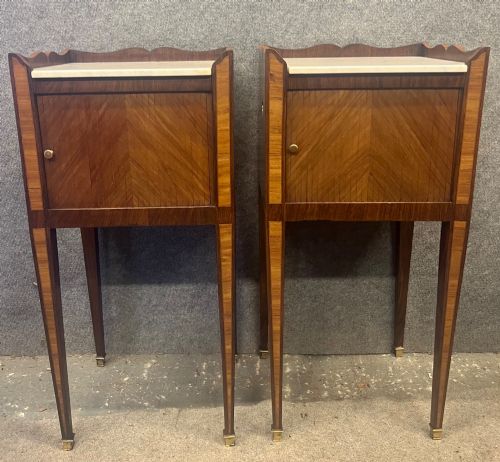
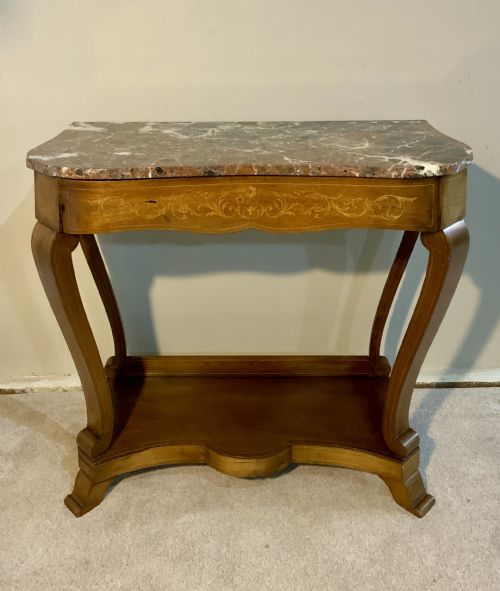
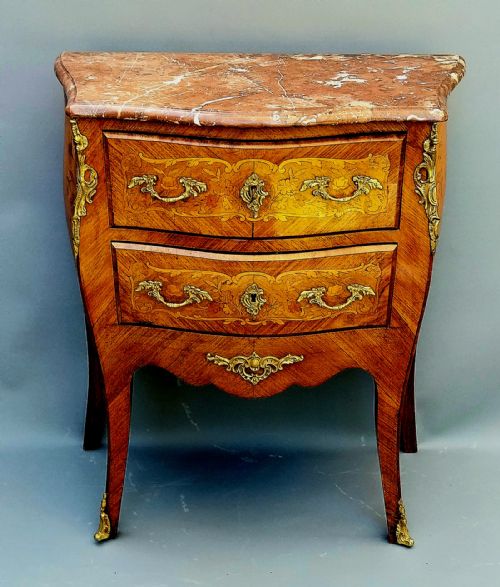
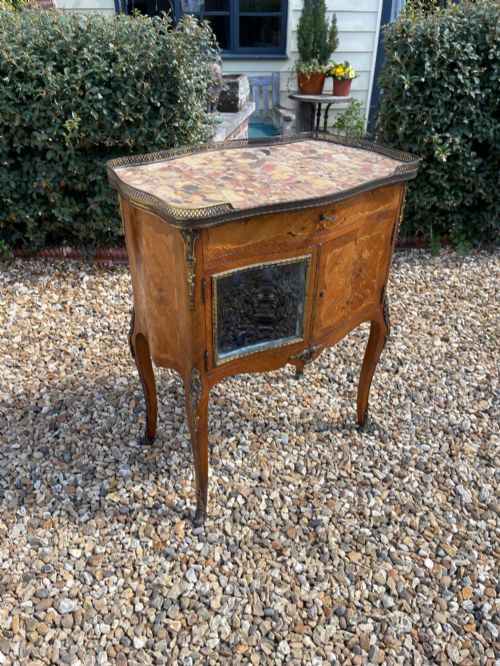
The most common version met on this page is the bedside cabinet or lamp table, frequently pairing a fitted marble top with inlaid wooden marquetry or parquetry. French Louis XV and Rococo revival styles dominate these smaller formats, often utilising rich timbers like kingwood and walnut.
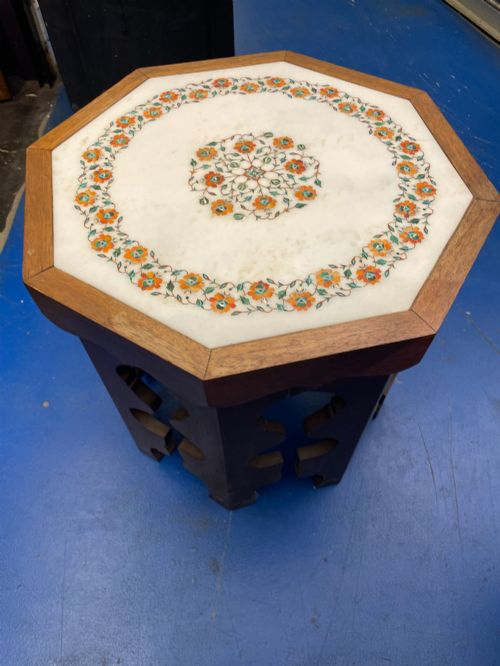
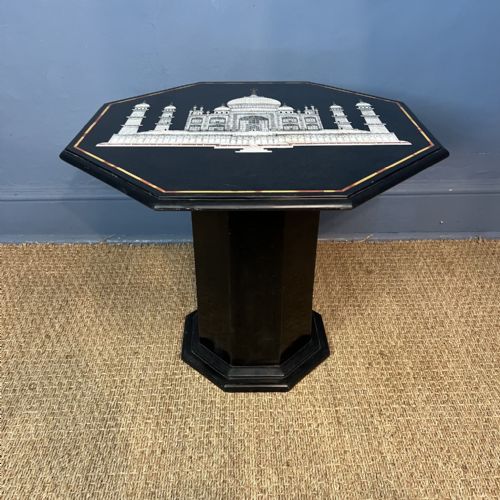
Beyond European domestic furniture, the selection encompasses specialised forms such as Indian marble tables featuring intricate pietra dura or Taj Mahal designs, alongside Italian specimen marble surfaces. These diverse geographic origins expand the category beyond standard cabinet work into regional artistry.
Materials and construction
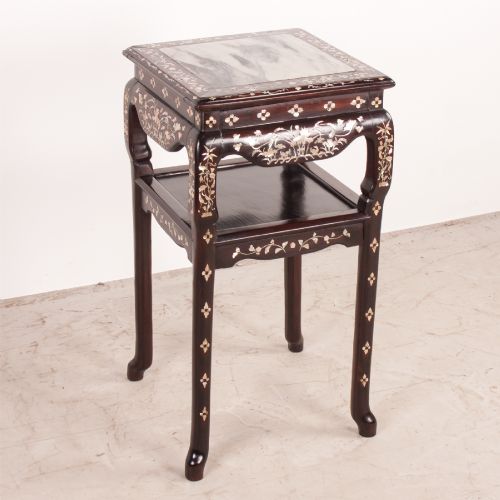
Makers built the structural carcases using dense timbers such as mahogany, walnut, and kingwood, frequently applying detailed marquetry or parquetry in contrasting woods like satinwood. Brass mounts, ormolu, and mother-of-pearl inlay frequently accent these wooden surfaces.
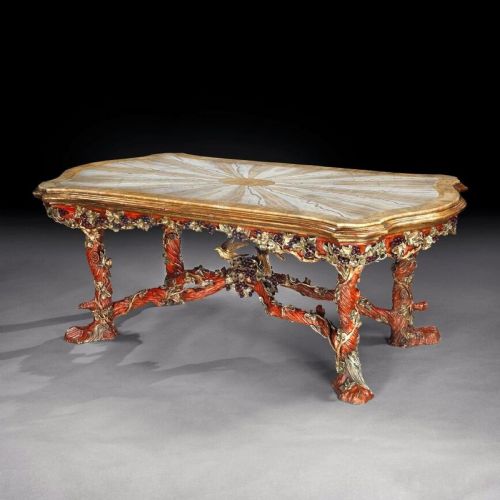
The defining stone elements utilise solid marble, onyx, or tesselated stone slabs cut to fit the specific furniture top. These stone surfaces often feature inlaid specimen marbles or pictorial stone arrangements set directly into the heavy top plates.
Materials recur across multiple object types, pairing marble and onyx with walnut, kingwood, mahogany, and brass.
Factors determining quality
Quality rests in the precision of the timber inlay and the geological choice of the stone top. Superior examples display tight, seamless marquetry where individual wood veneers fit without visible gaps, paired with heavy, well-figured marble or multi-coloured specimen stone.
Construction methods and secondary details dictate the tier of the piece. Fine mounts in brass or ormolu, sound carcase joinery, and well-proportioned bombe or serpentine shapes separate workshop masterpieces from standard commercial production.
Amleto Bertoni
The Vintage Marble Inlaid Table Glossary
- Marquetry
- Decorative patterns formed by fitting together small pieces of wood veneer onto a structural surface. This technique allows makers to create complex pictorial or geometric designs across tabletops and cabinet doors.
- Parquetry
- Geometric mosaic woodwork arranged in regular patterns like cubes or chequers. It appears frequently on the surfaces of lamp tables and commodes.
- Ormolu
- Gilt bronze mounts applied to furniture edges and feet. The presence of chased ormolu usually indicates a higher grade of nineteenth-century cabinet work.
- Specimen marble
- Multiple varieties of coloured marble assembled into geometric or pictorial tabletop displays. Italian workshops specialised in arranging these polished stones into complex compositions.
- Bombe
- A bulging, outward-curving swell on the sides of a chest or cabinet. This curved form requires advanced carpentry to follow the stone top accurately.
Vintage Marble Inlaid Table: Frequently Asked Questions
How do I clean a marble table top?
Wipe the surface gently with a soft damp cloth using neutral soap, avoiding acidic cleaners that etch stone.
Dry the marble thoroughly afterwards to maintain the polished finish and prevent water marks.
Where were these tables made?
The pieces originate primarily from European workshops, particularly French cabinet makers and Italian stone specialists.
Other examples stem from international traditions, including Indian stone and mother-of-pearl production.
Are these tables heavy to move?
The inclusion of dense stone tops and solid hardwood frames makes these tables considerably heavy for their size.
Lifting them requires two people to support both the marble slab and the wooden base securely.
How do I identify a French revival style?
Look for characteristic cabriole legs, serpentine fronts, and elaborate floral marquetry reflecting Louis XV or Rococo aesthetics.
These decorative elements often accompany shaped marble tops on bedside cabinets and small chests.