




Vintage Map Art
Vintage map art brings centuries of cartography into modern interiors through framed county engravings, atlas excerpts, and regional charts.
Vintage Map Art
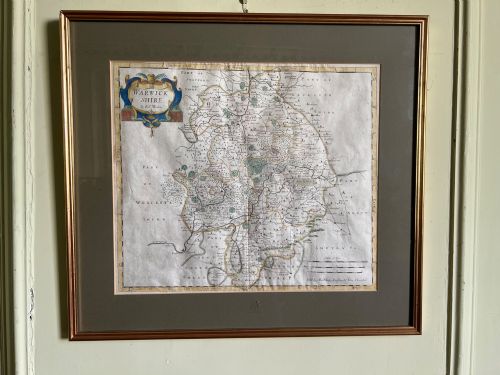
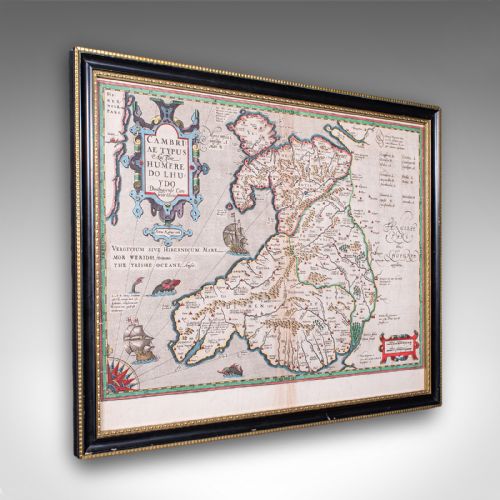
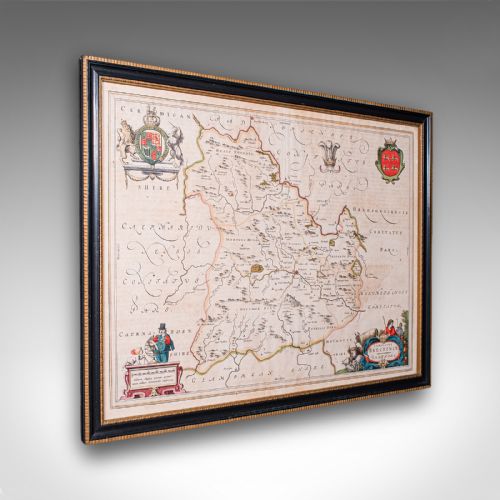
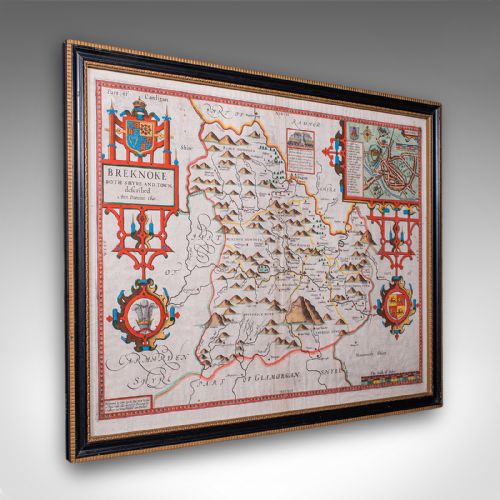
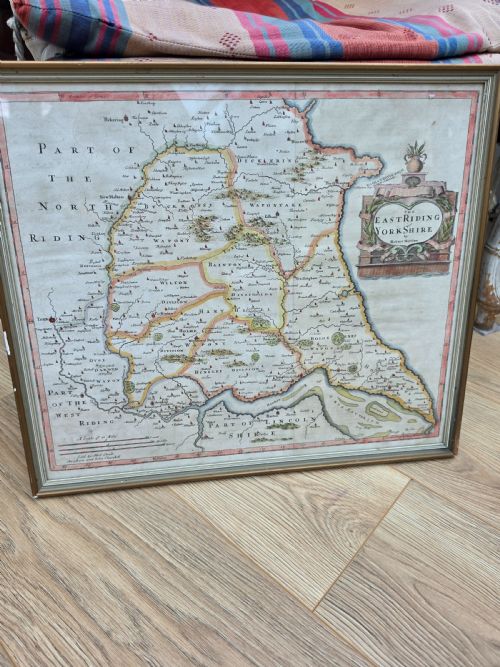
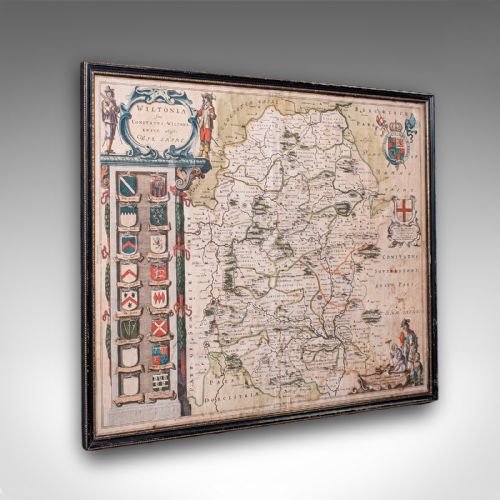
The most common formats on this page are framed sheets sourced from historic atlases, alongside specialised folio stands and cabinets used for storing paper. Creators such as John Speed, Robert Morden, and Joan Blaeu dominate the early periods with detailed regional surveys. Later Victorian works expand the geographical scope to include North America and broader colonial territories.
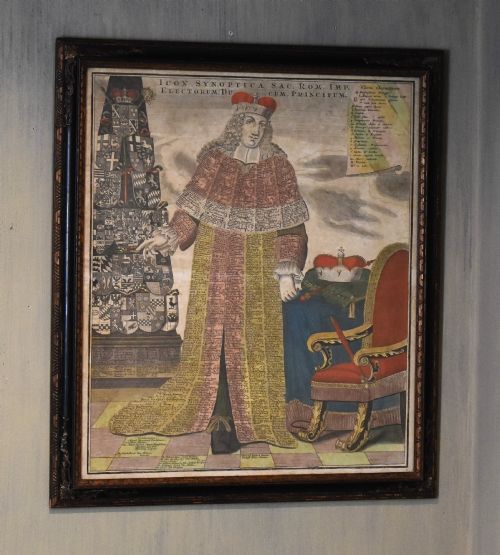
Beyond standard wall hangings, the category incorporates unusual items like map samplers and educational prints from later eras. Each piece retains the topographical notations, decorative cartouches, and Latin or English text characteristic of its original publication. Buyers select these works to anchor a room with historical depth and specific regional heritage.
Materials and Techniques
Framing materials rely on period timbers such as gilt wood, mahogany, walnut, and pine, paired with protective glass to shield fragile paper. Folio stands and cabinets utilise traditional cabinet-making methods in oak and mahogany to house unmounted maps and prints. Brass hardware frequently appears on adjustable stands and storage drawers designed for practical archival use.
Vintage Map Art Retail Price Guide 2026
Typical asking prices for vintage map art among the pieces listed under this phrase on Sellingantiques today, from the lower quarter to the upper quarter. They describe what is for sale here now, not the wider market.
Early cartographers filled unexplored territories with sea monsters and imaginary mountains just to keep things interesting.
Evaluating Quality
Quality in vintage map art rests upon the clarity of the plate impression, the precision of the original cartography, and the vibrancy of any hand-applied watercolour. Early impressions taken when the copperplate was fresh exhibit sharp, crisp lines and legible text, whereas worn plates yield blurred details. The prominence and artistry of the decorative cartouche also elevate certain cartographic works above standard regional prints.
Condition and provenance dictate the standing of a piece within the broader range. Intact margins, original folds preserved without destabilizing tears, and authentic contemporary colouring command greater regard than heavily trimmed or later-coloured sheets. The reputation of the cartographer and the specific historical significance of the mapped region further separate standard decorative prints from museum-grade cartography.
John Speed·Robert Morden·Joan Blaeu·Johannes Janssonius·Thomas Kitchin
The Vintage Map Art Glossary
- Cartouche
- A decorative frame or tablet on a map enclosing the title, scale, or dedication. These ornate elements often feature heraldic crests, figures, or architectural motifs typical of the period.
- Atlas excerpt
- A single leaf or plate removed from a bound historical atlas. These sheets frequently retain Latin or vernacular text on the reverse side detailing the geography.
- Copperplate engraving
- A printmaking technique where lines are incised into a copper sheet with a burin. Ink is forced into the grooves and transferred under pressure to paper.
- Folio stand
- A piece of furniture designed to hold large books, prints, or maps flat or on an adjustable sloping rack. They are constructed in woods like mahogany and walnut.
Vintage Map Art: Frequently Asked Questions
How do I hang antique maps safely?
Protect the paper by mounting maps away from direct sunlight and high humidity. Use UV-filtering glass and acid-free backing materials to prevent fading and chemical degradation over time.
Ensure the frame is securely fastened to the wall using appropriate fixings suited to the weight of the wood and glass. Heavy framed atlases and large county maps require stable wall anchors to support their structure.
Are these maps original or reproductions?
The pieces listed here are period originals dating from the seventeenth century through to the Victorian era. They were printed using historical techniques like copperplate engraving on genuine antique paper.
Examination of the paper texture, plate marks, and ink penetration helps confirm the age of each sheet. Historical annotations and Latin text on the reverse often provide further evidence of authenticity.
What is a decorative cartouche?
A cartouche is an ornamental frame designed to highlight the map title, scale, or publisher details. They reflect the artistic styles of their respective centuries, ranging from Elizabethan scrollwork to Baroque flourishes.
Cartouches often include coats of arms, allegorical figures, or local wildlife pertinent to the region depicted. Their artistic execution is a primary indicator of the map's overall quality and origin.