
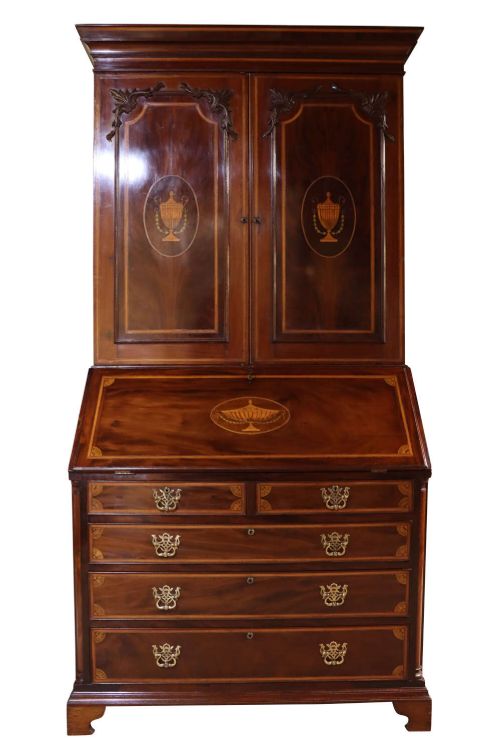
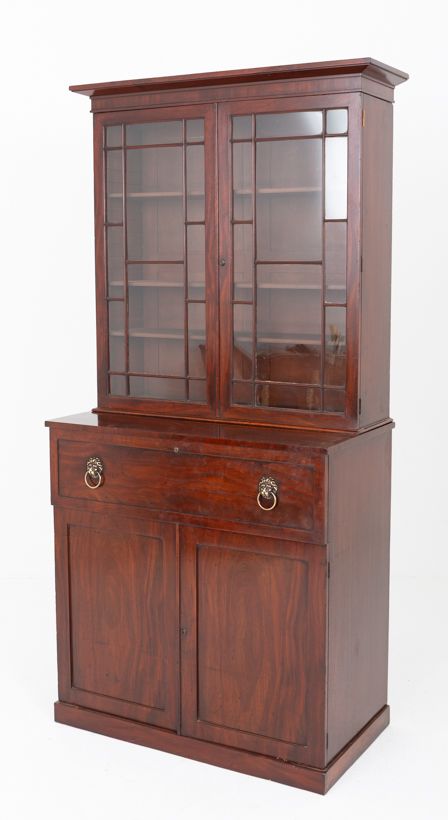
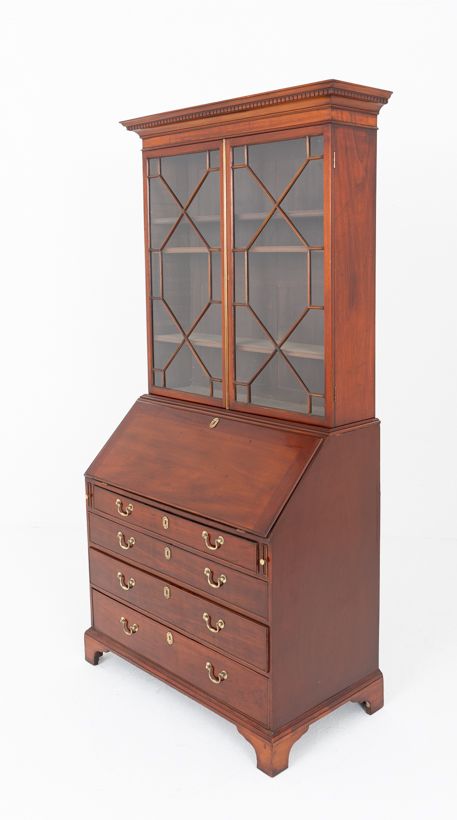
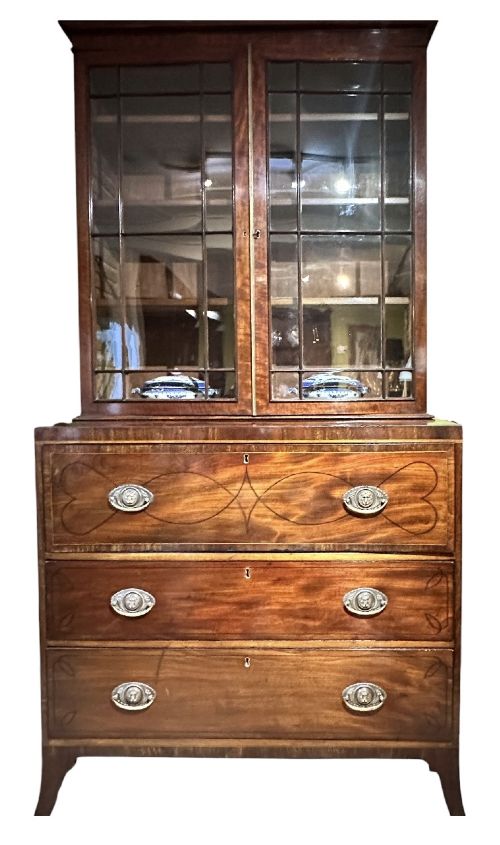
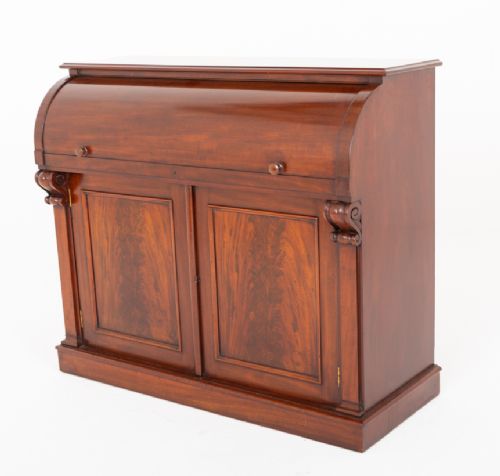
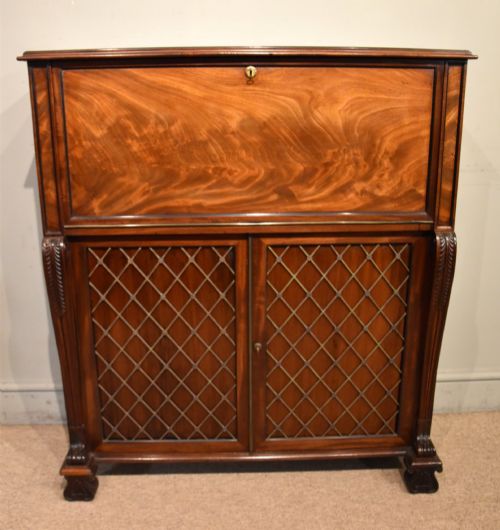
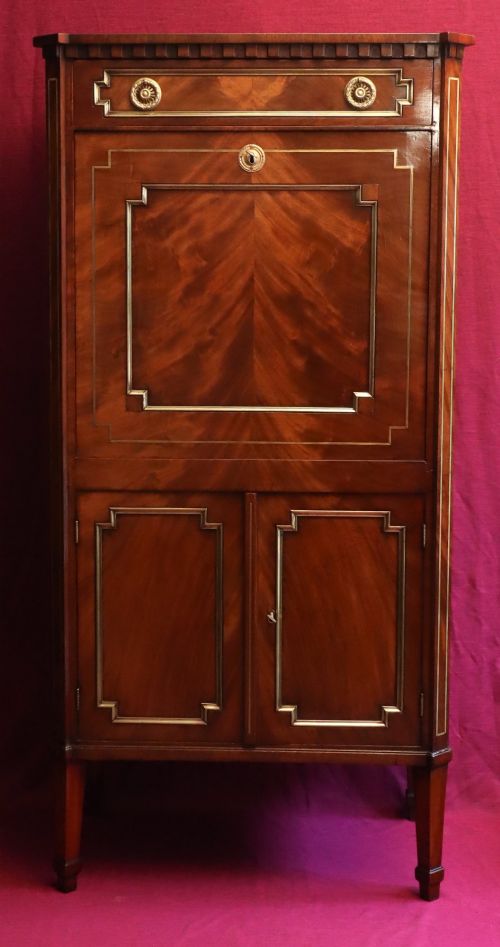
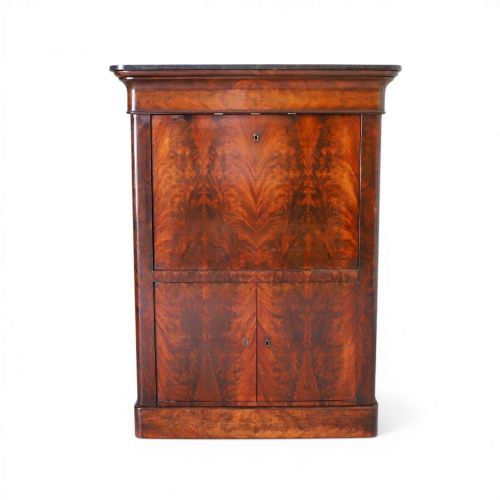
Vintage Mahogany Writing Cabinet
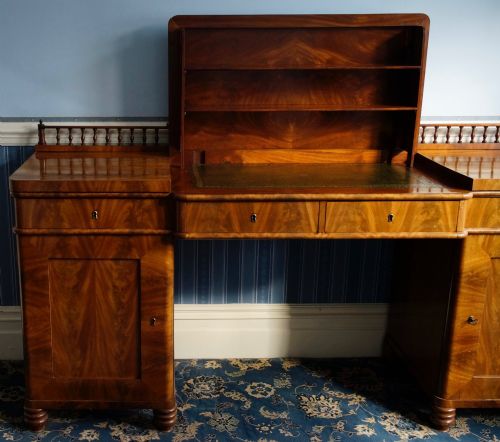
A vintage mahogany writing cabinet brings together deep timber and practical workspace, offering concealed compartments and generous shelving for everyday correspondence.
Vintage Mahogany Writing Cabinet
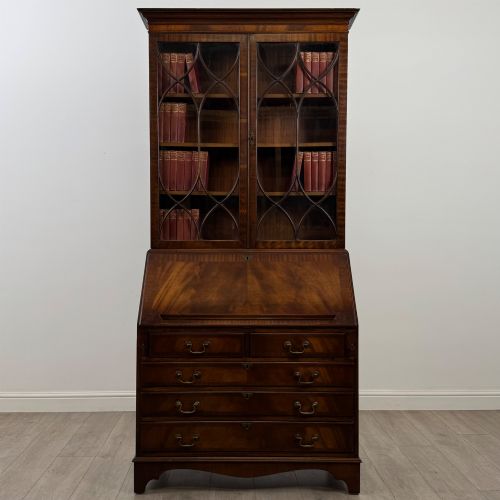
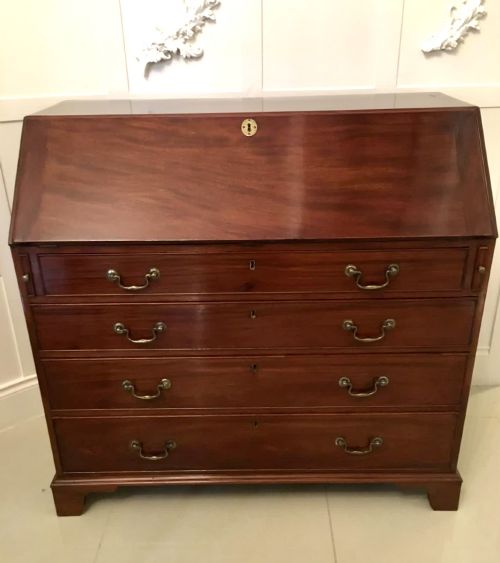
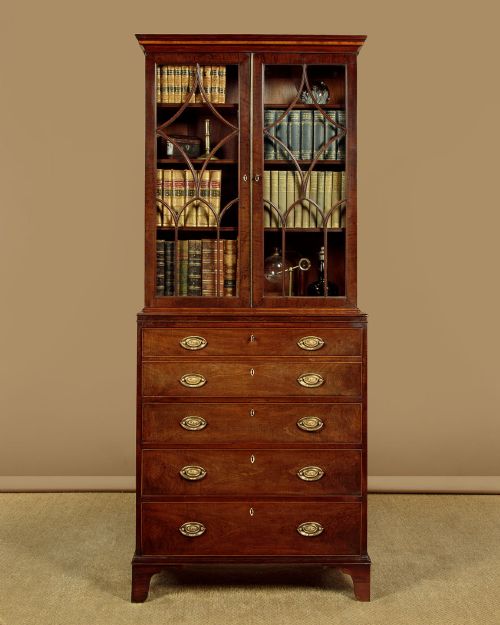
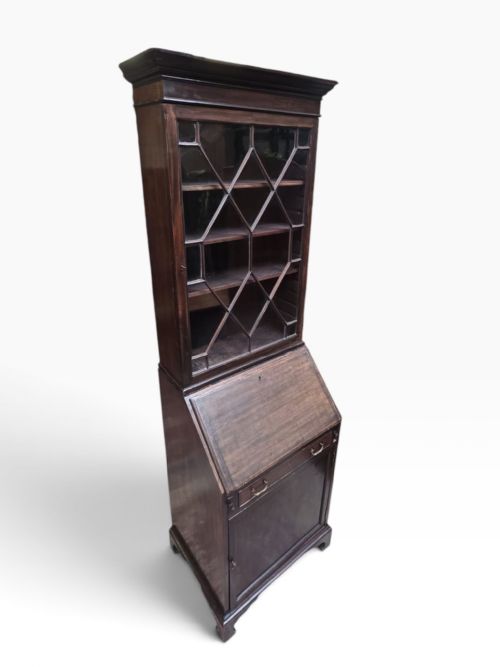
When you search for a vintage mahogany writing cabinet, you encounter a versatile family of case pieces spanning the Georgian, Regency, Victorian and Edwardian eras. These domestic furnishings combine a dedicated writing surface with storage, appearing frequently as bureau bookcases, secretaire cabinets and compact escritoires.
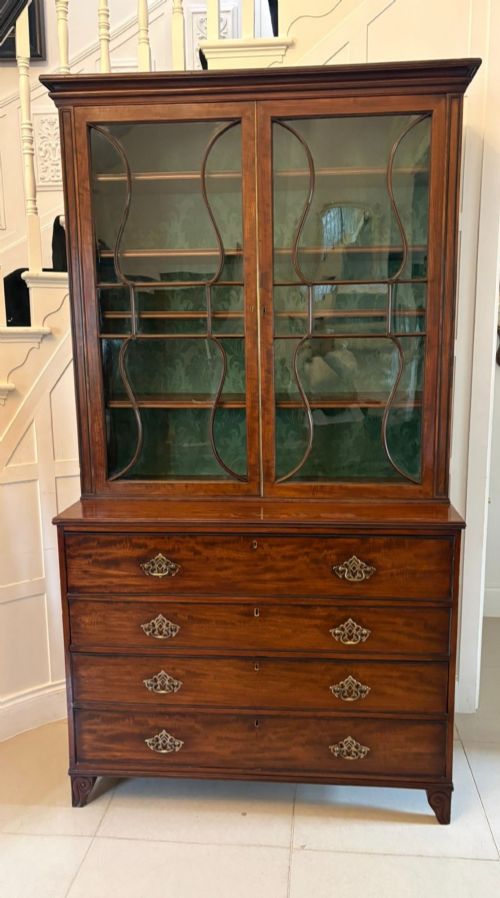
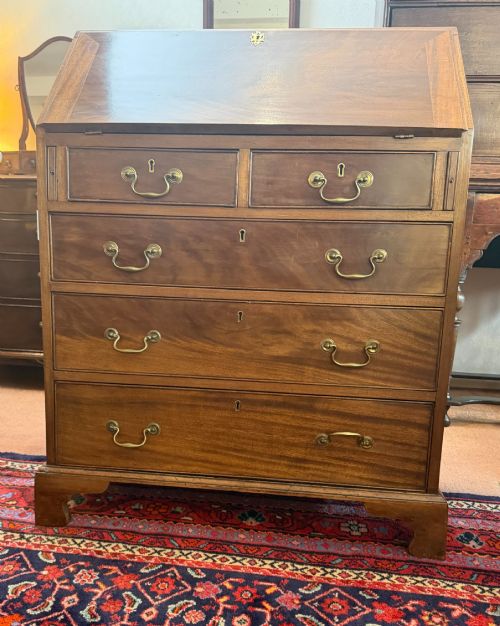
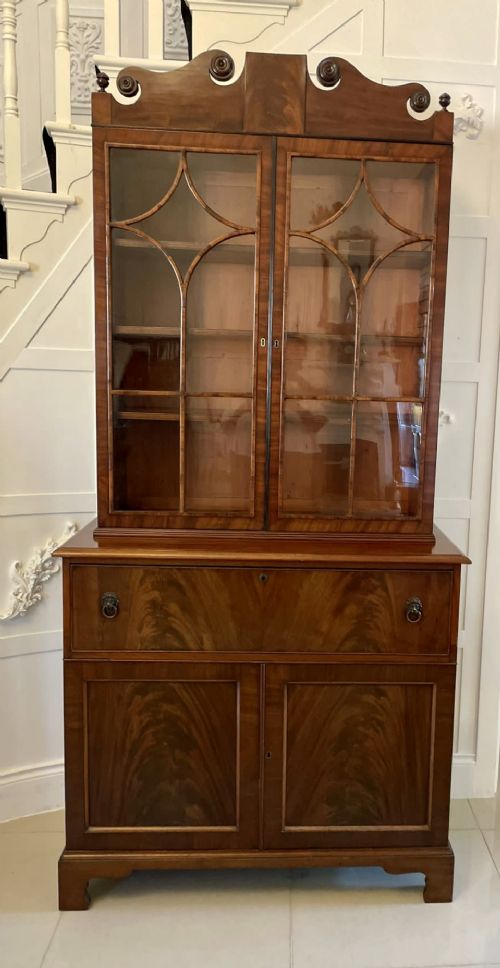
The pieces on this page range from grand 18th-century bureau cabinets with astragal glazed doors to smaller Edwardian writing desks and French secrétaires. Many incorporate fitted interiors with secret drawers, pigeonholes and small compartments designed for keeping stationery and correspondence organised.
Form and scale vary significantly across the inventory, from tall library bookcases housing upper display shelves down to low cylinder desks and compact bonheur du jour writing tables. The overarching purpose remains consistent: providing a dedicated writing station housed within fine cabinetry.
Materials and construction methods
Cabinet makers relied heavily on solid mahogany and flame mahogany veneer, often enhanced by secondary timbers such as oak and satinwood for drawer linings and internal compartments. Decorative contrast came from inlaid stringing, brass hardware, ormolu mounts and glass panels fitted to upper bookcase doors.
Structural complexity defined the better workshops, integrating drop-front writing flaps, spring-loaded secret drawers and sliding desk mechanisms. Fine joinery techniques ensured that heavy bureau falls and secretaire drawers operated smoothly despite shifts in timber over the centuries.
Materials recorded across the inventory include mahogany, brass, glass, leather, satinwood and oak.
Distinguishing quality across the range
Quality rests in the selection of timber figures, particularly the grain pattern of flame mahogany veneers across large unbroken surfaces like fall-fronts and cabinet doors. Superior examples display thoughtful timber matching and careful preservation of original polished finishes rather than heavy modern restoration.
The interior architecture of the fitted writing compartment separates standard pieces from exceptional ones. Elaborate small drawers, pigeonhole arches, original leather writing surfaces and concealed locking mechanisms indicate meticulous craftsmanship by prominent makers.
Gillows of Lancaster
The Vintage Mahogany Writing Cabinet Glossary
- Secretaire
- A cabinet or chest featuring a pull-out or drop-front drawer that conceals a fitted writing interior with small drawers and pigeonholes.
- Bureau bookcase
- A tall dual-purpose case piece combining a sloping or drop-front writing desk at the base with enclosed shelving above.
- Astragal glazed
- Glass doors divided into smaller panes by wooden glazing bars, commonly seen on Georgian and Regency library bookcases.
- Flame mahogany
- A highly figured veneer cut from the fork of the mahogany tree, producing a dramatic, flickering flame-like grain pattern.
- Bonheur du jour
- A light lady's writing desk originating in France, usually featuring a small tiered cabinet superstructure above the desk surface.
Vintage Mahogany Writing Cabinet: Frequently Asked Questions
What is a secretaire bookcase?
A secretaire bookcase combines a tall display cabinet with glazed doors above and a pull-out or drop-front writing drawer below.
Inside this central drawer lies a fitted interior containing pigeonholes and small secret compartments for paperwork.
How do I identify a Georgian bureau?
Georgian bureaux typically feature a sloping wooden fall-front that opens to reveal fitted desk drawers and pigeonholes supported by internal framing.
They are constructed from solid mahogany or figured veneers, often resting on bracket feet with hand-cut dovetail joinery.
Where were writing cabinets placed?
These cabinets served as functional workspace furniture in libraries, studies and formal drawing rooms of grand homes.
Their dual storage and writing capacities made them central hubs for managing household accounts and personal correspondence.
What is flame mahogany veneer?
Flame mahogany is a decorative wood veneer sliced from the junction where branches meet the main trunk of the tree.
This specific cut yields a distinctive undulating, fiery grain pattern prized by period cabinet makers for focal panels.