



Chippendale Secretaire Bookcase
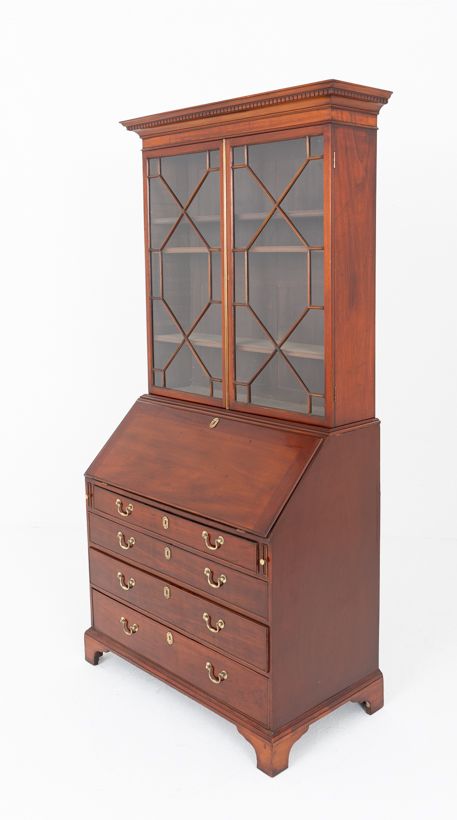
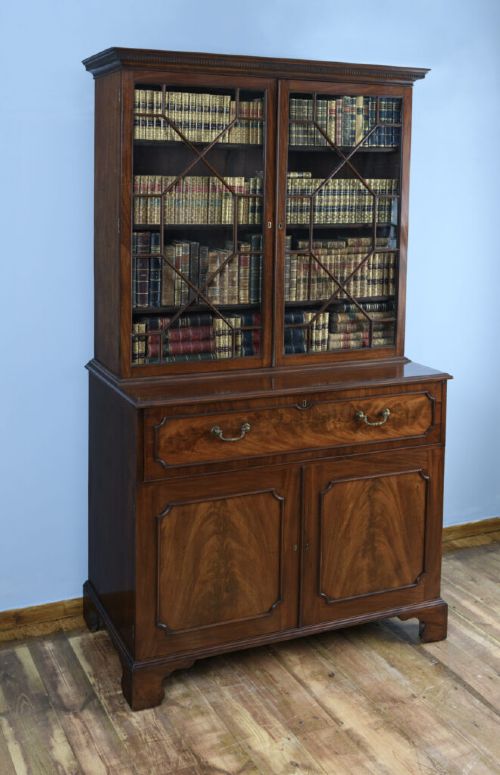
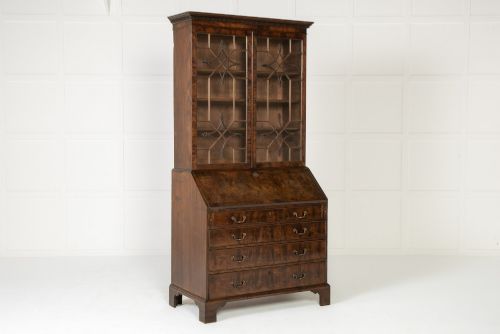
These chippendale secretaire bookcase examples bring together 18th century cabinetmaking and practicality, offering fitted writing drawers behind falling panels beneath extensive shelving.
Chippendale Secretaire Bookcase
A chippendale secretaire bookcase combines a bureau with a bookcase top, designed for domestic correspondence and the storage of bound volumes. Buyers find these tall storage units taking the form of bureau bookcases, secretaire cabinets, and chest on chest variations.
The pieces appearing on this page belong to the Georgian and Regency periods, spanning the 18th century and around 1800. English workshops produced the majority of these items in mahogany, often incorporating glass-panelled upper doors and oak internal carcases.
How they were made
Makers constructed these carcases primarily in solid and veneered mahogany, supplemented by oak for internal drawer linings and secondary framing. Glass panelling protects the upper shelving, while brass hardware secures doors and drawers.
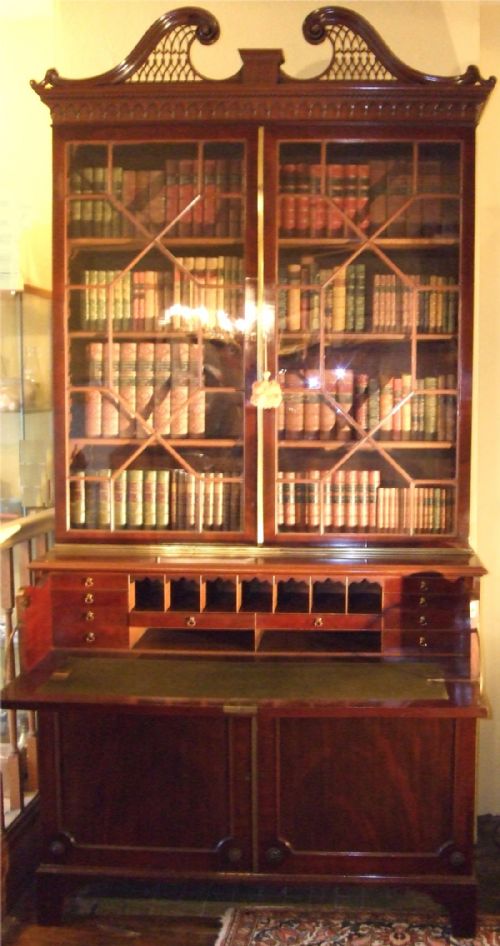
The writing sections feature leather writing surfaces and gold leaf tooling, alongside fitted internal pigeonholes and small drawers. Structural elements like swan neck pediments appear on top of breakfront and standard bookcases.
Many secretaire drawers conceal secret compartments behind miniature pigeonholes, designed for hiding private letters and small valuables.
What varies in quality
The refinement of the carving work separates standard joinery from superior examples, particularly on cornices, pediments, and bracket feet. Timber selection dictates the visual depth of the facade, with well-figured mahogany grain displaying greater visual harmony across the front.
Internal complexity alters the standing of a piece, with fitted secretaire drawers containing secret compartments indicating higher workshop ambition. The integration of original brass handles and intact glass panes preserves the integrity of the construction.
The Chippendale Secretaire Bookcase Glossary
- Secretaire
- A writing drawer or compartment featuring a drop-front that conceals small drawers and pigeonholes. This element allows the piece to function as a desk without requiring a separate table.
- Swan Neck Pediment
- A broken pediment moulding curving upward and outward like the neck of a swan, often terminating in a scroll or rosette. It crowns the upper section of tall case furniture.
- Breakfront
- A cabinet design where the central section projects forward from the flanking wings. This architectural arrangement adds depth and presence to large bookcases.
- Bureau Bookcase
- A dual-purpose item comprising a desk base with a sloping lid or secretaire drawer beneath a glazed shelving unit. It serves both writing and library storage needs.
Chippendale Secretaire Bookcase: Frequently Asked Questions
What is a chippendale secretaire bookcase?
It is a tall 18th century wooden cabinet combining a shelved upper bookcase with a lower writing drawer that drops down to reveal compartments.
Craftsmen built these pieces primarily in mahogany during the Georgian era to serve as functional libraries and writing desks in country houses.
How do I date a Georgian bookcase?
Dating relies on timber choices, construction methods of the internal oak drawers, and stylistic markers like pediment shapes and bracket feet.
Pieces originating in the 18th century often feature hand-cut dovetails and native cabinet woods alongside period brass hardware.
Where should I place a large bookcase?
These tall pieces require stable wall space away from direct sunlight and heat sources that might dry out the mahogany timber.
Rooms with adequate ceiling height and controlled humidity suit large breakfront and bureau bookcase configurations best.
How do I maintain mahogany furniture?
Maintenance involves dusting with a dry cloth and occasionally applying traditional beeswax to nourish the polished wood surface.
Avoiding moisture and sudden temperature changes protects the leather inserts, gold leaf, and structural joints from deterioration.