



Regency Style Bureau Desk
A regency style bureau desk is a practical writing cabinet built for storage and surface work, bringing classic proportions to any study.
Regency Style Bureau Desk
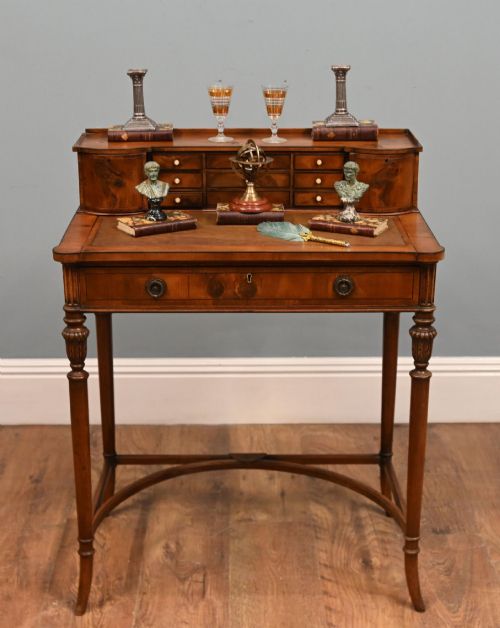
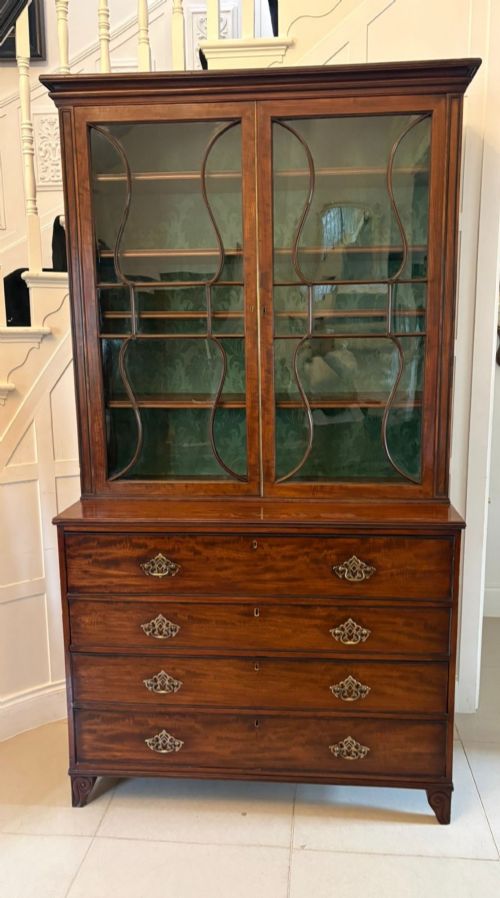
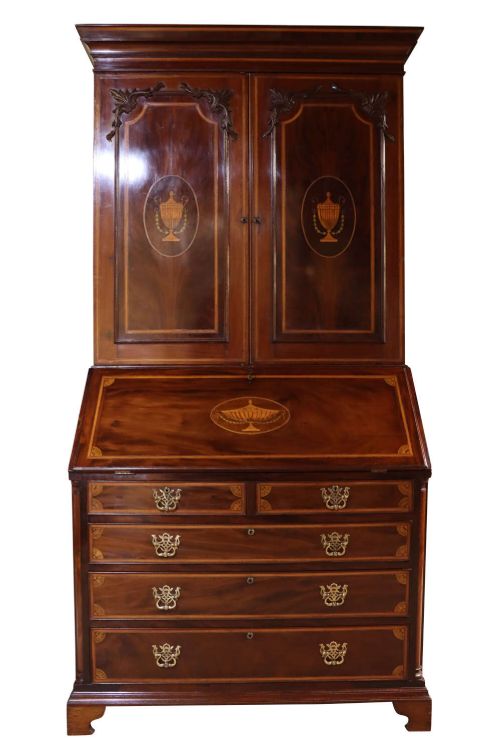
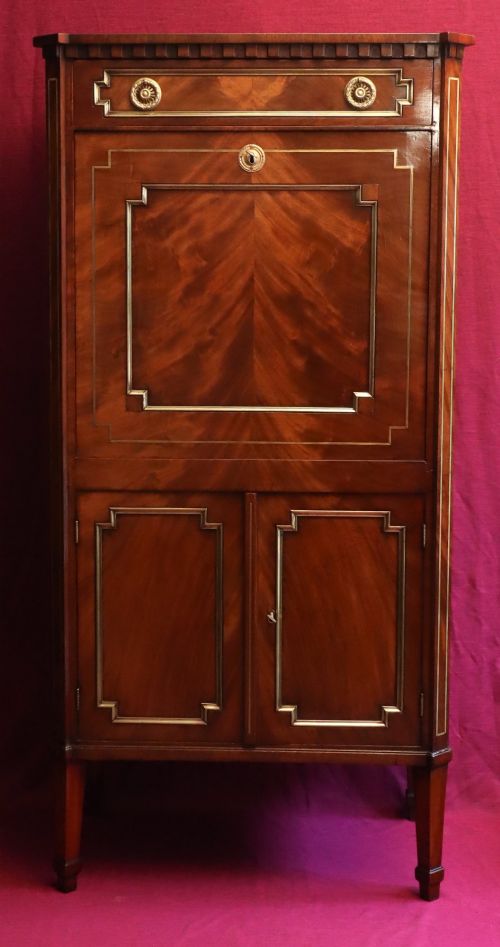
A regency style bureau desk encompasses writing furniture designed with classical restraint, clean architectural lines, and fitted interiors. These pieces range from compact chamber writing tables and secretaire cabinets to grand bureau bookcases.
The versions most commonly met on this page span the 19th century and later revivals, drawing on the Regency, William IV, Georgian, and Sheraton Revival styles. Cabinetmakers utilised rich timber figures to create functional workspaces with drop fronts or pull-out writing surfaces.
Makers working in these historical styles produced specialised forms including the Carlton House desk, bonheur du jour, and bureau plat. Each variant offers dedicated compartments for correspondence, storage drawers, and specialised leather-lined writing surfaces.
Materials and construction
Construction relies heavily on dense timbers such as mahogany, flame mahogany veneer, and rosewood, often accented with intricate wood inlay and contrasting satinwood stringing. Cabinetmakers selected these dense hardwoods to ensure structural stability while displaying striking grain patterns across large flat surfaces.
Secondary elements incorporate brass hardware, fitted pigeonholes, and leather inserts for the writing surface. The integration of fine veneers over solid carcases allowed workshops to achieve sophisticated visual richness without risking the warping inherent in solid timber construction.
Regency Style Bureau Desk Retail Price Guide 2026
Typical asking prices for regency style bureau desk among the pieces listed under this phrase on Sellingantiques today, from the lower quarter to the upper quarter. They describe what is for sale here now, not the wider market.
Forms include compact chamber writing tables, Carlton House desks, and large secretaire bookcases.
Distinctions in quality
Quality rests upon the selection of timber figures, such as matched flame mahogany veneers and carefully chosen rosewood boards, alongside the precision of inlay work. Finer examples display meticulous attention to internal drawer construction and the integration of secondary timbers.
Proportion and decorative restraint dictate the standing of a piece, with superior items balancing architectural severity against subtle brass detailing and well-executed secondary woodwork. The handling of cabinetwork dictates whether a desk remains a sturdy utilitarian object or a refined statement of design.
Gillows of Lancaster·John McLean·Thomas Hope
The Regency Style Bureau Desk Glossary
- Secretaire
- A piece of furniture containing a concealed writing drawer or drop-front writing surface. It typically disguises its function behind handsome drawer fronts or bookcase doors.
- Bureau bookcase
- A tall cabinet combining a sloping or fall-front desk section with upper shelving enclosed by doors. This form maximises vertical storage while providing a dedicated writing surface.
- Bonheur du jour
- A light lady's writing desk featuring a small tiered superstructure with shelves and small drawers above the main writing surface. It originated in France and gained popularity during the Regency period.
- Bureau plat
- A freestanding writing table fitted with drawers across the frieze, designed to sit away from the wall. These tables feature finished backs and generous leather-lined tops.
- Flame mahogany veneer
- Thin slices of timber cut from the fork of a mahogany tree to produce a dramatic, flickering flame pattern. Cabinetmakers applied this to prominent exterior surfaces for visual impact.
Regency Style Bureau Desk: Frequently Asked Questions
What is a regency style bureau desk?
A regency style bureau desk is a compact or substantial writing cabinet featuring classical proportions, fitted interior drawers, and often a fall front or leather writing surface.
These pieces reflect the decorative vocabulary of the early nineteenth century and later revivals, prioritising symmetry, rich timber grains, and refined architectural details.
How were these desks used historically?
These desks served as private writing stations for correspondence, household accounts, and the management of personal affairs. The inclusion of pigeonholes and small drawers kept writing materials and documents organised.
Larger variants like bureau bookcases also provided prominent display space for libraries and valuable collections behind glazed or panelled doors.
How do I live with a bureau desk?
A bureau desk functions effectively in a home study, living room, or hallway as a combined workspace and display surface. Drop-front models allow you to conceal paperwork simply by closing the flap.
Positioning the desk away from direct heat sources and strong sunlight protects the polished mahogany or rosewood surfaces and leather inserts from drying out.
How can I tell periods apart?
Distinguishing between original Regency pieces and later revivals involves examining construction methods, secondary timbers, and the handling of brass mounts and veneers. Earlier pieces often display hand-cut dovetails and native framing timbers.
Stylistic shifts also provide clues, as Georgian and Regency designs favour restrained classical lines, whereas later Victorian interpretations may incorporate heavier proportions or revived Sheraton motifs.