

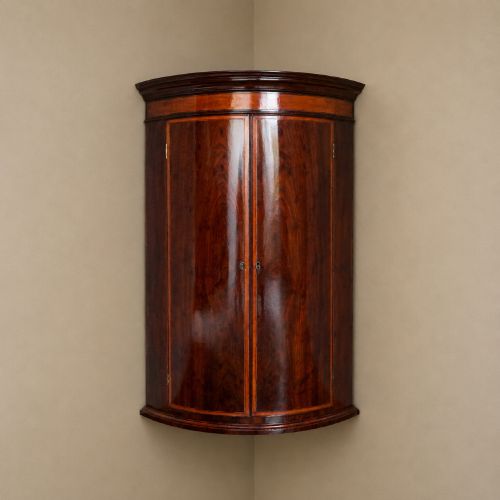
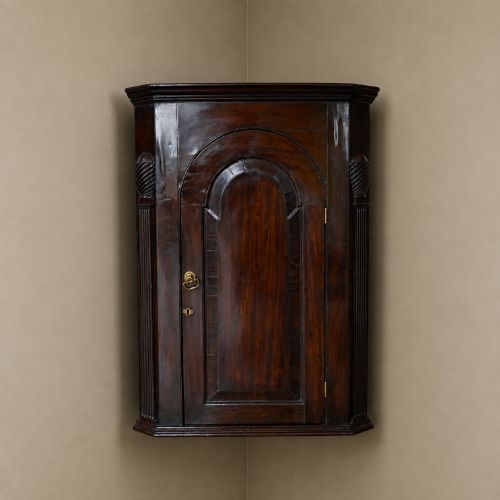
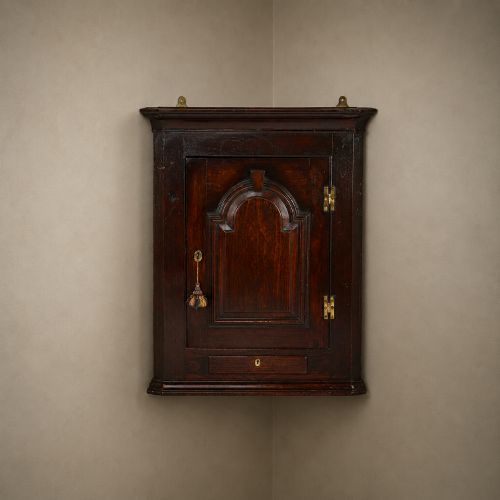
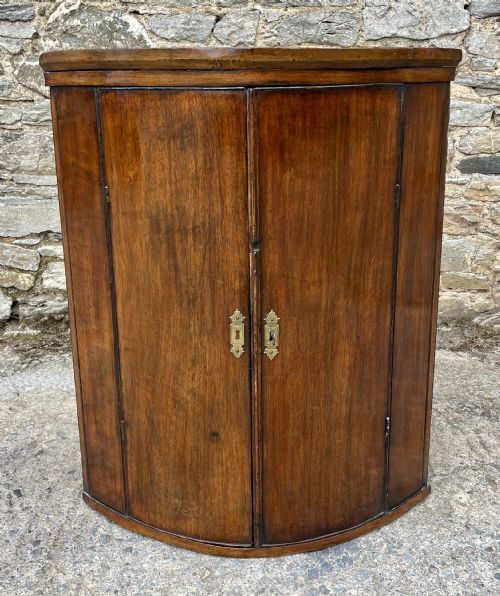





Vintage Mahogany Wall Cabinet
A vintage mahogany wall cabinet brings warmth and practical storage to compact spaces, combining rich timber grain with period character.
Vintage Mahogany Wall Cabinet
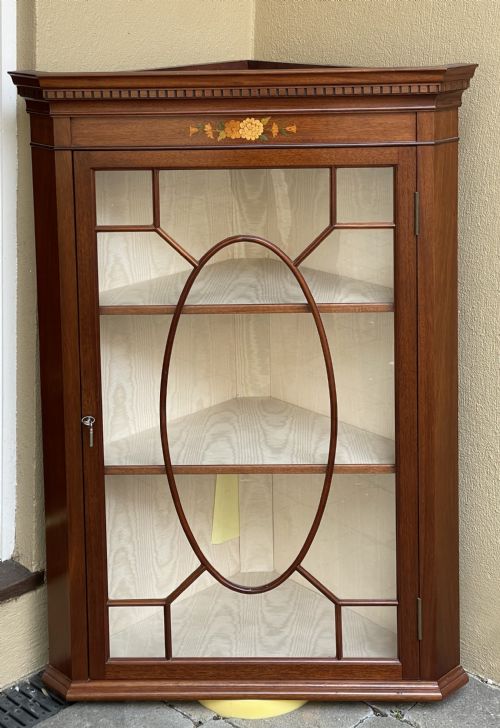
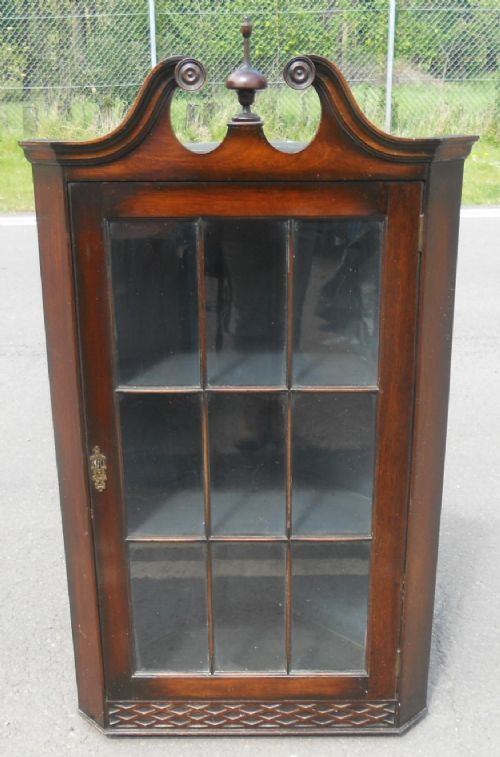
A vintage mahogany wall cabinet encompasses various hanging storage pieces, most frequently encountered as corner cupboards, display cabinets, and flat wall cupboards originating from the eighteenth, nineteenth, and early twentieth centuries.
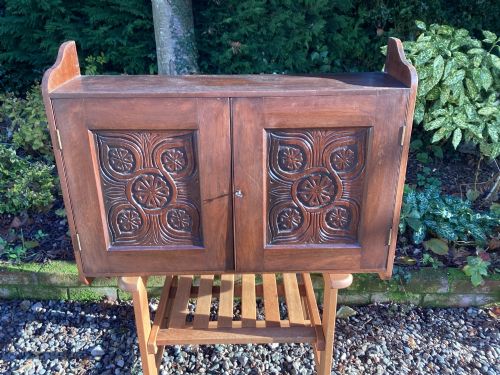
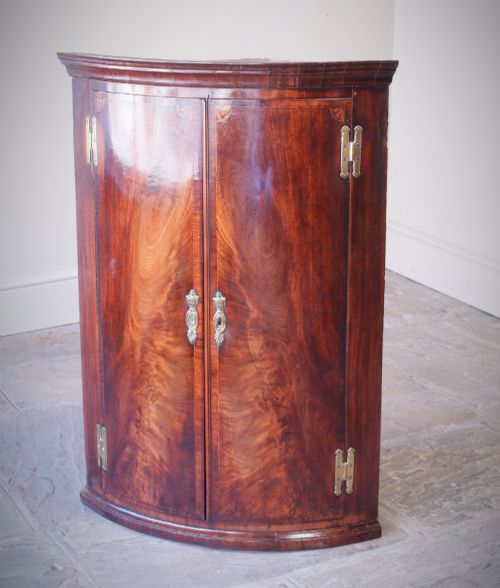
The pieces on this page range from Georgian bow-front hanging cupboards and Edwardian inlaid display units to Arts and Crafts wall cupboards, each designed to maximise room space by mounting securely to the wall.
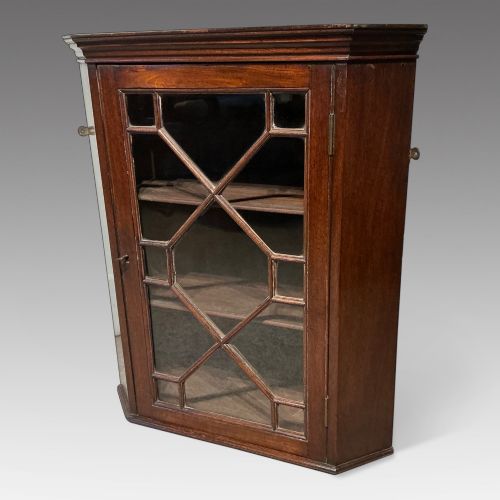
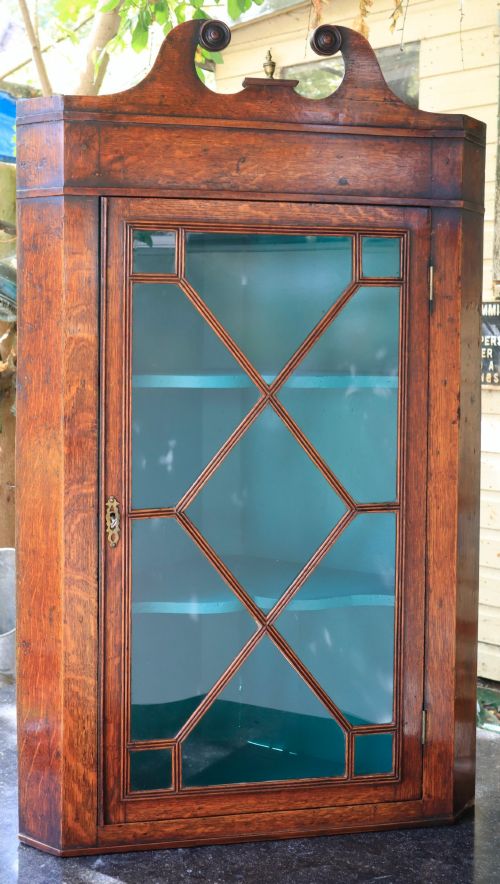
Buyers seeking a vintage mahogany wall cabinet will find numerous examples featuring timber panelled doors, glazed fronts for displaying contents, and internal shelving arranged for practical everyday use.
Materials and construction methods
Cabinet makers utilised dense solid mahogany and figured flame mahogany veneers over secondary timbers such as oak, often selecting boards with rich natural grain patterns for the primary display surfaces.
Surface decoration frequently incorporated contrasting lightwood details such as satinwood inlay and boxwood stringing, alongside functional brass hinges, escutcheons, and working keys.
Glazing bars divided cabinet doors into geometric panes on display pieces, while structural integrity relied on traditional pegged and dovetailed joints hidden within the carcass.
Vintage Mahogany Wall Cabinet Retail Price Guide 2026
Typical asking prices for vintage mahogany wall cabinet among the pieces listed under this phrase on Sellingantiques today, from the lower quarter to the upper quarter. They describe what is for sale here now, not the wider market.
Distinguishing quality across the selection
Quality reveals itself in the selection of the timber, where finely figured flame mahogany veneers and balanced grain patterns elevate a piece far above plain stock.
The refinement of the cabinetmaking distinguishes finer examples, visible in crisp inlaid borders, neatly dovetailed internal drawers, and well-fitted panelled or glazed doors that close flush.
Original brass hardware, intact glass panes, and working locks with matching keys contribute significantly to the integrity and desirability of an antique wall-hanging cupboard.
The Vintage Mahogany Wall Cabinet Glossary
- Bow front
- A cabinet front that curves outwards in a convex sweep. This design softens room corners and was particularly popular on Georgian corner cupboards.
- Flame mahogany
- A veneer showing a distinctive flickering flame-like grain pattern. Cabinet makers reserved this striking timber for principal doors and drawer fronts.
- Glazing bar
- A narrow timber strip holding individual panes of glass within a door. These bars create geometric patterns typical of display cabinets.
- Escutcheon
- A protective plate surrounding a keyhole. Brass examples often provide a decorative accent against dark mahogany timber.
- Stringing
- Thin inlaid lines of contrasting light wood used to outline panels. This technique defines edges on Edwardian and Sheraton revival pieces.
Vintage Mahogany Wall Cabinet: Frequently Asked Questions
How do I hang a heavy mahogany wall cabinet safely?
Wall-hanging cabinets require secure fixing directly into masonry or substantial wall studs using appropriate heavy-duty brackets. Given the weight of dense mahogany timber and internal contents, professional installation ensures the piece remains safely supported.
Positioning the cabinet at a comfortable eye level allows easy access to internal shelves while ensuring structural stability against the wall surface.
What is the difference between a corner cabinet and a flat wall cupboard?
Corner cabinets feature an angled back designed to fit neatly into room intersections, effectively utilising space that often remains empty. Flat wall cupboards present a rectangular profile meant for mounting on a single uninterrupted wall plane.
Both forms share similar internal shelving and hanging mechanisms but serve entirely different spatial layouts within a room.
How do I date a Georgian mahogany wall cabinet?
Dating relies on examining construction techniques, timber characteristics, and stylistic details such as cornice moulding and inlay work. Eighteenth-century pieces typically feature hand-cut dovetails and solid secondary woods, whereas later revival pieces often display machine precision.
Secondary woods like oak alongside specific hinge types help distinguish original Georgian pieces from nineteenth-century copies.
Can I use a vintage wall cabinet in a bathroom?
Certain compact Edwardian wall cabinets and mirrored shaving cabinets were originally intended for personal grooming spaces. However, modern bathroom humidity requires careful consideration to protect antique mahogany and veneer finishes.
Ensuring adequate ventilation prevents moisture damage to the timber, traditional glues, and internal mirror silvering.