




Carved Floral Wood Cabinet
A carved floral wood cabinet brings rich texture and botanical detail into a room, offering practical storage disguised as sculpture.
Carved Floral Wood Cabinet
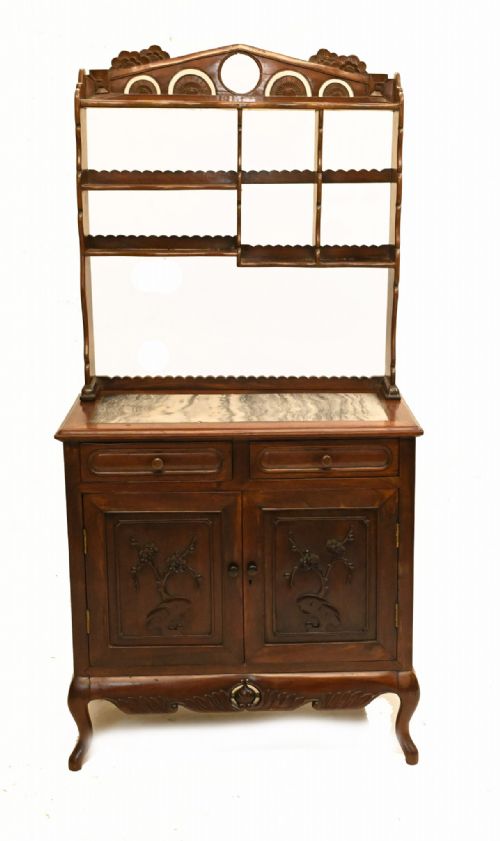
A carved floral wood cabinet combines functional storage with intricate botanical motifs carved directly into the timber. When you search for a carved floral wood cabinet, you will encounter diverse forms ranging from wall-hung cupboards and bedside tables to larger sideboards and cocktail cabinets.
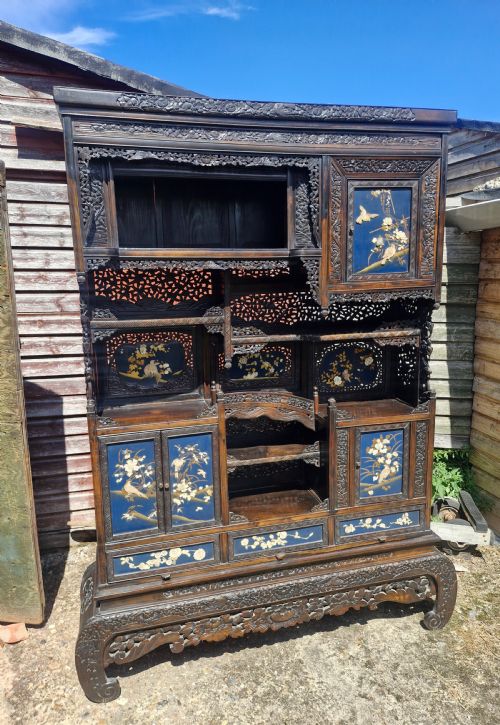
The pieces available span multiple periods including the Victorian and Edwardian eras, alongside pieces from the nineteenth and twentieth centuries. Origins vary widely, taking in British oak and mahogany alongside Chinese hardwood, Anglo-Indian padauk, and Japanese designs.
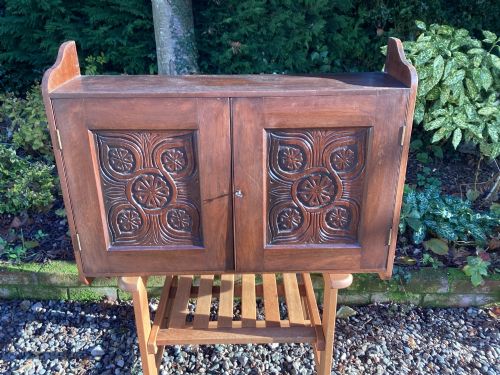
Wall cabinets, corner cupboards, and dressers make up the core of the selection on this page. Each format utilises floral carving to break up flat expanses of timber, creating depth and shadow across the front elevation.
Materials and construction methods
Construction relies heavily on traditional hardwoods such as oak, mahogany, walnut, teak, and padauk, selected for their stability and grain. Makers employed hand-carving techniques to render floral motifs into the solid timber, often pairing the carved sections with brass hardware.
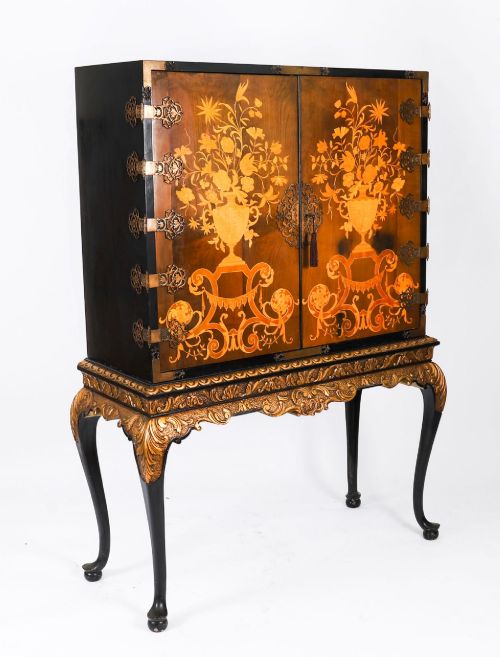
Surface treatments vary by region and period, encompassing clear wax finishes on European oak, dark polish on Victorian mahogany, and specialised finishes like black lacquer or cinnabar on Asian pieces. Marquetry inlay also appears on later twentieth-century cocktail cabinets to add contrasting wood tones.
Carved Floral Wood Cabinet Retail Price Guide 2026
Typical asking prices for carved floral wood cabinet among the pieces listed under this phrase on Sellingantiques today, from the lower quarter to the upper quarter. They describe what is for sale here now, not the wider market.
Some floral panels hide miniature drink compartments designed for covert nineteenth-century hospitality.
Assessing craftsmanship and finish
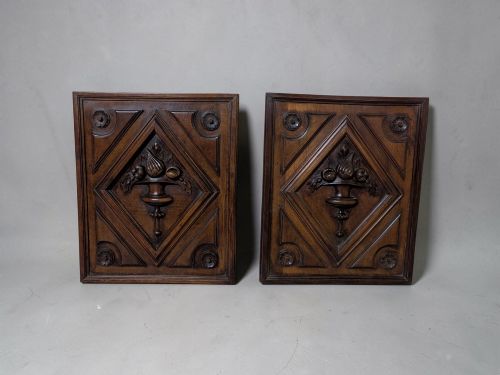
Quality rests primarily on the depth and crispness of the carving, where hand-tooled floral details exhibit clean undercut edges and deliberate relief rather than soft, mechanical moulding. The choice of timber underpins this, with dense hardwoods holding sharper botanical lines over decades of use.
Structural integrity sets apart superior examples, visible in tight joinery, original brass hinges, and doors that hang true without binding. The sophistication of the overall design, whether an Anglo-Indian breakfront pedestal or a simpler Arts and Crafts wall cupboard, dictates the level of artisan investment.
The Carved Floral Wood Cabinet Glossary
- Padauk
- A heavy, durable tropical hardwood with a reddish-brown hue often utilised in Anglo-Indian furniture production. It provides a stable base for deep, crisp floral carving.
- Marquetry
- The art of applying small pieces of veneer to a structure to form decorative patterns or pictures. It frequently surfaces on mid-century cocktail cabinets to create pictorial floral or geometric scenes.
- Breakfront
- A piece of furniture where the central section projects forward from the flanking outer sections. This architectural arrangement adds visual weight and shadow to larger sideboards.
- Cinnabar
- A carved lacquer technique involving numerous layers of red mineral lacquer applied to a core and carved with intricate motifs. It offers a smooth, tactile surface distinct from bare timber.
- Arts and Crafts
- A design movement emphasising handcraftsmanship, traditional materials, and simple utility over mass production. Cabinets from this style prioritize honest construction and plant-based motifs.
Carved Floral Wood Cabinet: Frequently Asked Questions
Where should I place a wall-hung cupboard?
A wall-hung cabinet works well in smaller rooms where floor space is limited, such as a hallway or bathroom, lifting storage off the ground.
Ensure the wall structure can support the weight of solid hardwood and its contents before fixing it securely at eye level.
How do I care for carved wood surfaces?
Dust the intricate floral recesses regularly with a soft-bristled brush to prevent dirt buildup in the carved channels.
Apply a traditional beeswax periodically to nourish the timber, buffing gently to maintain a soft sheen without clogging the fine details.
What is an Anglo-Indian cabinet?
An Anglo-Indian piece reflects British colonial commissioning executed by local craftsmen in India, frequently utilising dense exotic timbers like padauk.
These items blend European furniture forms with traditional South Asian floral and foliage carving, resulting in highly ornate silhouettes.
How do I distinguish Victorian from Edwardian styles?
Victorian cabinets generally feature darker, heavier timbers with dense, deep-relief carving and formal proportions.
Edwardian pieces often appear lighter in scale, influenced by the Arts and Crafts movement with simpler lines and brighter oak or mahogany.