




Vintage Mahogany Torchere
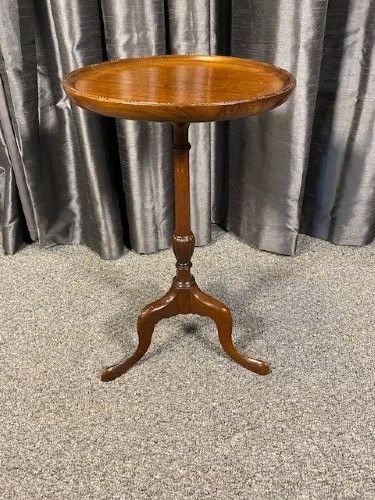
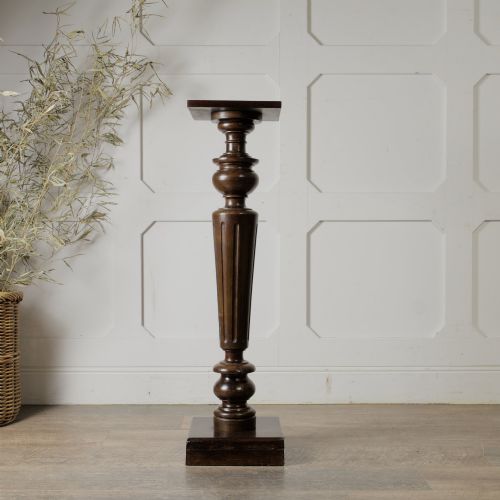
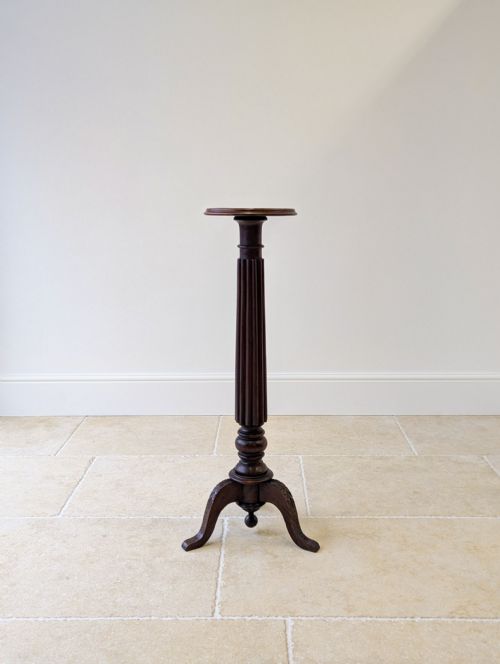
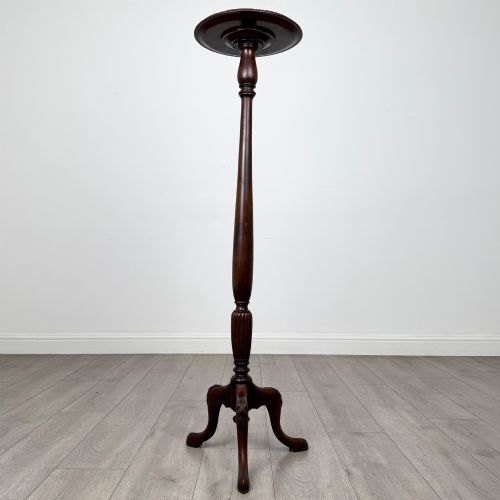
A vintage mahogany torchere brings height and architectural grace to a corner, holding a lamp, plant or bust with slender dignity.
Vintage Mahogany Torchere
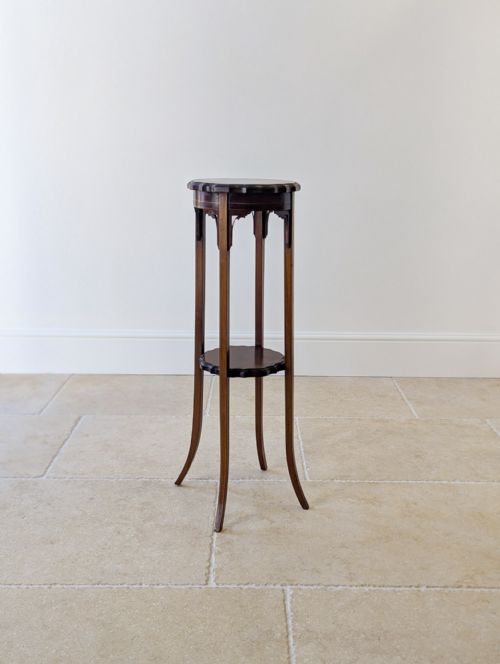
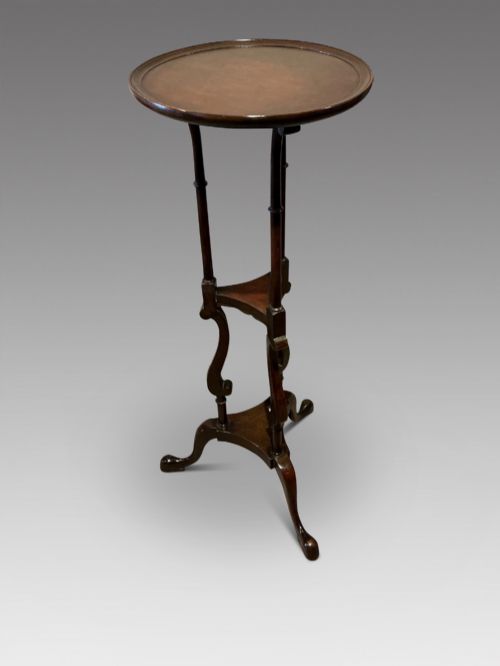
When you search for a vintage mahogany torchere, you encounter tall, slender stands designed originally to support candles, lamps or decorative urns. The selections here span the eighteenth century through the Edwardian period, encompassing Georgian styles and revival pieces alongside standard Victorian forms.
Most examples function as plant stands, jardiniere pedestals or tall occasional tables rather than pure lighting supports. You will regularly find variations labelled as plant stands, pedestals and tall lamp tables sharing the exact same upright columnar form.
How they were made
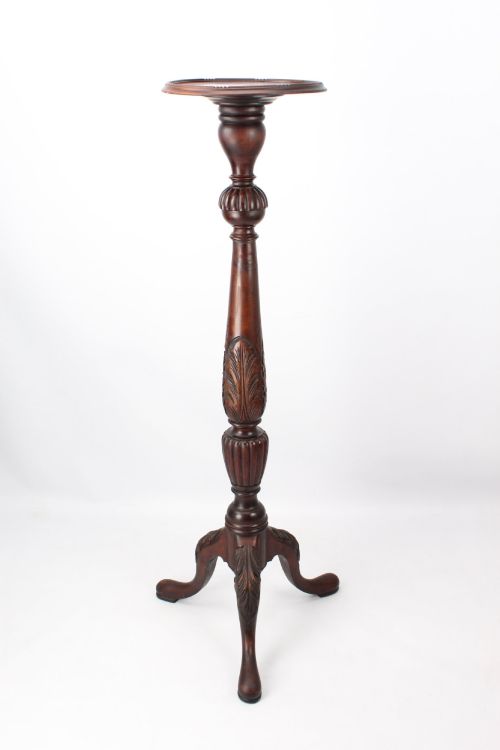
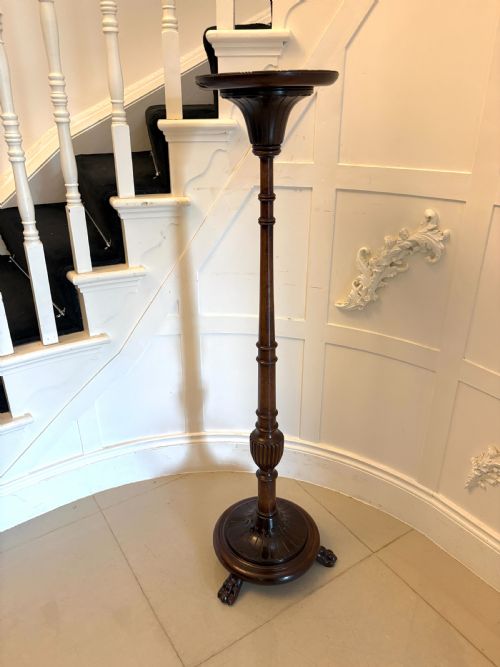
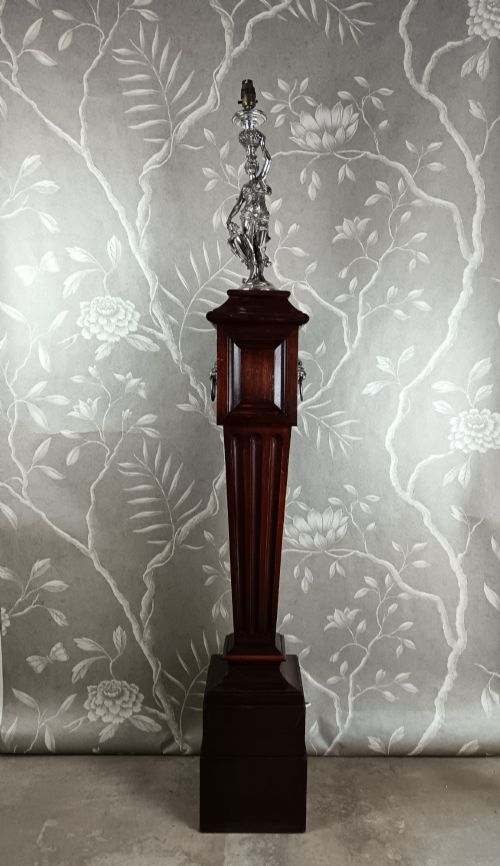
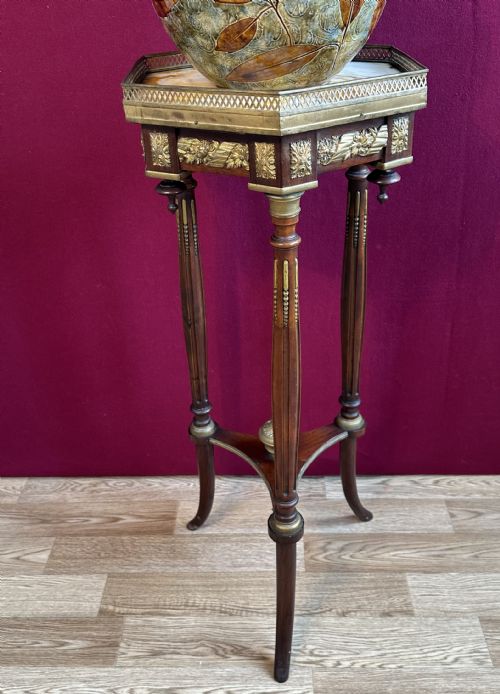
Cabinetmakers constructed these tall stands primarily using solid mahogany and dense hardwoods, frequently turning shafts on a lathe and carving tripod or stepped bases. Selected pieces incorporate satinwood inlay for contrast, whilst others integrate brass fittings, marble tops or silver-plated figural elements.
Joinery methods rely on sturdy pegged joints, threaded central spindles and weighted bases to ensure stability despite the narrow footprint. Surface finishing typically involves traditional polishing to highlight the rich grain and deep colour inherent in the timber.
Listings span the 18th Century, Victorian, Edwardian, and 1900s eras, utilising mahogany, brass, marble, and satinwood inlay.
What varies in quality
The distinction between ordinary and exceptional pieces lies in the crispness of the hand-carving and the proportion of the column to the base. Finely turned reeding, deep fluting and substantial timber thickness elevate an example far above simple utility stands.
Structural integrity and original surface patination dictate desirability among collectors. Examples retaining their untouched polish and heavy, stable footing represent the superior end of the surviving range.
WMF
The Vintage Mahogany Torchere Glossary
- Torchere
- A tall, slender stand historically used for carrying a torch or candle, now principally employed for displaying plants, lamps or sculptural busts.
- Jardiniere
- A decorative pot or stand intended for holding plants and flowers, frequently integrated into tall pedestal designs.
- Plinth
- The heavy base or lower block supporting a column, statue or torchere shaft.
- Satinwood inlay
- Contrasting light-coloured wood inserted into the mahogany surface in geometric or floral patterns.
- Tripod base
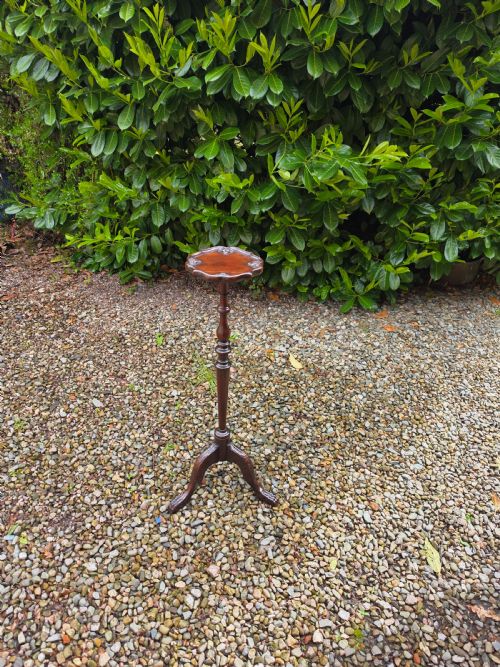
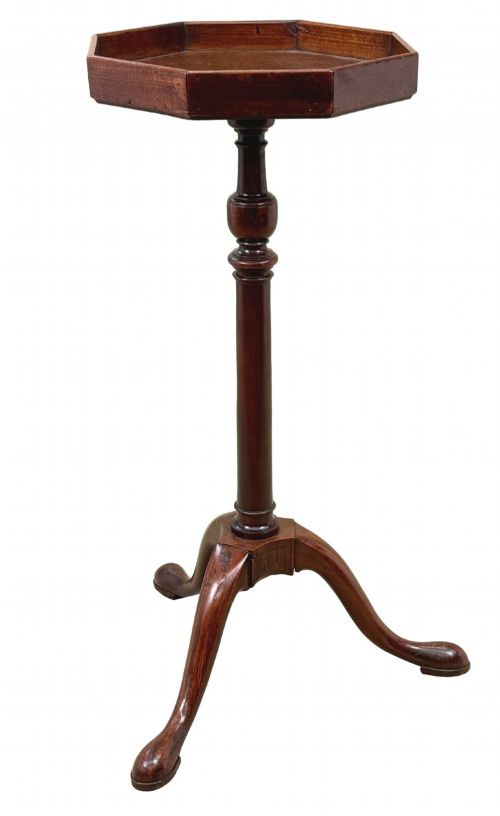
- A three-legged support structure commonly utilised on candle stands and torcheres to prevent rocking on uneven floors.
Vintage Mahogany Torchere: Frequently Asked Questions
What is a torchere used for today?
These tall stands provide a practical stage for table lamps, trailing houseplants or decorative sculptures in tight spaces.
Their elevated profile draws the eye upward, filling empty corners without consuming valuable floor area.
How do I tell Georgian from Edwardian examples?
Georgian pieces from the eighteenth century typically display heavier proportions, robust carving and dense, dark timber.
Edwardian revivals often feature finer inlay work, lighter construction and more delicate turned columns.
Are these stands stable enough for heavy plants?
Most torcheres rely on wide tripod feet or weighted circular bases designed to balance the height.
Heavier marble-topped or solid hardwood versions offer greater stability for substantial pots.
Can I use a torchere as a floor lamp?
Several period examples are adapted or built specifically to function as lamp stands with integrated wiring.
Slim wooden columns allow cords to run discreetly alongside or through the central shaft.