


Vintage Mahogany Headboard
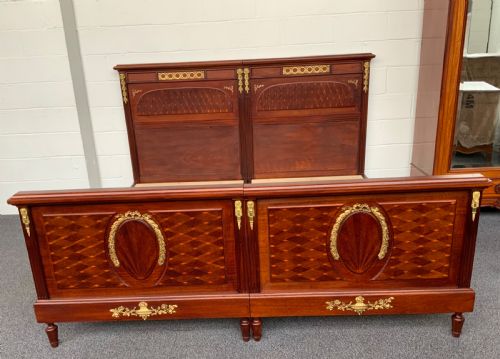
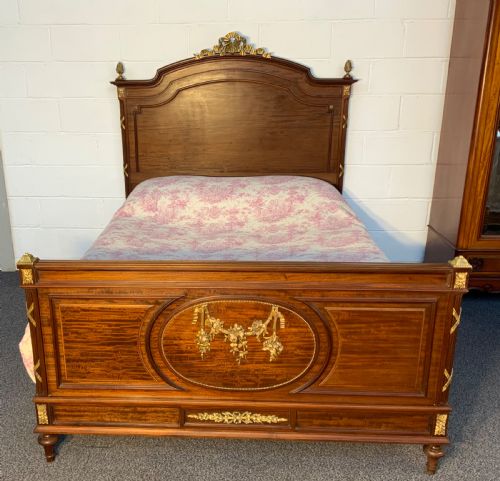
A vintage mahogany headboard brings rich timber grain and classic period proportion directly to the bedroom wall.
Vintage Mahogany Headboard
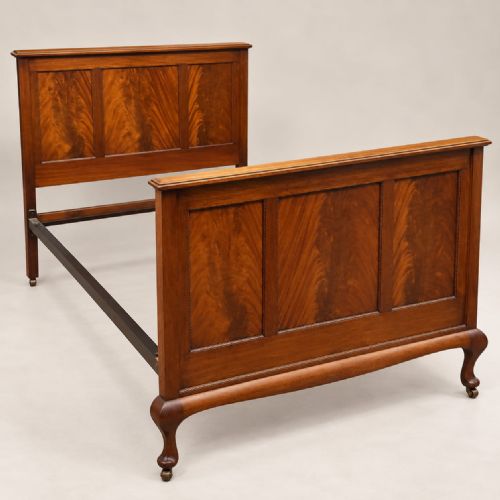
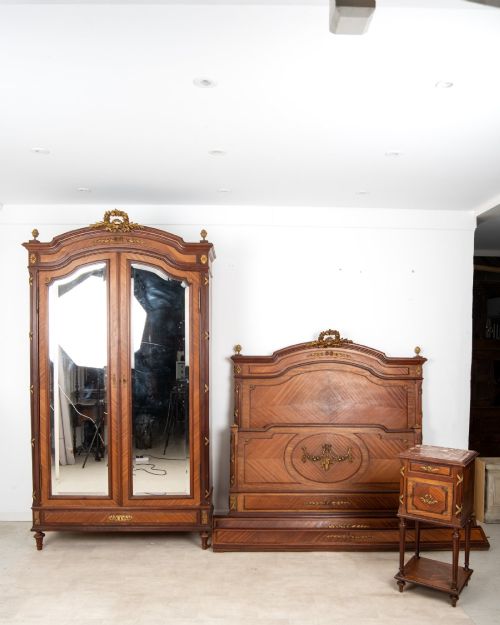
A vintage mahogany headboard is typically found within a range of larger bedframes, double bedsteads, and dedicated headboard pieces originating from the Edwardian era through to the late nineteenth century. These furnishings often emerge from broader bedroom suites or grander French and British colonial traditions, reflecting the domestic scales of their periods.
How they were made
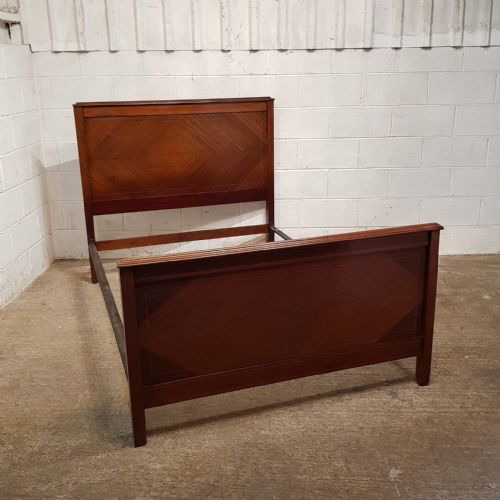
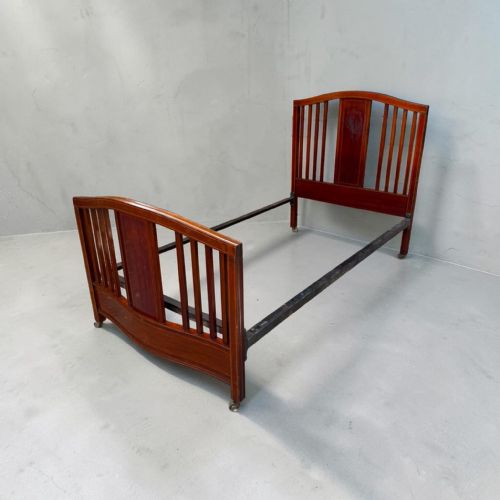
Cabinet makers utilised dense Honduran and Cuban timber reserves, often selecting figured mahogany, burr, and plum pudding varieties for prominent panels. These rich wood surfaces were frequently enhanced with contrasting satinwood inlay, fruitwood marquetry, or intricate parquetry geometric patterns.
Structural integrity relied on traditional joinery supplemented by cast brass detailing, ormolu mounts, and occasional iron framing. Carved mouldings and panelled rails were shaped by hand before receiving polished finishes that accentuated the natural depth of the grain.
Materials appearing across current stock include solid mahogany, brass, iron, ormolu, satinwood, marble, glass, and decorative veneer.
What varies in quality
The standard of a vintage mahogany headboard depends heavily on the selection of timber figure and the precision of its decorative marquetry or inlay work. Superior examples display carefully matched grain patterns across wide panels, whilst lesser pieces rely on simpler, uniform boards.
Execution of carved details and the quality of applied brass or ormolu mounts set finer workshop output apart from mass-produced commercial variants. The depth of the hand-applied polish and the structural soundness of the underlying frame further define the upper tier of surviving items.
The Vintage Mahogany Headboard Glossary
- Mahogany
- A durable tropical hardwood prized for its deep reddish-brown colour and stable working properties. Cabinet makers utilised this timber extensively for fine furniture throughout the eighteenth and nineteenth centuries.
- Parquetry
- A geometric mosaic of wood pieces used for decorative floors and furniture panels. This technique creates contrasting patterns using various timber tones.
- Marquetry
- The art of applying pieces of veneer to a structure to form decorative patterns and pictures. Craftsmen cut thin sheets of contrasting wood to create elaborate floral or pictorial designs.
- Ormolu
- Gilt bronze mounts applied to furniture as decorative hardware and accents. This French technique involves treating brass with a mercury and gold amalgam.
- Veneer
- A thin slice of figured wood adhered to a secondary timber base. This method allows makers to display expensive grain patterns without using solid scarce logs.
Vintage Mahogany Headboard: Frequently Asked Questions
How do I attach an older headboard to a modern divan?
Most older wooden bedframes and headboards were designed as self-contained units rather than for standard bolt-on brackets. Adapting them often requires custom wooden battens or discrete metal brackets fitted behind the mattress line.
Care should be taken to measure the fixing points against your specific bed base before attempting any modification to historic timber frames.
Can these headboards stand alone without a full bedframe?
Dedicated headboard pieces mount directly to the wall or anchor to the floor behind the bed. Complete bedstead sections require conversion work to function purely as wall-mounted headboards.
Assessing the weight and structural backing of the panel helps determine whether wall fixing or floor standing is appropriate.
How do I care for polished mahogany surfaces?
Regular dusting with a soft, dry cloth prevents particulate build-up on the polished finish. Avoid silicone-based sprays and direct sunlight to preserve the depth of the timber.
Occasional application of quality beeswax feeds the historic grain without leaving heavy chemical residues on the wood.
What distinguishes Edwardian mahogany from Victorian examples?
Edwardian pieces generally exhibit lighter proportions and simpler inlay work reflecting the transition into the twentieth century. Victorian furniture tends to feature heavier carvings, darker finishes, and more robust structural forms.
Examining the underlying timber construction and secondary woods helps clarify the specific period of manufacture.