
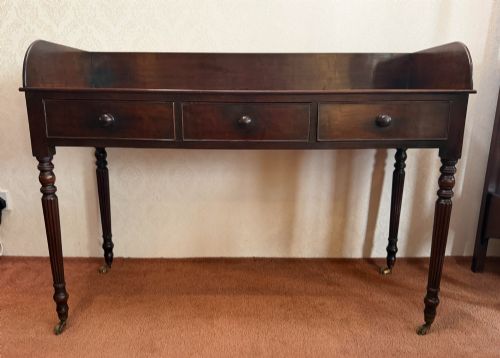
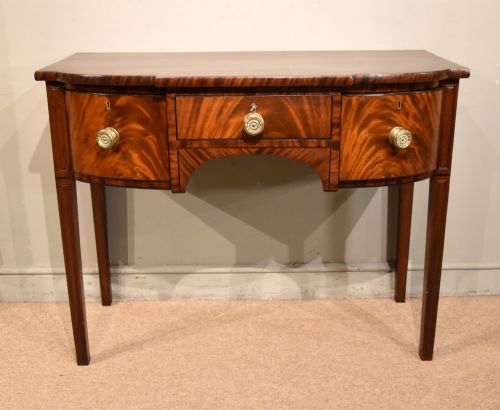
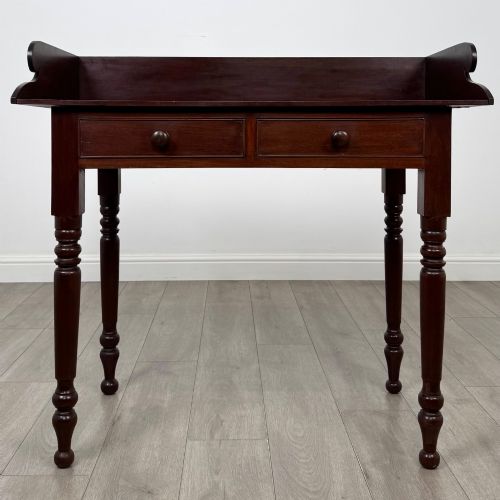
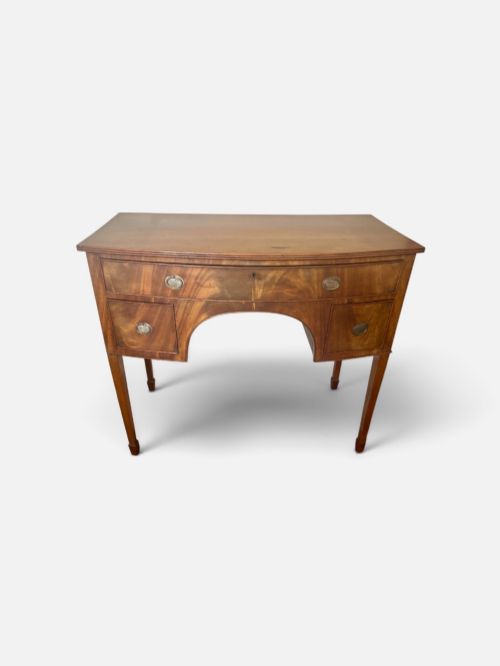
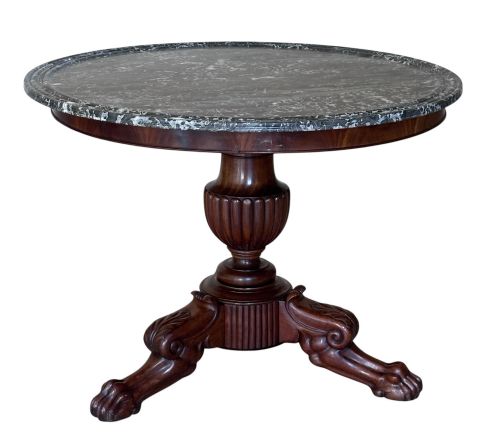
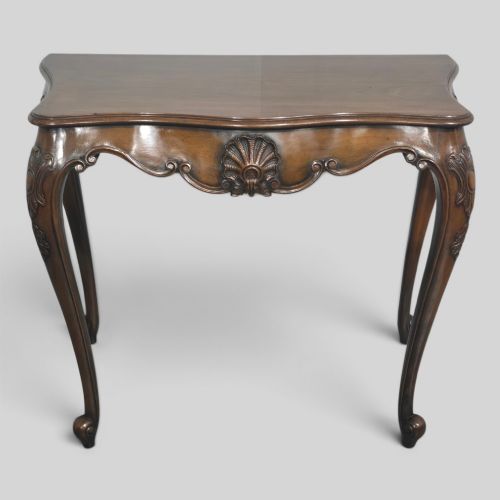
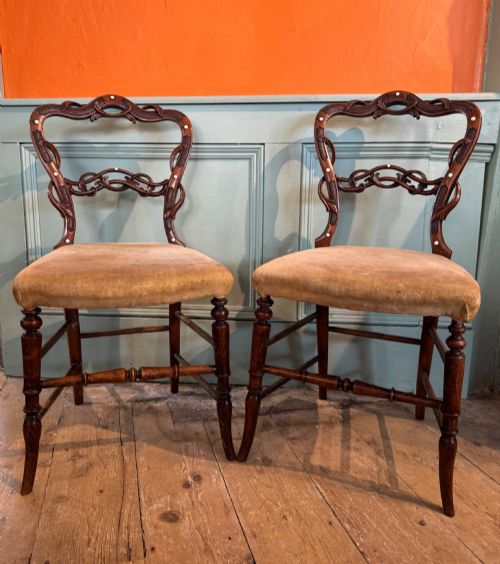

Vintage Mahogany Hall Table
A vintage mahogany hall table brings compact form and rich timber grain to a narrow space, offering a functional surface rooted in centuries of cabinet making.
Vintage Mahogany Hall Table
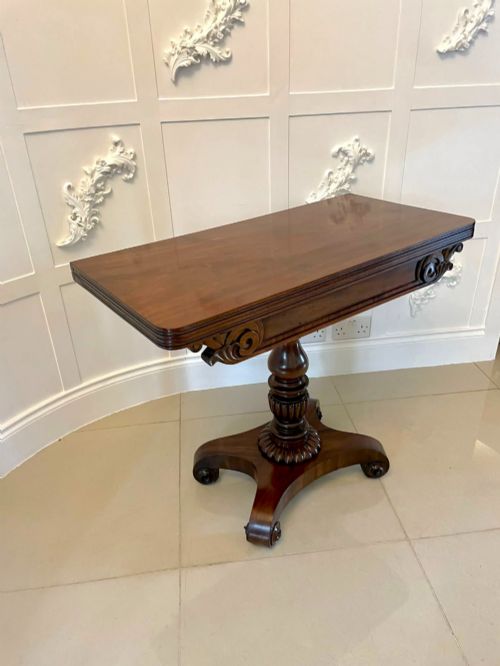
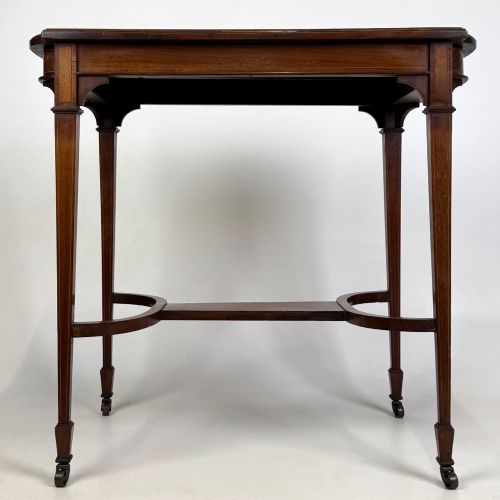
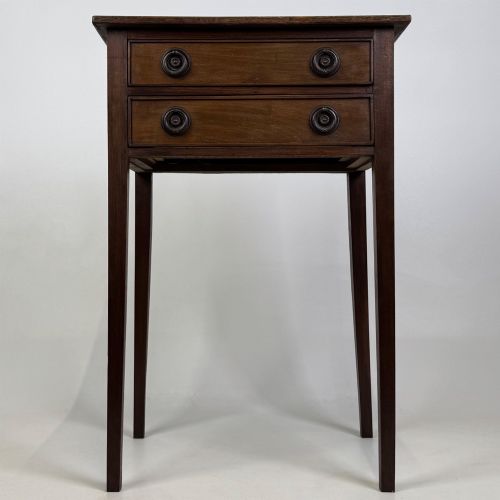
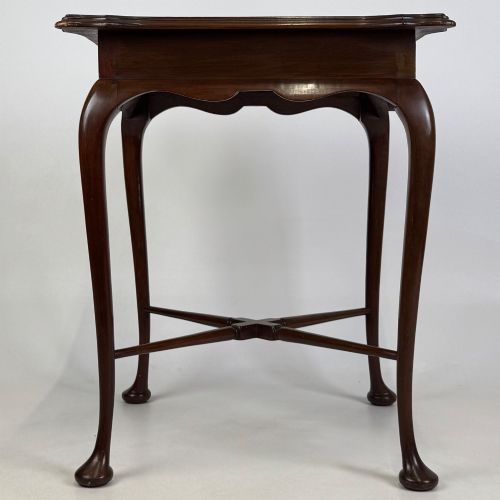
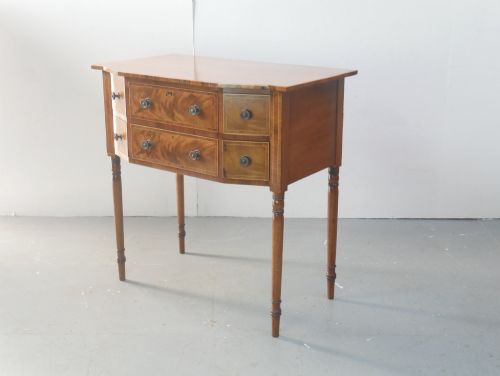
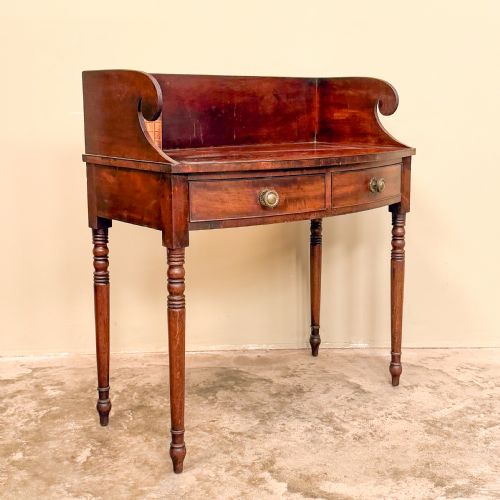
A vintage mahogany hall table encompasses slender console, side, and serving forms designed primarily for entryways and narrow passages. These pieces span periods from the nineteenth century through the Edwardian era and the 1930s, reflecting changing domestic requirements.
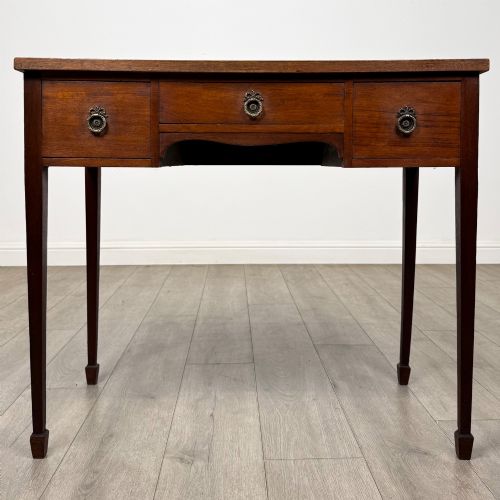
The most common examples on this page are Edwardian console and side tables, frequently incorporating boxwood or satinwood inlay, alongside nineteenth-century Georgian and Regency design variants. Such forms prioritise a shallow footprint to sit flush against a hallway wall.
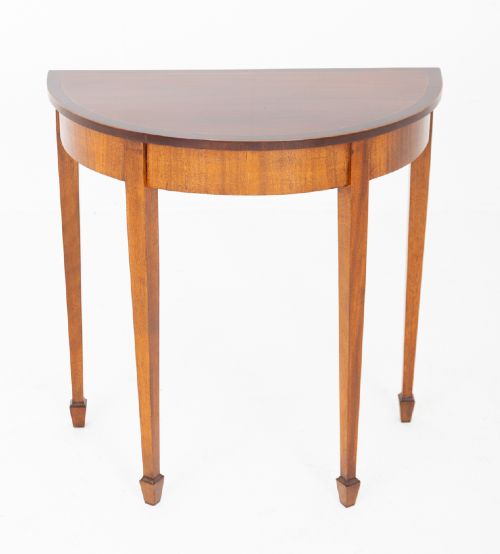
Makers and workshops adapted these tables into various configurations including demi-lune shapes, bow fronts, and occasional writing surfaces. Buyers encounter both plain timber grains and detailed marquetry work across these historical periods.
Materials and construction methods
Construction relies heavily on solid mahogany and flame mahogany veneers applied to secondary woods, providing the characteristic deep red-brown colour and figured grain. Cabinet makers utilised contrasting timbers such as boxwood and satinwood for delicate line inlay and stringing.
Hardware additions commonly feature cast brass handles, key escutcheons, and occasional military campaign mounts. Selected surfaces incorporate inset leather writing panels or polished marble tops supported by timber frameworks.
Vintage Mahogany Hall Table Retail Price Guide 2026
Typical asking prices for vintage mahogany hall table among the pieces listed under this phrase on Sellingantiques today, from the lower quarter to the upper quarter. They describe what is for sale here now, not the wider market.
Listings span multiple eras including the Georgian period, Regency, Victorian, Edwardian, and the 1930s, utilising materials like brass, marble, and leather alongside solid mahogany.
Factors of standard and construction merit
Quality rests on the selection of the mahogany veneer, where rich flame figuring and balanced grain patterns distinguish finer pieces from plain timber stocks. The crispness of inlaid stringing and the precision of joinery at the corners reveal the skill of the original workshop.
Structural integrity depends on the retention of original brass hardware, stable timber movement across the top boards, and the condition of any integrated leather or marble inserts. Tables that maintain their untouched surface patination demonstrate superior preservation.
Walker and Hall·Andrew Thomson and Sons
The Vintage Mahogany Hall Table Glossary
- Demi-lune
- A half-moon shape used for console tables designed to stand flat against a wall. This profile saves floor space in narrow hallways.
- Inlay
- A technique where contrasting materials such as boxwood or satinwood are embedded into the mahogany surface to create decorative patterns. It defines much of the Edwardian output.
- Console table
- A table fixed to a wall or standing on slender legs, built specifically for narrow rooms like corridors and reception halls. These forms rarely exceed modest depths.
- Flame mahogany
- A veneer cut from the fork of the mahogany tree, producing a distinctive flickering flame-like grain pattern. It signals higher status furniture.
- Serpentine
- A gently undulating curved front line found on certain console and side tables. This shape adds visual movement to the piece.
Vintage Mahogany Hall Table: Frequently Asked Questions
What is a vintage mahogany hall table used for?
These tables provide a narrow surface in entrance halls and corridors for holding keys, correspondence, and decorative objects such as lamps or small clocks.
Their shallow depth ensures they do not obstruct passageways while offering functional tabletop space in compact domestic areas.
How do I identify an Edwardian mahogany hall table?
Edwardian examples typically date from around 1900 to 1910 and often feature light wood stringing, satinwood inlay, or tapered spade feet.
They display lighter proportions compared to heavier Victorian counterparts, reflecting changing interior tastes at the turn of the century.
Will a console table fit in a narrow hallway?
Console and demi-lune tables are specifically constructed with shallow depths to accommodate restricted floor spaces in entrance passages and hallways.
Many designs sit flush against the wall, making them suitable for narrow layouts where standard tables would cause an obstruction.
How do I care for a mahogany table surface?
Maintenance requires regular dusting with a soft, dry cloth and occasional application of traditional beeswax to nourish the timber grain and preserve the polish.
Direct sunlight and placement near heat sources should be avoided to prevent the mahogany veneer from drying out or splitting.