





Vintage Mahogany Corner Unit
A vintage mahogany corner unit brings forgotten angles to life, offering both structured storage and display space.
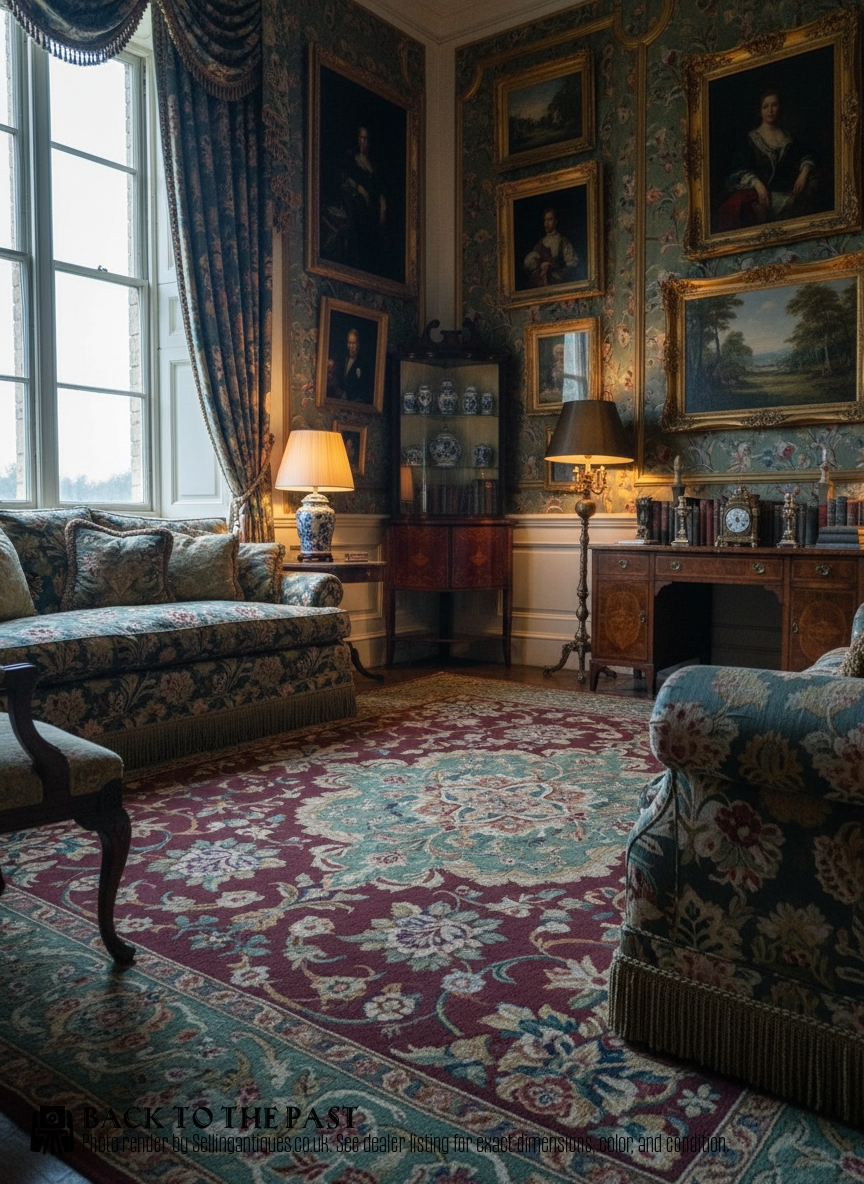
Vintage Mahogany Corner Unit
A vintage mahogany corner unit serves to utilise neglected domestic space, appearing primarily as hanging or floor-standing cupboards, display cabinets, and tiered whatnots. These pieces emerge across several periods, most notably through Edwardian interpretations and Georgian designs.
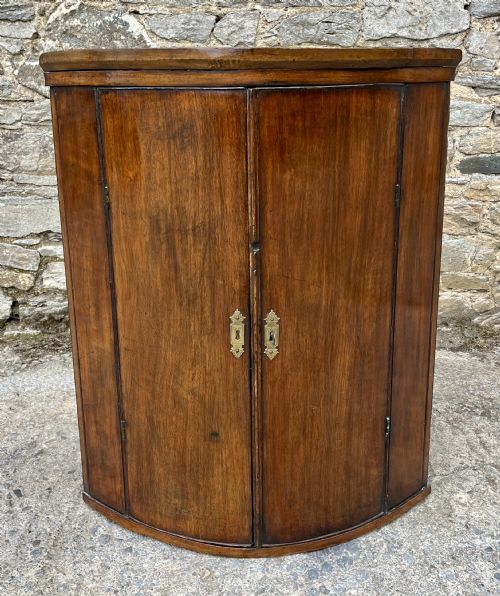
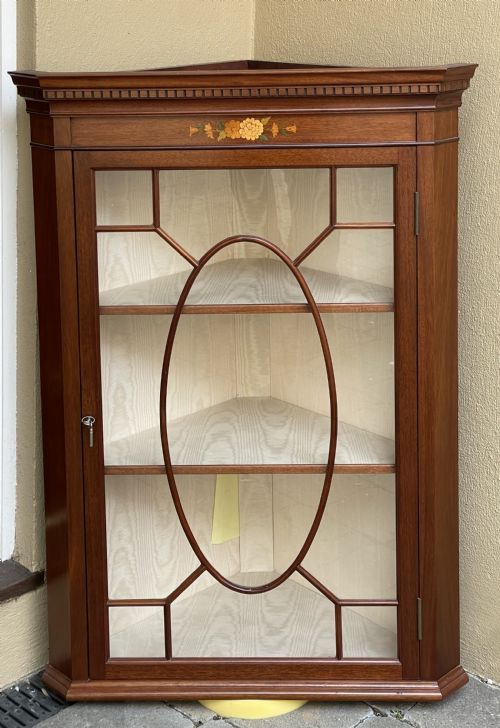
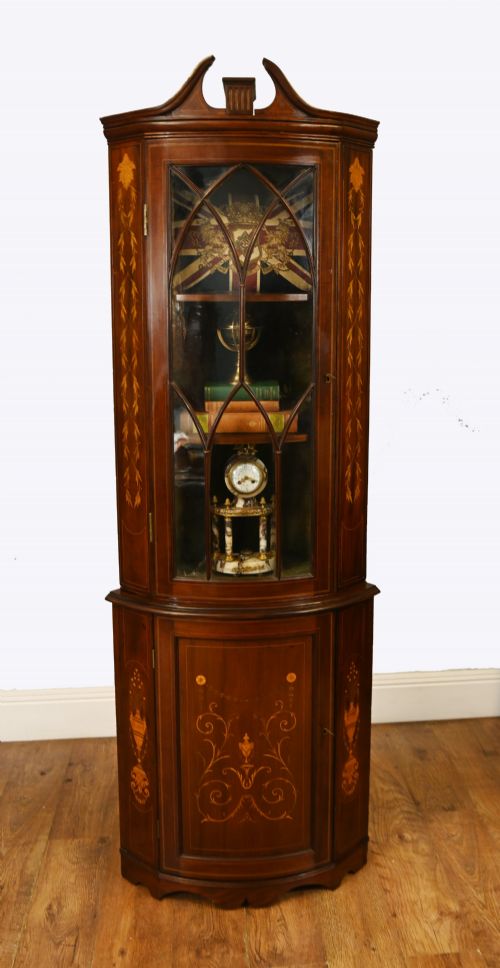
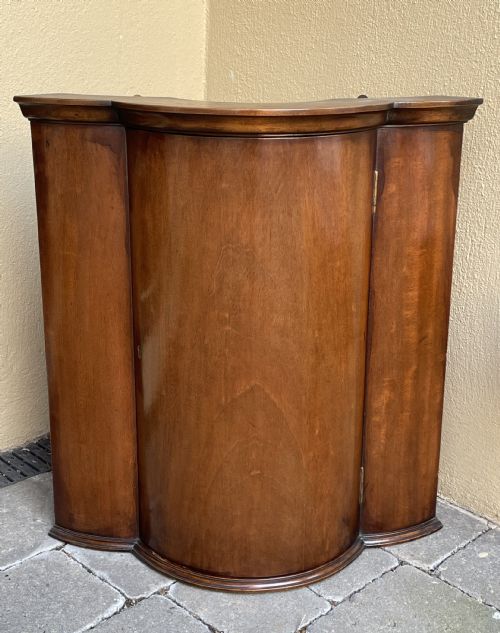
The forms range from wall-mounted corner cupboards with single doors to grand double-height standing cabinets and open multi-tiered shelves. Buyers encounter hanging models designed to save floor space alongside substantial standing pieces fitted with glazed or solid timber doors.
Makers drew on historic aesthetics, resulting in Georgian originals sitting alongside later Sheraton Revival and Georgian Revival copies. The enduring appeal lies in the timber's warmth and the clever utilisation of room geometry.
Materials and construction
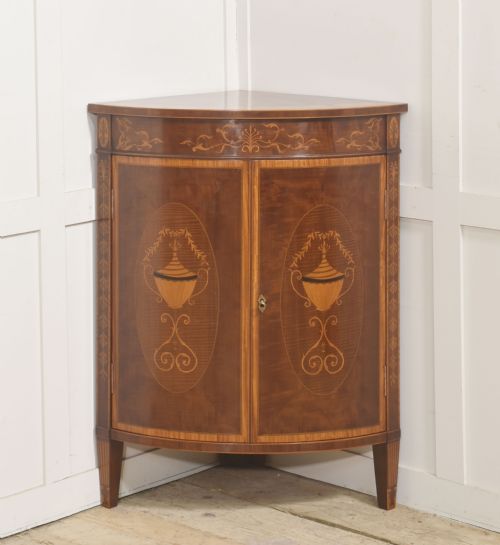
Cabinetmakers relied on solid mahogany and mahogany veneers, frequently enhancing the primary timber with contrasting details in boxwood and satinwood inlay. Brass hardware, including hinges and escutcheons, provides functional and decorative accents.
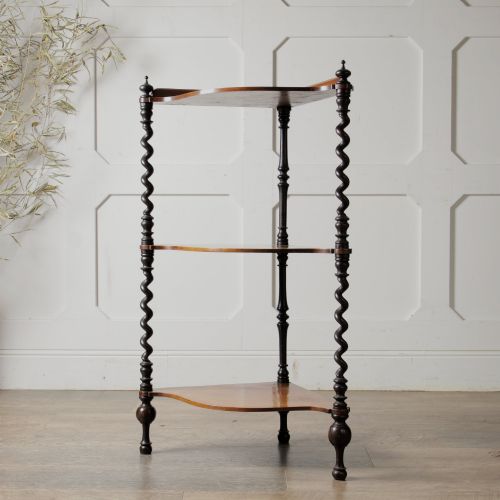
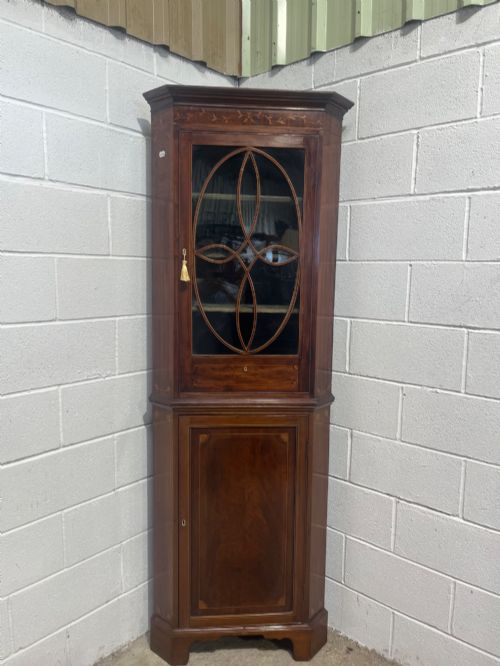
Structural variety encompasses turned barley twist columns on Victorian whatnots, delicate marquetry panels on Edwardian display cabinets, and glass panelling for visibility in corner vitrines. Oak sometimes appears alongside mahogany in regional vernacular pieces.
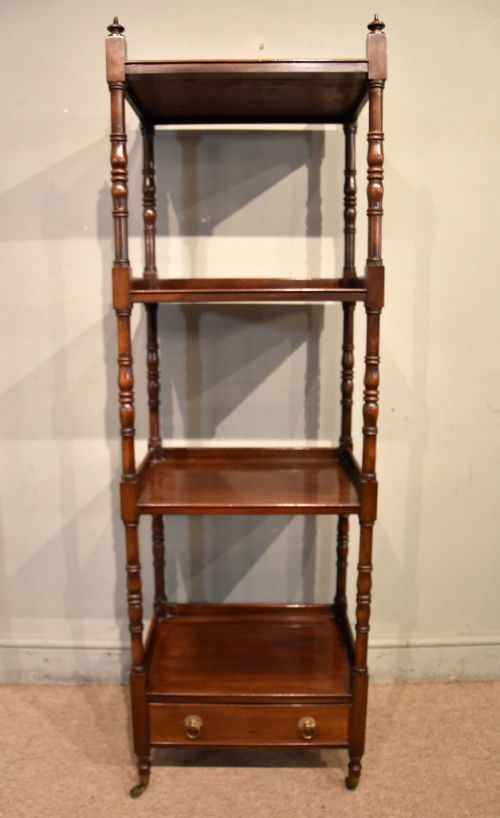
Object configurations range from hanging cupboards and open bookcases to multi-tiered whatnots, étagères, and standing double-height display units.
Assessing quality
Quality rests on the crispness of the inlay work, the selection of timber figures, and the integrity of the structural joinery. Finer examples display meticulous satinwood and boxwood detailing that remains flush with the surrounding mahogany surface.
Proportion and execution distinguish standard production items from superior pieces. Well-executed glazing bars, balanced door panels, and refined architectural cornices elevate a cabinet above utility status.
Edwards And Roberts
The Vintage Mahogany Corner Unit Glossary
- Whatnot
- A moveable set of open shelves used for displaying ornaments and books. These tier-based units appear in various heights throughout the nineteenth century.
- Marquetry
- Decorative veneer work forming pictures or geometric patterns using various woods. Craftsmen cut contrasting timbers like satinwood and boxwood to fit flush into the mahogany ground.
- Bow front
- A convex curved front edge to a cabinet or cupboard. This shape softens the angular geometry typical of corner furniture.
- Serpentine
- A gently undulating curved front line featuring a convex centre flanked by concave sides. This contour requires advanced woodworking skill to execute properly.
- Sheraton Revival
- A late nineteenth and early twentieth century design movement inspired by late eighteenth century neoclassical furniture. Pieces from this revival often feature delicate inlay and light proportions.
Vintage Mahogany Corner Unit: Frequently Asked Questions
What is a corner whatnot?
A corner whatnot is a multi-tiered open shelf unit designed to fit into the junction of two walls. They provide vertical display space for small decorative items without enclosing them behind doors.
These pieces gained popularity in the nineteenth century and vary from simple four-tier structures to more ornate designs incorporating turned supports.
Are these cabinets hung on walls or placed on the floor?
Both options exist within this category, divided between hanging cupboards and floor-standing units. Hanging versions attach directly to wall studs to utilise upper room space.
Floor-standing variants range from single-door cupboards to grand double-height display cabinets and pieces raised on dedicated stands.
How do I distinguish Georgian from Edwardian pieces?
Georgian pieces date from the eighteenth century or reflect that era's stricter classical proportions and solid construction. They often rely on clean architectural lines and timber grain rather than heavy surface decoration.
Edwardian interpretations, particularly those in the Sheraton Revival style, frequently incorporate lighter satinwood and boxwood inlay, marquetry, and slender framing dating around nineteen hundred.