



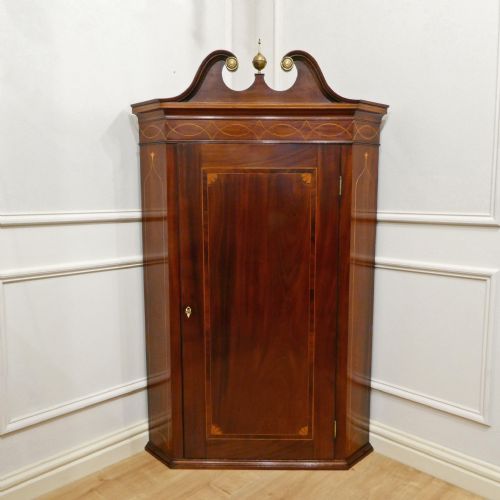
Vintage Mahogany Corner Cabinet
A vintage mahogany corner cabinet turns unused room junctions into focal points while hiding clutter behind timber doors.
Vintage Mahogany Corner Cabinet
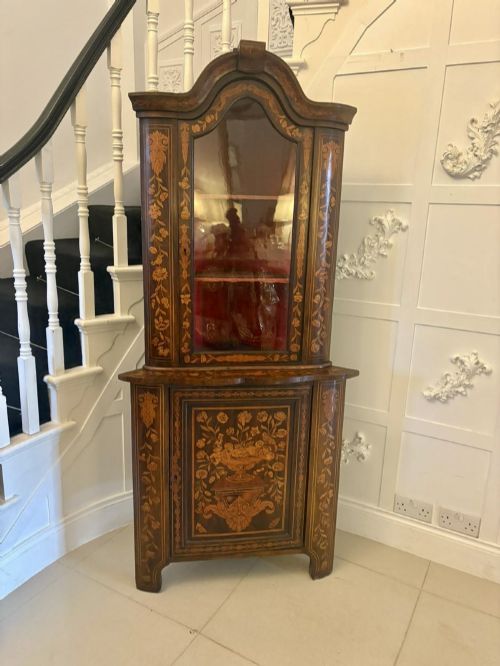
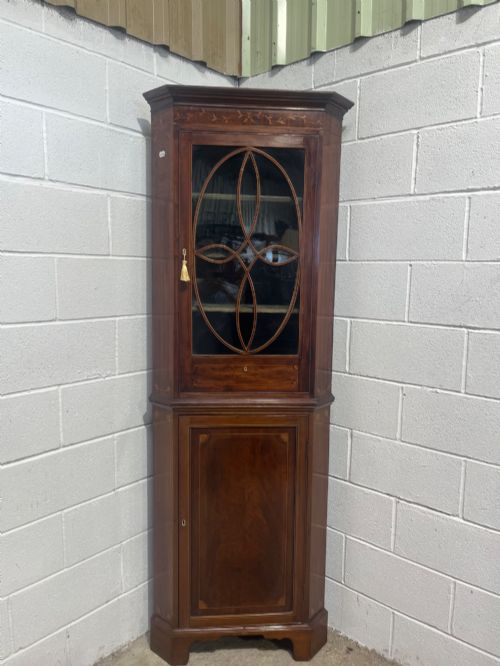
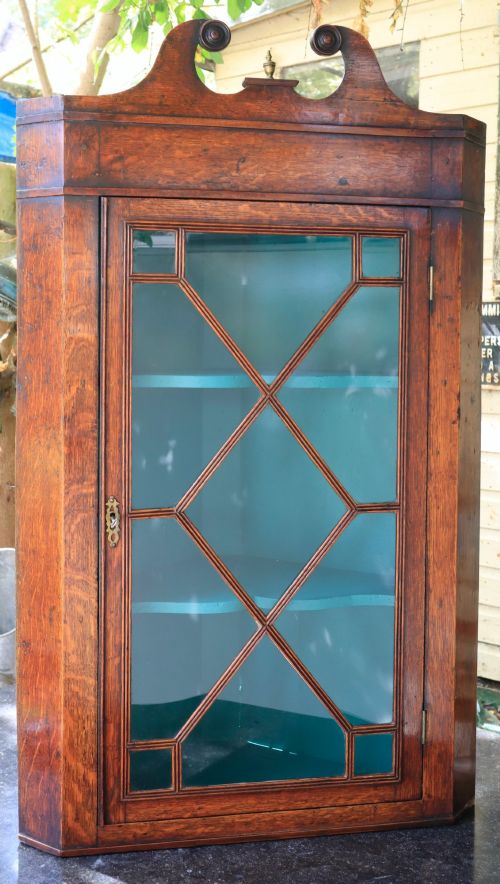
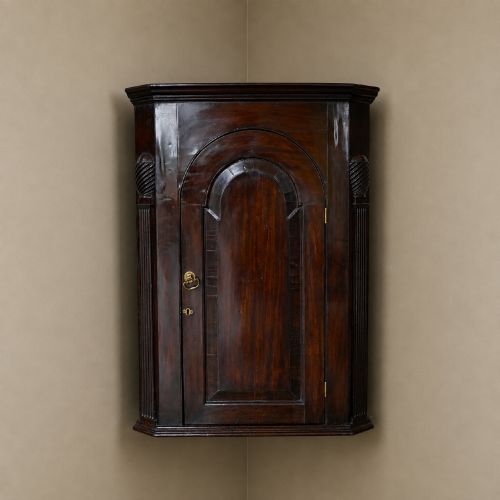
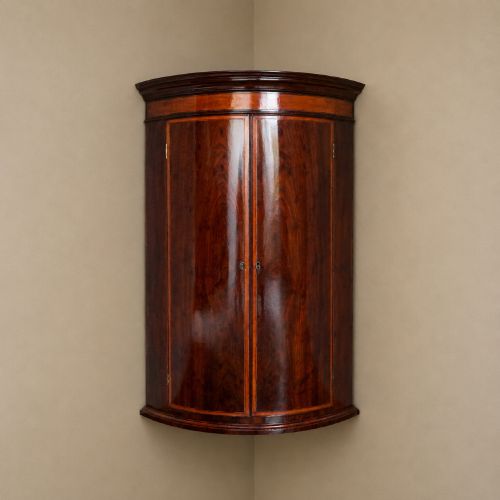
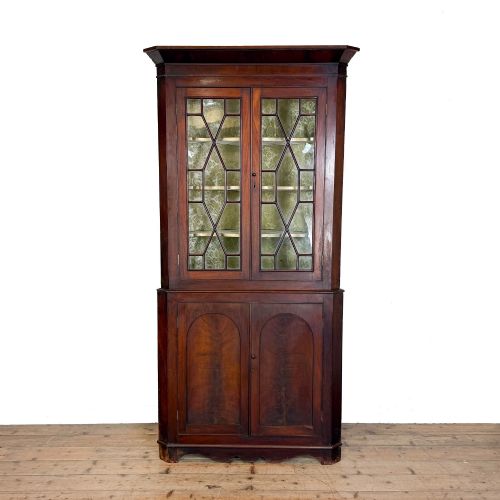
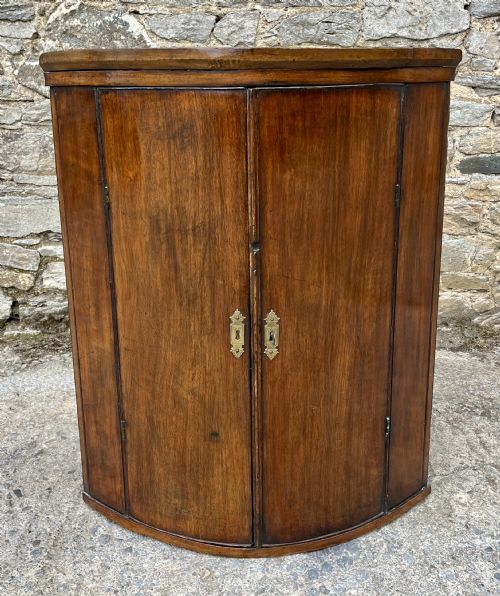
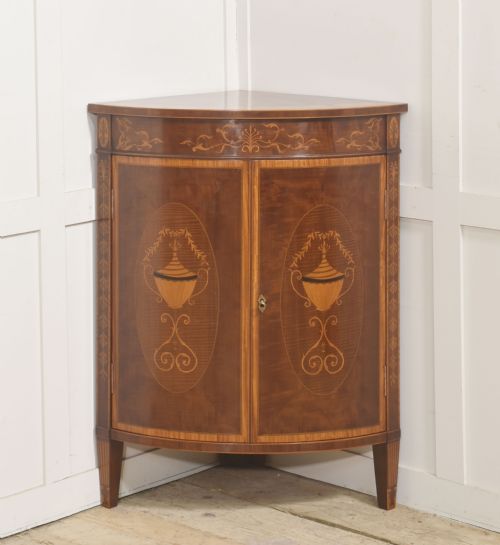
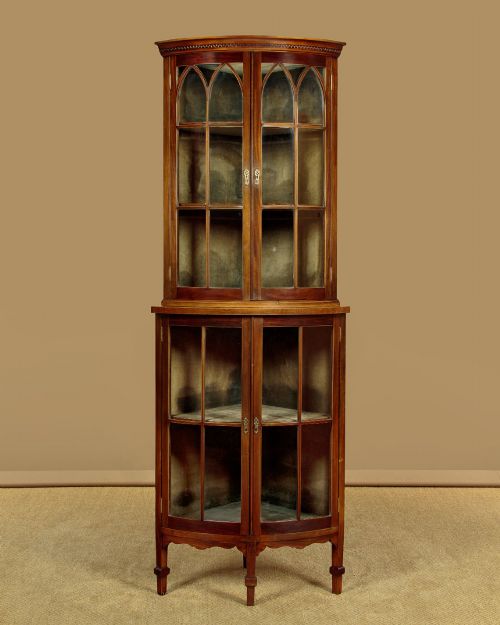
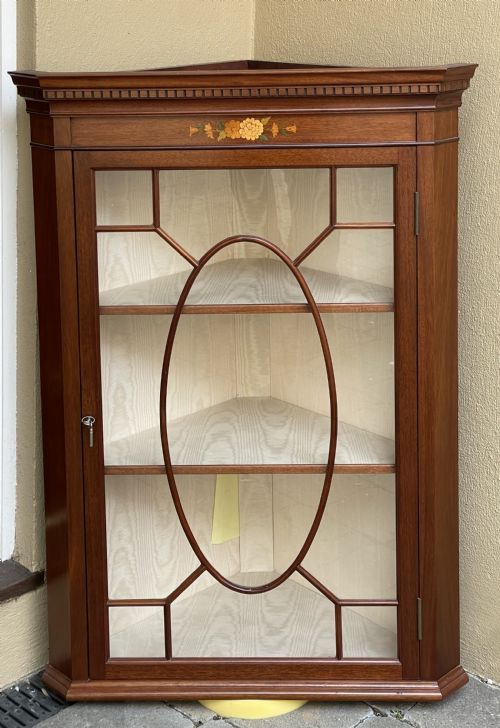
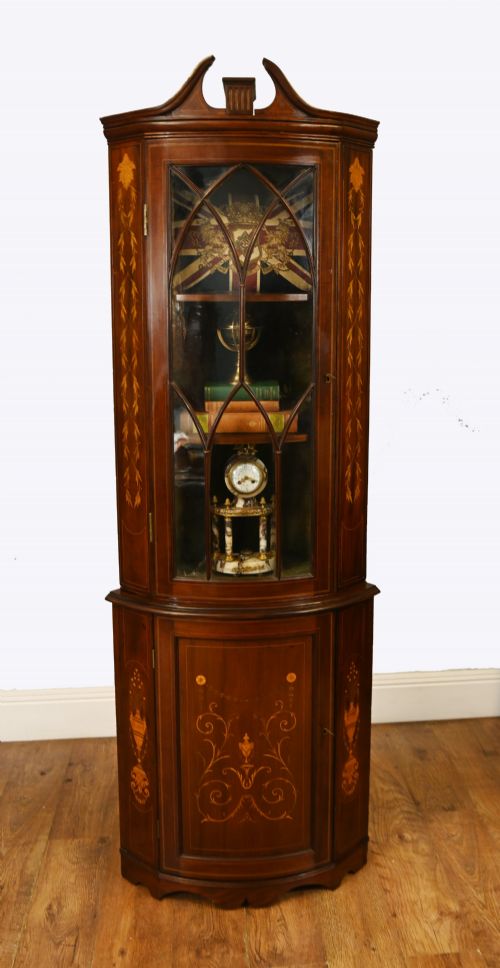
When you search for a vintage mahogany corner cabinet, you encounter hanging wall cupboards, floor-standing units, and glazed display furniture originating from the eighteenth century through to the Edwardian period and mid twentieth century. These pieces utilise the dead space of a room angle, shaped with bow fronts, flat sides, or double doors.
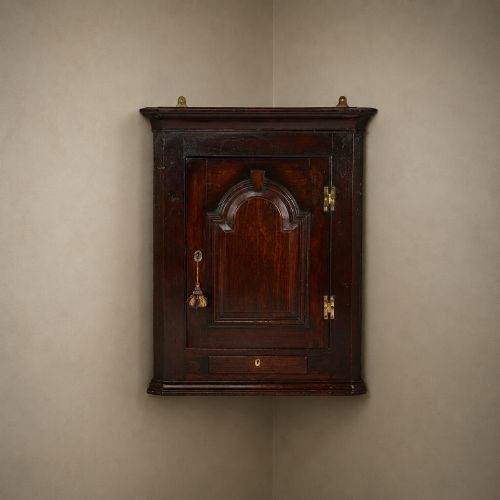
The most common examples on this page date from the Georgian and Edwardian eras, constructed in rich timber and often finished with satinwood inlay or brass hardware. You will find both single door hanging cupboards designed for small rooms and taller floor-standing architectural pieces intended for dining rooms and parlours.
How they were made
Cabinet makers built these units primarily using solid and veneered mahogany, sometimes enriched with satinwood inlay, marquetry, and brass handles or escutcheons. Oak frequently appears in secondary timbers for drawer linings and internal framing.
Glazed doors utilise timber framing to hold individual glass panes, while hanging versions incorporate sturdy brass wall brackets to support the heavy timber frame.
Listings span Georgian, Victorian, and Edwardian periods, featuring materials such as mahogany, brass, glass, satinwood inlay, and oak.
What varies in quality
The distinction between standard and superior pieces rests on the choice of timber figure, such as plum pudding mahogany, and the precision of the cabinet work in the mitred joints and door framing. Finer examples display meticulous satinwood inlay and original brass fittings.
Proportion and architectural presence separate ordinary storage cupboards from masterwork display cabinets, where the internal shelving and cornice moulding receive careful attention.
The Vintage Mahogany Corner Cabinet Glossary
- Bow front
- A convex curved cabinet front that projects outward from the corner angles. This curved joinery requires advanced woodworking skill.
- Marquetry
- Decorative patterns created by fitting different wood veneers together into timber panels. Craftsmen utilise this technique for floral and geometric motifs.
- Satinwood inlay
- Contrasting pale timber inserted into the darker mahogany surface in thin lines or shapes. It frames the panels of Edwardian and Georgian furniture.
- Hanging cupboard
- A wall-mounted cabinet secured directly to room studs through internal brackets. These units save floor space in compact rooms.
- Plum pudding mahogany
- A dense wood grain variety featuring circular growth marks resembling festive pudding. Cabinet makers reserved this highly figured timber for select pieces.
Vintage Mahogany Corner Cabinet: Frequently Asked Questions
How do I hang a wall cabinet safely?
Wall-hanging cupboards require secure fixings into structural timber studs or masonry using appropriate heavy-duty screws through the internal backboards.
Because solid mahogany and glass doors carry substantial weight, professional installation prevents any strain on the antique joints.
What is the difference between Georgian and Edwardian pieces?
Georgian cabinets dating from the eighteenth century tend to feature robust proportions, simple brass H-hinges, and deep polished timber surfaces.
Edwardian revivals from around nineteen hundred often incorporate lighter satinwood inlay, marquetry, and delicate glazed display doors.
Can these cabinets fit modern room corners?
Most standard room corners accommodate these units easily because ninety-degree angles have remained consistent in architecture for centuries.
Measuring the diagonal depth and wall clearance ensures the cornice and bow front clear any nearby skirting boards or light switches.
How do I care for antique mahogany surfaces?
Maintain the timber by dusting with a dry lint-free cloth and applying occasional traditional beeswax rather than modern silicone sprays.
Keep cabinets away from direct radiator heat and strong sunlight to prevent the mahogany finish from drying out or fading.