


Vintage Mahogany Canterbury
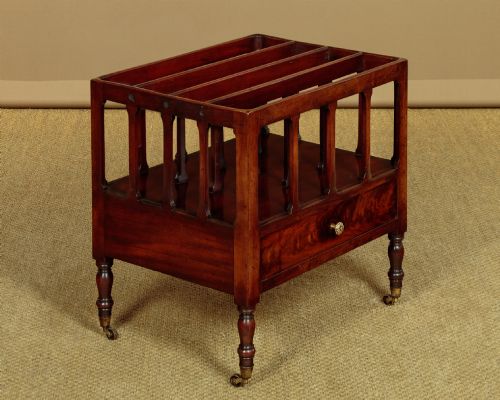
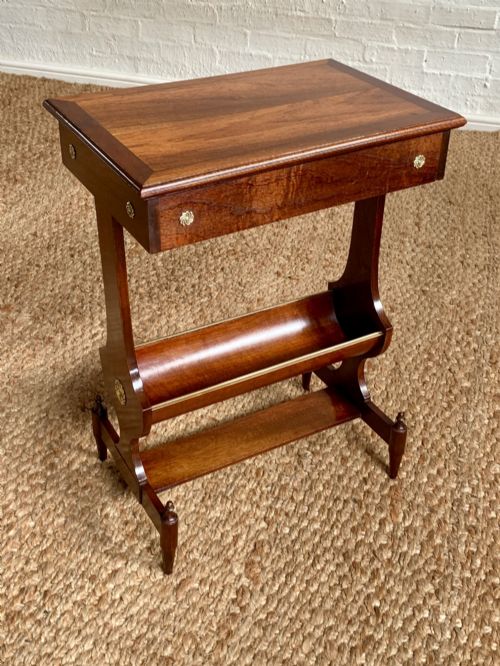
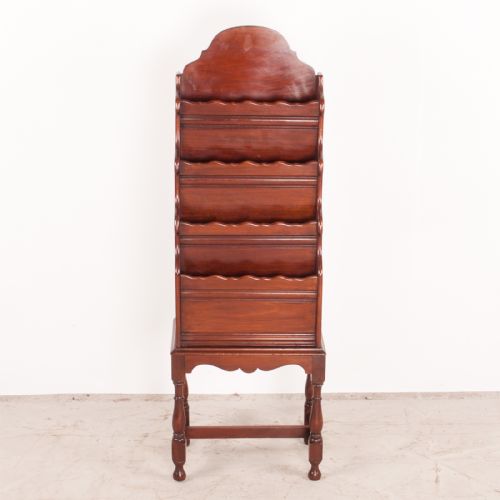
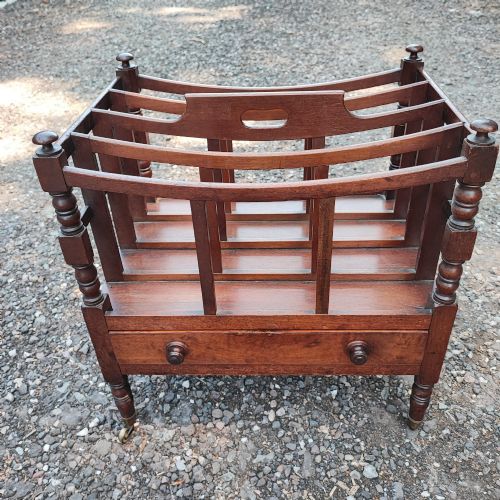
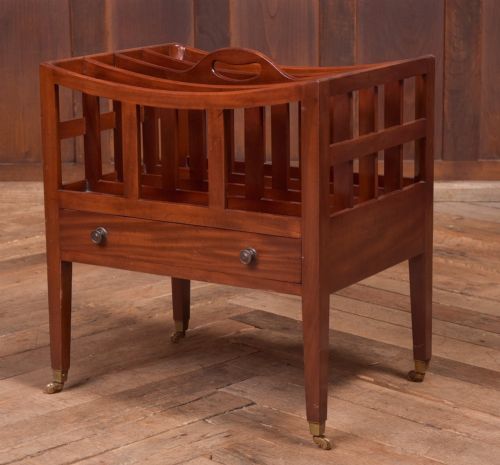
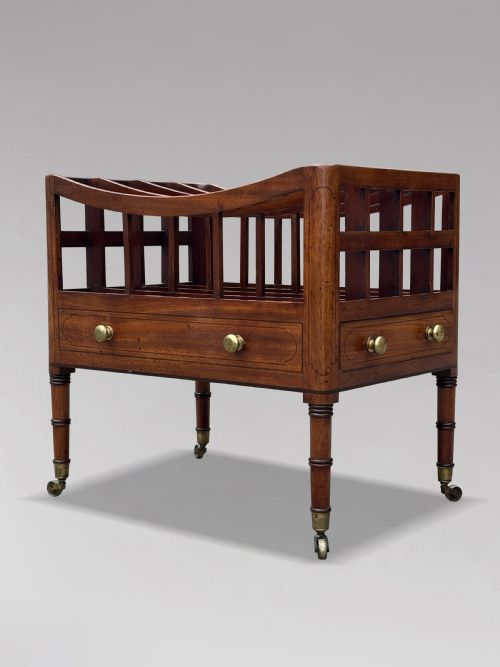
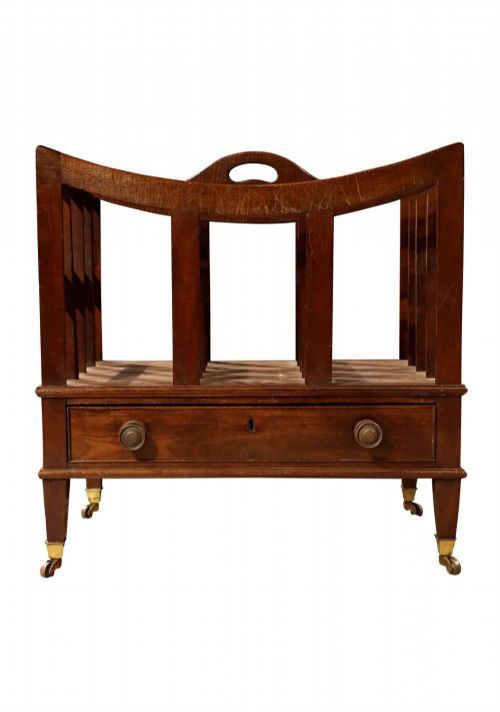
These vintage mahogany canterbury pieces are classic multi-division stands built to hold sheets of music, books, and journals.
Vintage Mahogany Canterbury
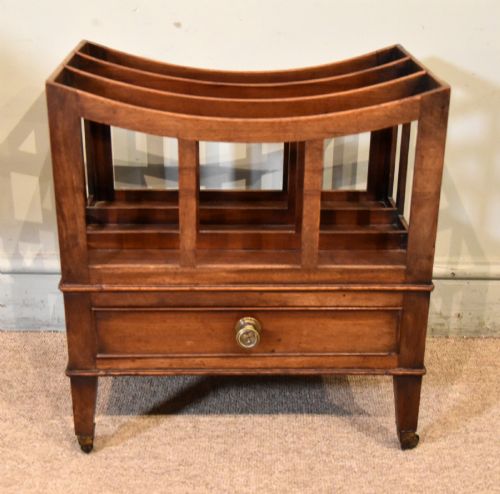
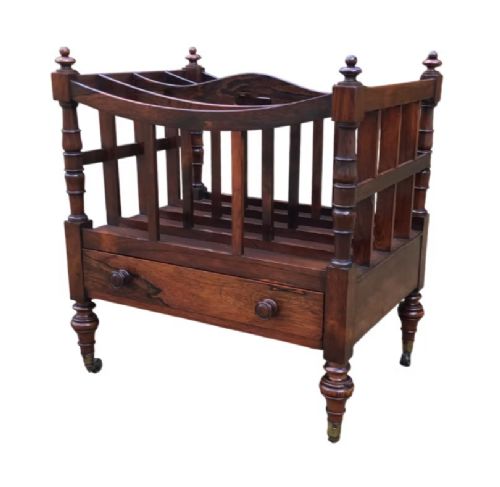
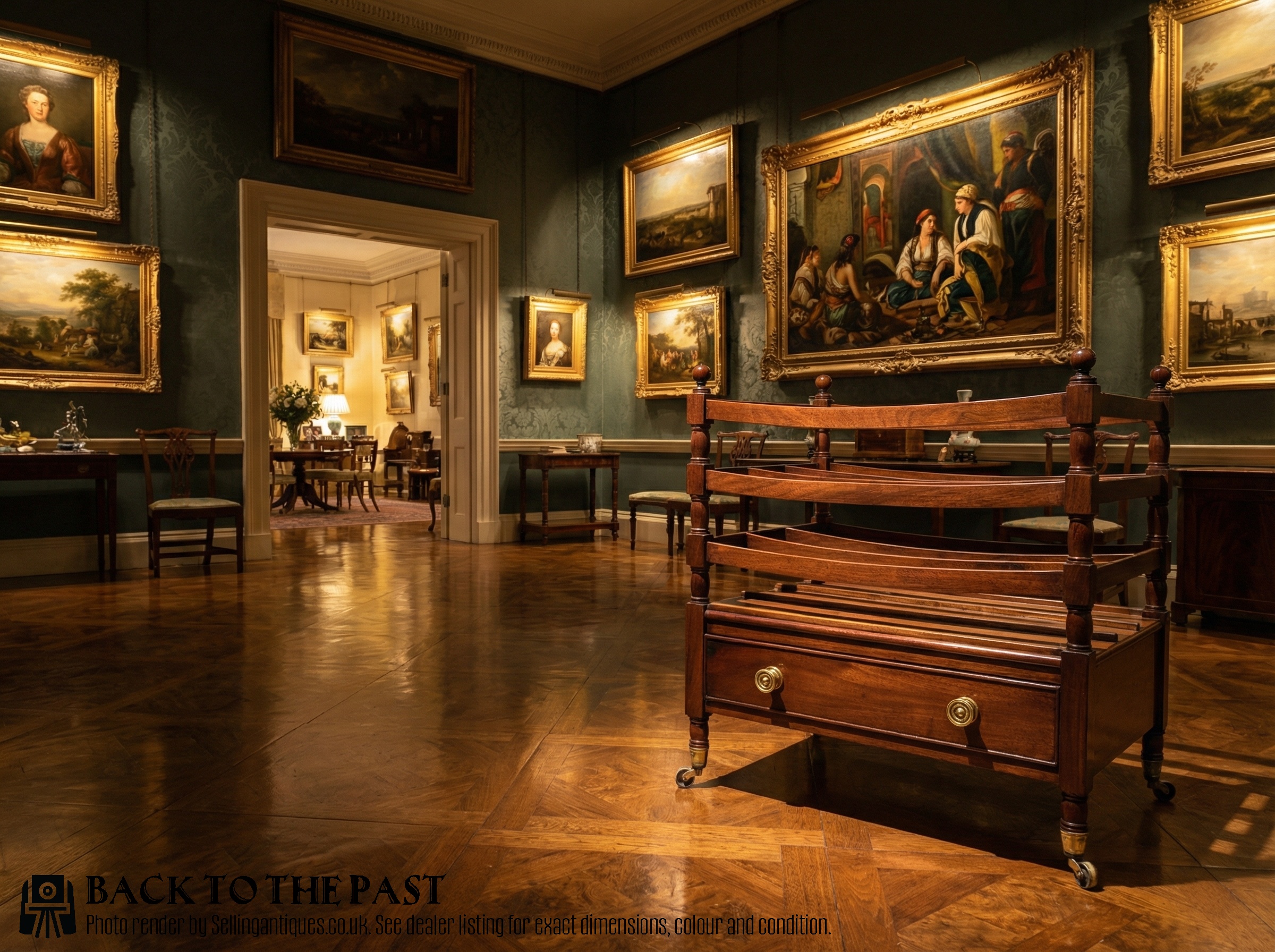
When you search for a vintage mahogany canterbury, you encounter low stands featuring slatted or partitioned sections designed specifically for holding folios, sheet music, and periodicals. The form frequently includes a low drawer set beneath the divisions and rests upon short legs fitted with castors for mobility around a drawing room.
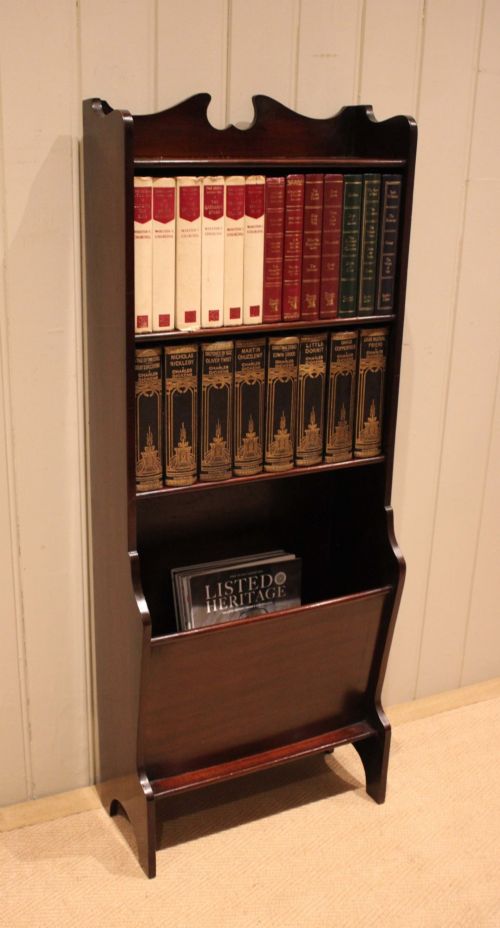
The pieces appearing on this page span several distinct eras, stretching from George III and Regency periods through the Victorian and Edwardian decades. Alongside traditional four-division music stands, you find boat-shaped variations, multi-tier racks, and related music cabinets sharing the same timber and functional purpose.
Construction Materials and Methods
Cabinet makers relied primarily on rich mahogany and dense Cuban mahogany, frequently enhanced by contrasting satinwood inlay or brass fittings. These timbers provided the structural strength required for slender vertical partitions and turned legs.
Joinery methods involved sturdy framing for the slatted divisions and dovetailed joints for the integrated drawers. Many examples incorporated castors of brass to allow the freestanding stand to move easily across carpets.
Listings span the 18th Century, Regency, Georgian, Victorian, Edwardian, and 1920 periods, constructed in mahogany, Cuban mahogany, rosewood, brass, and glass.
Judging Quality in Design and Timber
The distinction between standard examples and exceptional pieces rests in the choice of timber and the refinement of the turnings. Finer versions exhibit highly figured mahogany grain, crisp satinwood stringing, and well-cast brass hardware rather than plain secondary woods.
Proportion and structural harmony also dictate distinction, where grand scale or unusual boat-shaped profiles demonstrate superior craftsmanship from workshops adhering to Regency or Georgian design canons.
Gillow’s·Charles Dowsett Of Canterbury·Liberty
The Vintage Mahogany Canterbury Glossary
- Canterbury
- A low stand with upright partitions used originally for holding sheet music or folios. The name derives from an archbishop who reportedly ordered the first such stand.
- Folio
- A large sheet of paper folded once, or a book of similar large format. These stands were built specifically to accommodate such volumes.
- Castor
- A small wheel mounted on a swivel attached to the base of a leg. They allowed heavy wooden stands to roll easily across floors.
- Stringing
- A narrow inlay of contrasting wood used to outline panels or drawers. It adds subtle linear decoration to plain mahogany surfaces.
- Boat-shaped
- A curved profile resembling the hull of a vessel, seen in particular Regency-era racks. This sweeping contour softens the strict geometry of the partitions.
Vintage Mahogany Canterbury: Frequently Asked Questions
What was a canterbury originally used for?
These stands were designed to hold sheet music, unbound books, and folios near a piano or seating area. Victorians and Georgians utilised them to keep reading materials tidy in drawing rooms.
Over time, owners adapted them to hold modern newspapers and magazines while retaining their traditional placement beside armchairs and sofas.
How do I date a mahogany canterbury?
Dating relies on observing the leg turnings, timber choice, and overall stylistic details like satinwood inlay or brass mounts. Regency and George III examples display sharper architectural lines and dense Cuban mahogany.
Edwardian and later iterations often show lighter construction or simpler slat profiles, reflecting the manufacturing shifts of the early twentieth century.
Are these stands sturdy enough for daily use?
Most examples are constructed from solid mahogany with framed divisions designed to bear the weight of heavy books and folios. Their robust timber frames remain functional for holding current periodicals.
Care should be taken when rolling older stands on their original castors, particularly across thick carpets or uneven floorboards.