
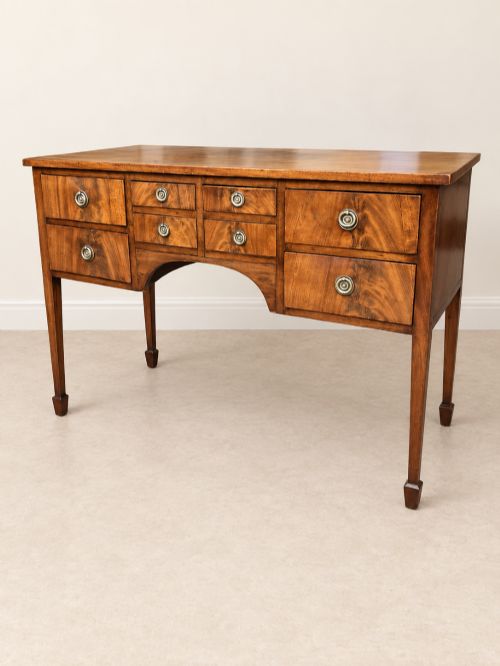
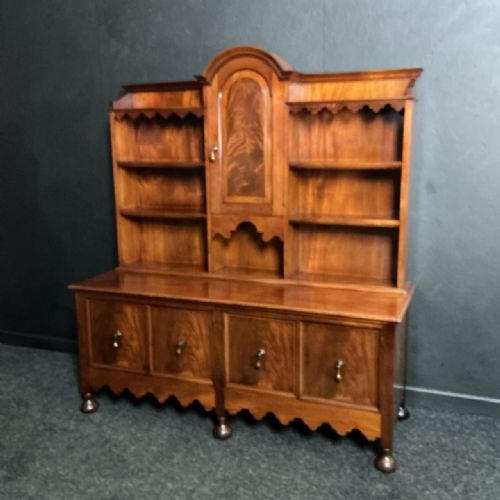
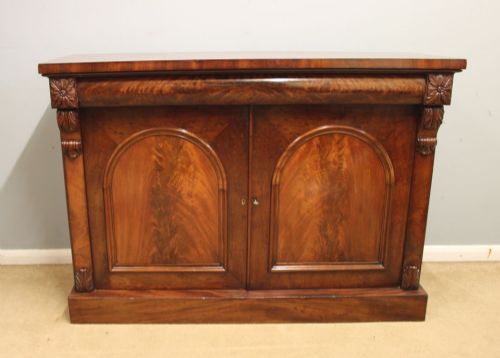
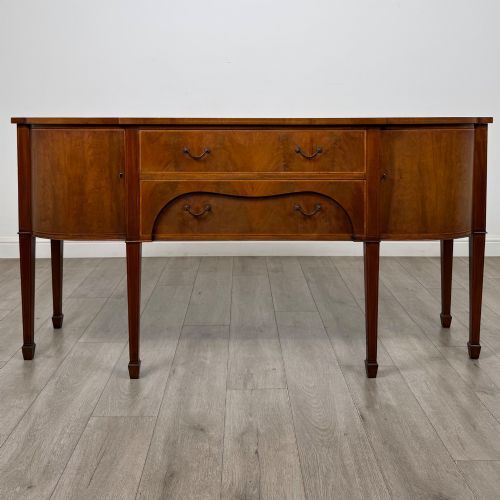
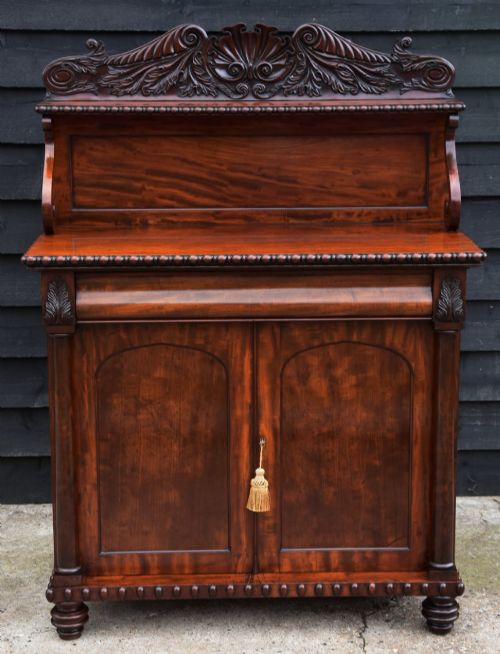
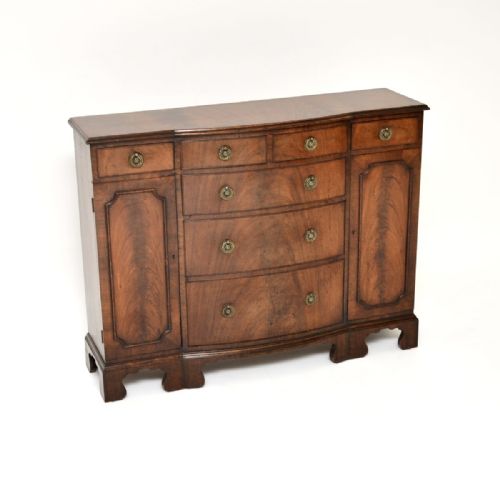
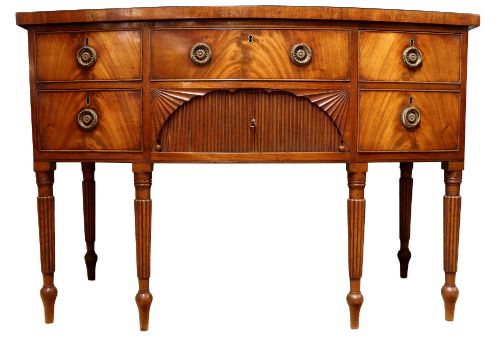
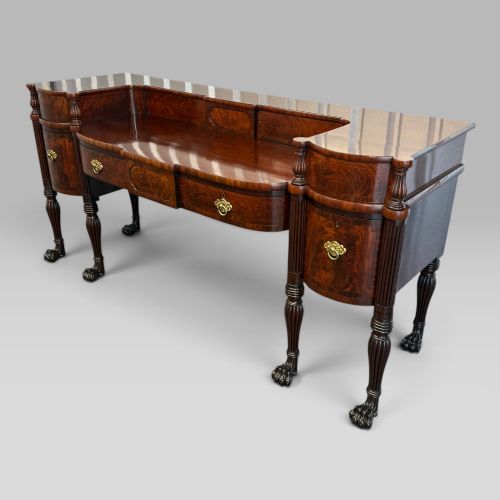
Vintage Mahogany Buffet Sideboard
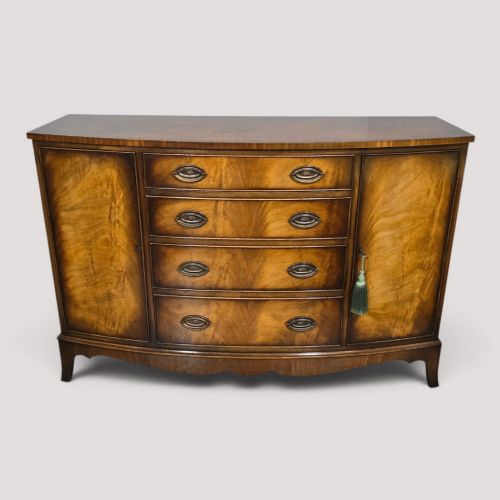
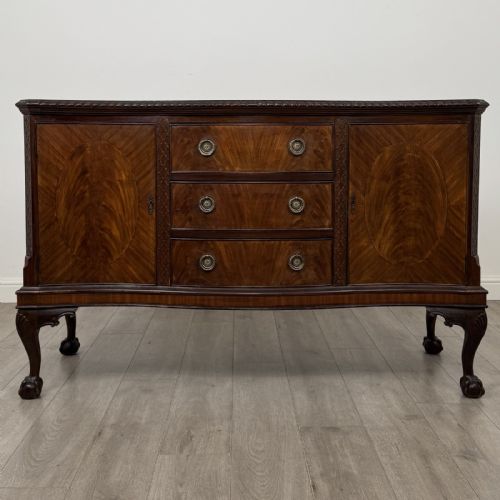
A vintage mahogany buffet sideboard grounds a dining room with rich grain and proportion, offering deep storage for silver and linen.
Vintage Mahogany Buffet Sideboard
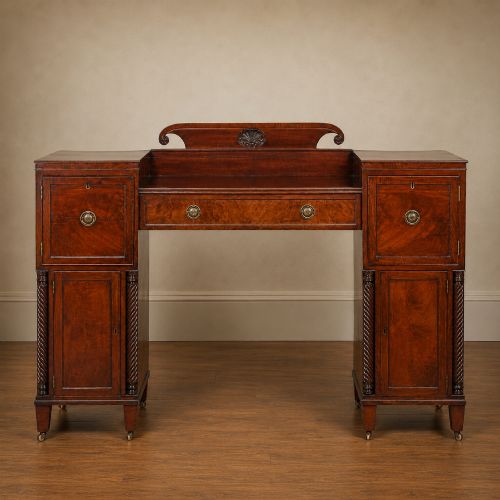
When searching for a vintage mahogany buffet sideboard, you encounter forms stretching from Georgian and Regency eras through the Victorian period and Edwardian decades. These pieces serve as dining room servers, console tables, and breakfront cabinets designed to hold tableware.
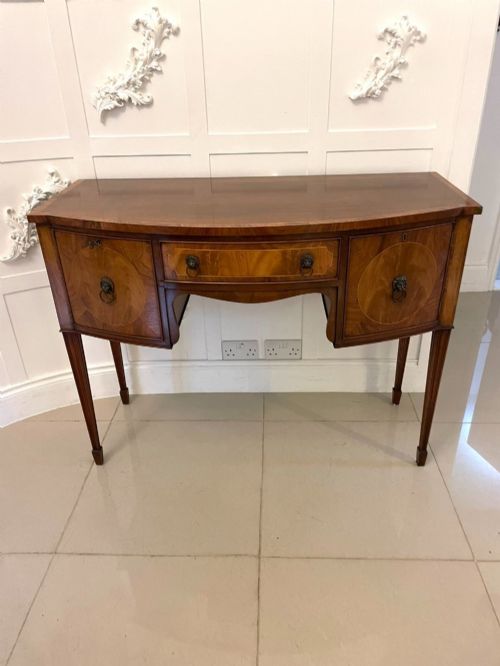
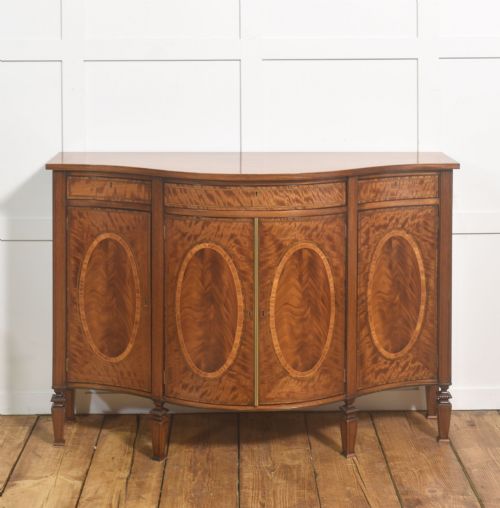
The most common examples on this page are bow-front and straight-front sideboards from the nineteenth and early twentieth centuries. Pieces range from grand pedestal designs to compact cabinets with two doors or mirrored backs.
Stylistic revivals appear frequently alongside genuine period pieces, particularly Sheraton Revival and Georgian Style interpretations from the Edwardian era and 1900. These later works adapt earlier proportions and decorative schemes for subsequent homes.
Construction and materials
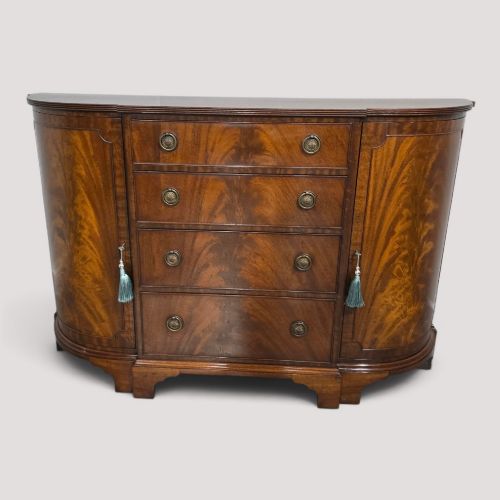
Makers built these pieces primarily from solid mahogany and mahogany veneers, frequently selecting figured flame mahogany and curl-mahogany to create striking visual movement on drawer fronts and cabinet doors. Contrasting stringing and banded borders in satinwood and boxwood define the edges.
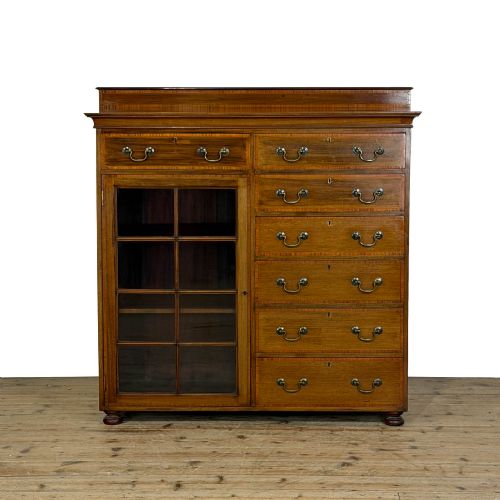
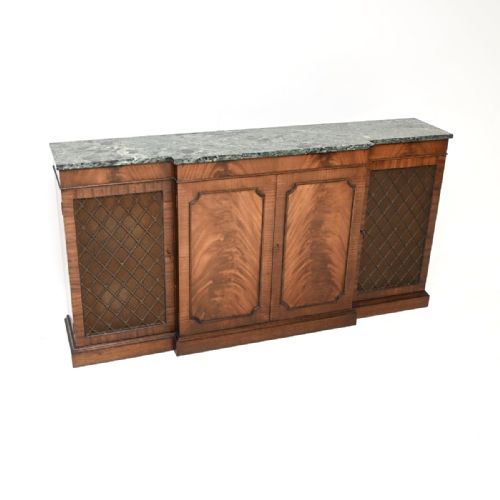
Hardware and structural accents rely heavily on brass for handles, gallery rails, and lion paw feet. Selected pieces incorporate white marble tops or glass panels within grill-front cupboard doors to vary the texture of the facade.
Listings span Georgian, Victorian, Edwardian, and Regency periods, utilising mahogany, satinwood, and marble.
Standards of craftsmanship
The distinction between ordinary and superior pieces rests upon timber selection and the precision of cabinetwork. Finer examples display symmetrical flame mahogany veneers matched carefully across multiple drawers and doors, ensuring the grain flows naturally.
Subtleties of hand-carved detail, such as crisp lion paw feet, delicate boxwood and satinwood inlay, and well-fitted original brass hardware, separate ambitious workshops from standard production.
M D Miller and Sons
The Vintage Mahogany Buffet Sideboard Glossary
- Bow front
- A cabinet front that curves outward in a convex sweep, popular in Regency and Sheraton designs. This shape softens the corners of a dining room.
- Flame mahogany
- A veneer cut from the fork of the mahogany tree where branches join the trunk, creating a flamelike pattern. Cabinetmakers placed these veneers centrally for maximum visual impact.
- Chiffonier
- A compact sideboard or low cabinet, often featuring a raised shelf or mirror back on the upper surface. These served for holding serving dishes and displaying glassware.
- Breakfront
- A piece of furniture where the central section projects forward from the flanking outer sections. This architectural arrangement creates depth and shadow across the facade.
- Inlay
- A technique where contrasting woods such as satinwood or boxwood are set into recesses flush with the mahogany surface. Geometric lines and classical motifs emerged through this method.
Vintage Mahogany Buffet Sideboard: Frequently Asked Questions
How do I identify a Regency period sideboard?
Regency pieces often display clean architectural lines, brass lion paw feet, and rich figured mahogany timbers dating from around 1810 to 1820. Makers of this era favoured bold grain patterns and restrained classical brass mounts.
Proportions tend to be robust yet balanced, frequently incorporating brass gallery rails on the upper surface for containing display items during service.
What is the difference between a sideboard and a buffet?
Sideboards traditionally functioned as servers for dining rooms with long flat tops and storage drawers for cutlery and linen. Buffets often incorporate enclosed cupboards and tiered shelving for displaying serving ware.
In practice, the terms overlap significantly across nineteenth and twentieth-century cabinetmaking.
How should I care for a mahogany sideboard?
Keep the wood away from direct heat sources and strong sunlight to prevent the mahogany finish and veneers from drying out or fading. Dust regularly with a soft cloth and apply quality beeswax periodically to nourish the grain.
Avoid silicone-based polishes which build up residue and dull the natural warmth of the timber over time.
Are Edwardian sideboards authentic antiques?
Edwardian sideboards manufactured around 1900 to 1910 are genuine antiques representing the craftsmanship of the early twentieth century. Many of these pieces revive eighteenth-century Sheraton and Hepplewhite designs with lighter proportions and delicate marquetry.
They offer traditional cabinetmaking techniques combined with the domestic requirements of Edwardian households.