

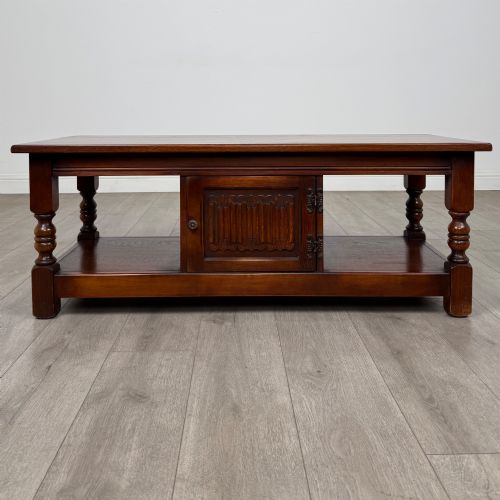
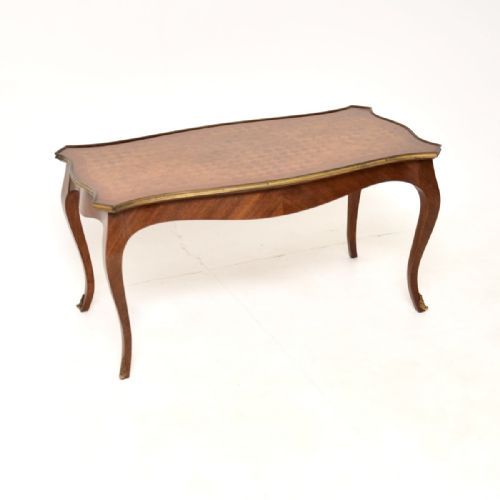
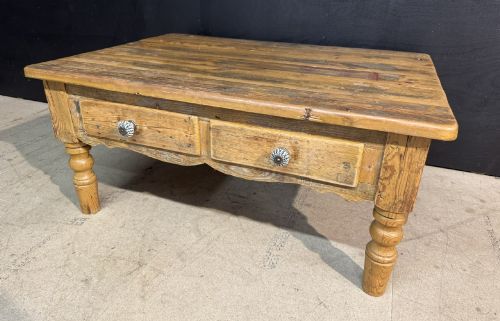
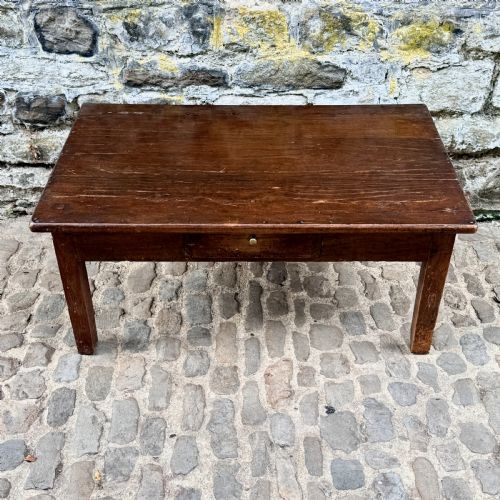
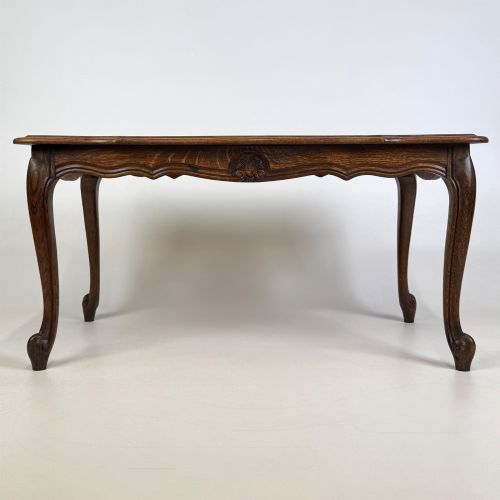
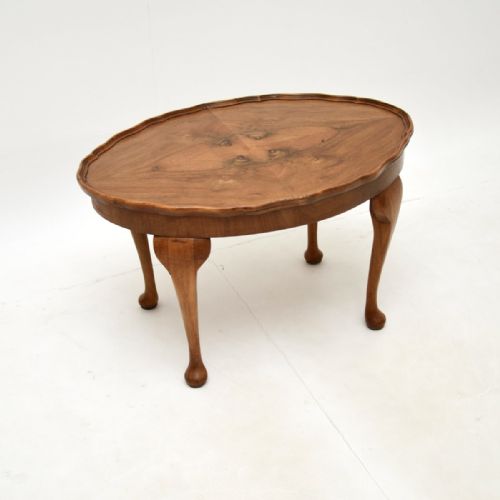
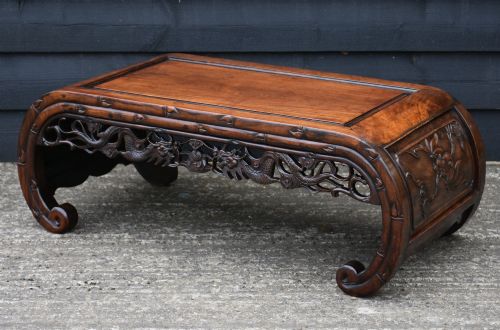
Vintage Low Tea Table
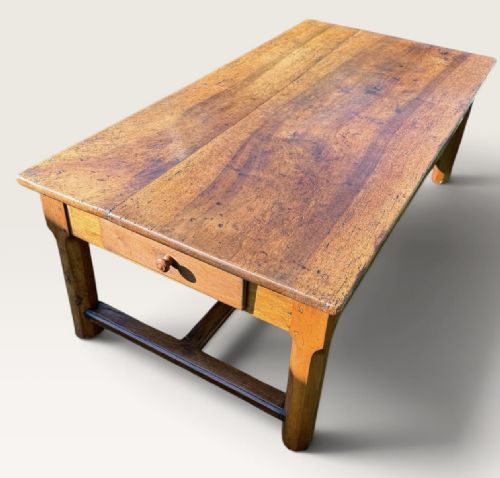
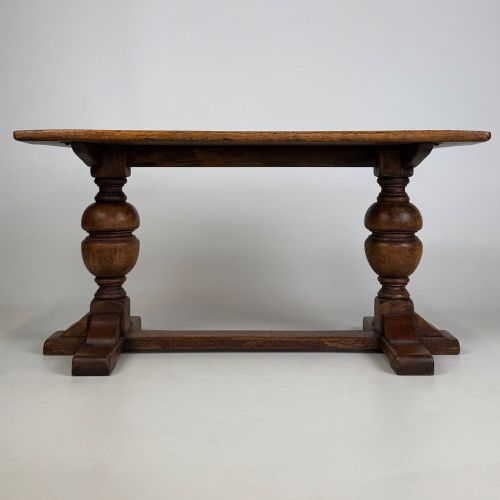
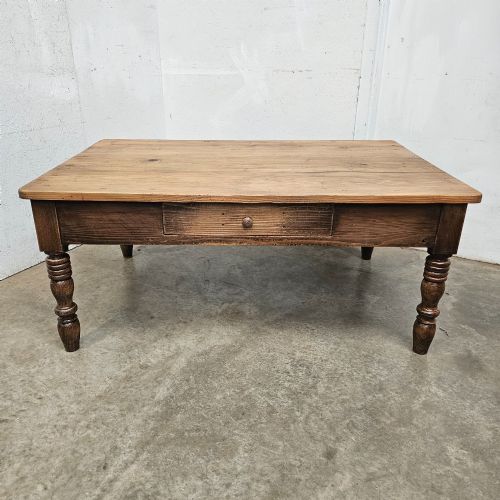
A vintage low tea table brings intimate proportion and rich timber grain to a seating area.
Vintage Low Tea Table
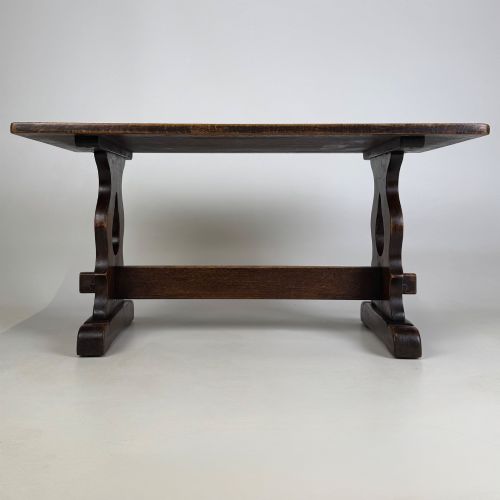
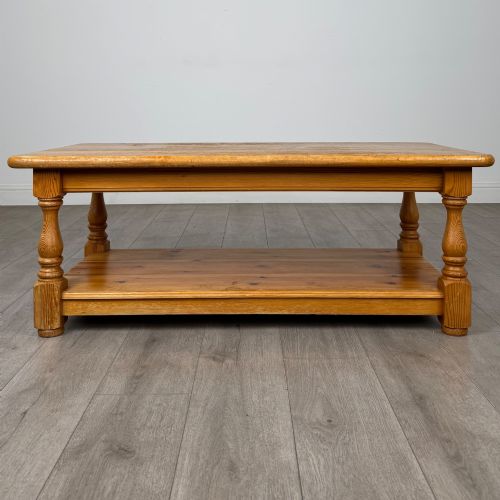
When you search for a vintage low tea table, you encounter low-slung surfaces adapted or built for informal gathering, spanning coffee tables, occasional tables, and traditional low forms. The pieces available here draw from the nineteenth century, the Edwardian period, and the nineteen-thirties, reflecting diverse regional origins from England and France to China and India.
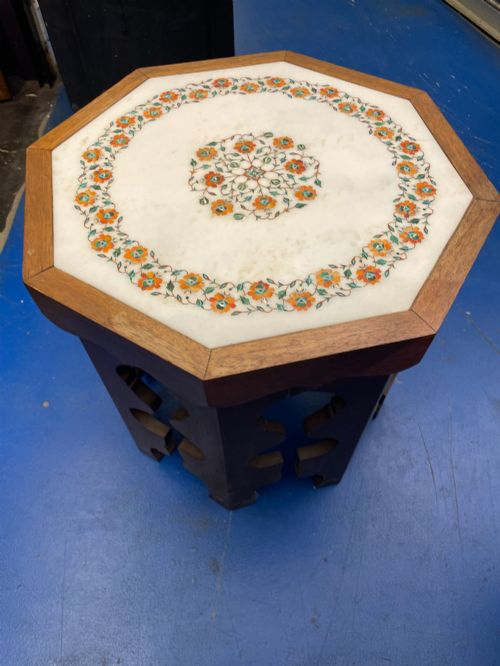
The most common formats on this page range from walnut and mahogany coffee tables of the early twentieth century to low occasional pieces with marble tops, brass trays, and carved wooden details. Buyers select these tables to anchor a room with distinct period character, utilising low proportions that suit modern seating layouts.
Materials and construction
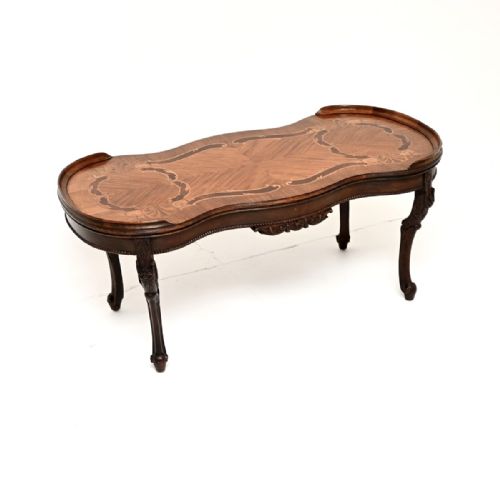
Construction relies heavily on hardwoods such as walnut, mahogany, oak, and burr walnut, often complemented by inset marble tops, polished brass trays, and intricate parquetry or marquetry. Cabinetmakers utilised traditional joinery alongside turned legs, carved borders, and figured veneers to create durable surfaces with strong visual presence.
Regional variations introduce specialised materials, from Chinese rosewood and Japanese hibachi frameworks to Indian brass and European giltwood. Artisans shaped these elements through careful carving, parquetry layouts, and surface polishing that highlight the natural grain of the timber.
Listings span periods from the nineteenth century through to nineteen-thirty, featuring walnut, oak, mahogany, and marble.
Assessing craftsmanship and finish
Quality in these low tables rests on the selection of timber figures, such as burr walnut and figured mahogany, and the precision of decorative elements like marquetry inlay or carved dragon details. Superior pieces display harmonious proportions and seamless integration between top surfaces and supporting legs, whether turned, cabriole, or straight.
The refinement of the finish and the integrity of inset materials, such as polished marble or heavy brass, distinguish finer examples from simpler utilitarian forms. Expert execution in joinery and surface polish ensures that the piece retains its structural balance and aesthetic depth over decades of use.
The Vintage Low Tea Table Glossary
- Marquetry
- The art of applying decorative veneer pieces in wood to form intricate pictorial designs. Craftsmen use this technique on tabletop surfaces to create geometric or floral motifs.
- Hibachi
- A traditional Japanese heating device or container adapted into low furniture forms. These items often feature integrated metal liners and compartmented wooden bodies.
- Parquetry
- A geometric mosaic of wood pieces used for decorative floors and tabletops. It relies on contrasting timber tones to form repeating patterns.
- Pie crust
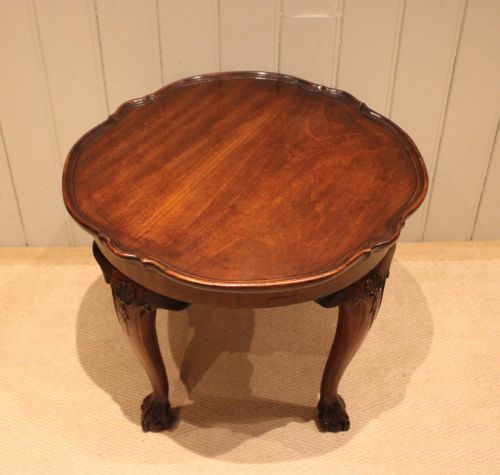
- A carved, raised decorative border shaped in gentle waves around the edge of a circular tabletop. This detail appears on select walnut occasional pieces.
Vintage Low Tea Table: Frequently Asked Questions
How are these low tables used today?
These tables function primarily as coffee tables positioned centrally in a living room or seating area. Their lowered height makes them suitable for holding books, decorative objects, and cups while maintaining open sightlines across a room.
They also serve as occasional or side surfaces in studies and bedrooms, bringing historical texture and convenient placement beside armchairs or sofas.
What periods do these pieces come from?
The selection includes pieces originating from the nineteenth century, the Edwardian era, and the nineteen-thirties. Victorian and Edwardian examples often feature traditional British timbers like mahogany and oak, alongside revival styles.
Items from the nineteen-thirties frequently display Art Deco aesthetics with figured walnut veneers, while Asian and continental imports span similar broad periods.
How do I identify an Art Deco table?
Art Deco pieces typically date from around nineteen-thirty and emphasise clean geometric lines, symmetrical forms, and highly figured walnut surfaces. They often incorporate two-tier designs or smooth, unadorned borders that reflect modernism.
In contrast to heavily carved Victorian or Edwardian styles, these tables rely on the natural pattern of the wood grain and streamlined silhouettes for visual impact.
Are marble-topped tables difficult to maintain?
Marble-topped tables require basic care to protect the polished stone surface from acidic spills and moisture rings. Regular wiping with a soft, damp cloth keeps the stone clean without damaging the finish.
The heavy stone top provides a durable, cool surface that contrasts with wooden frames, combining practical utility with decorative elegance.