


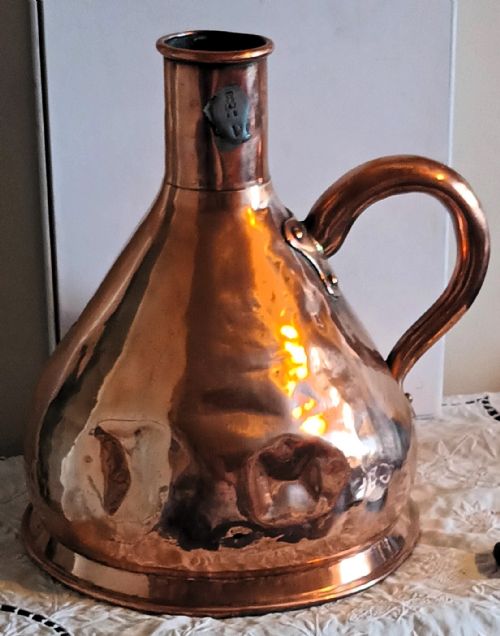


Vintage Liquid Measure
These vintage liquid measure examples in copper, pewter, brass, and glass bring utilitarian honesty to a kitchen or bar.
Vintage Liquid Measure
When you search for vintage liquid measure, you encounter practical vessels forged for taverns, kitchens, and commercial trade. These items span periods from the Georgian era through the Victorian period, the interwar years, and into the mid-twentieth century.
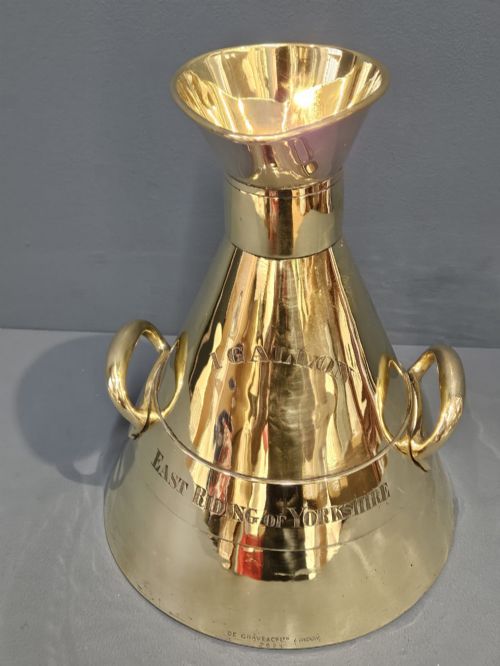
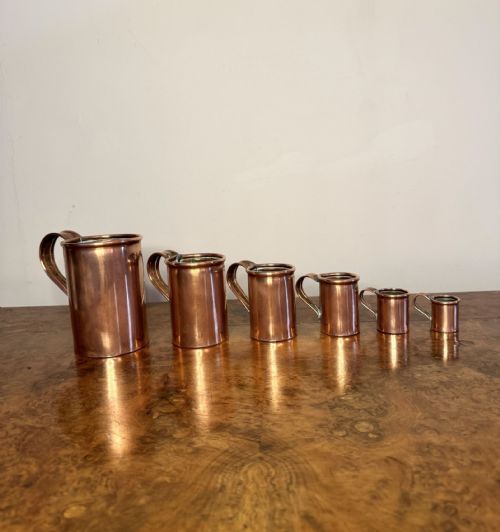
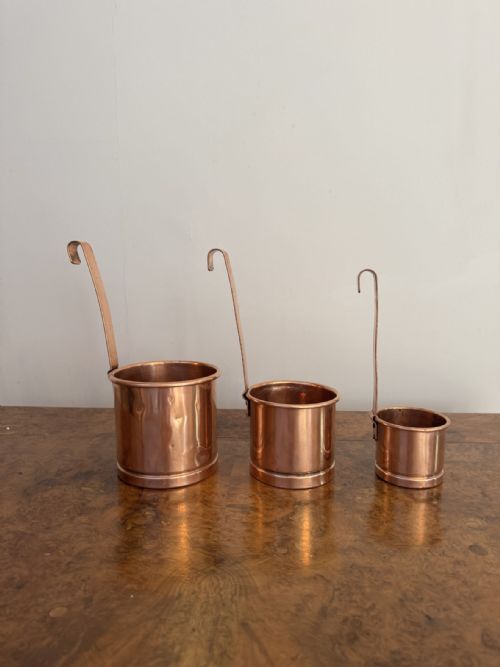
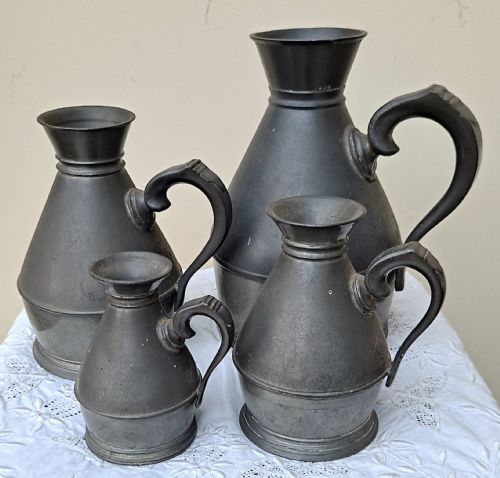
You are most likely to meet graduated sets or individual pieces formed as copper jugs, pewter haystack measures, and bell shaped tankards. They originate from English and Irish makers, designed originally to dispense spirits and liquids accurately.
The inventory includes specialised forms such as Customs and Excise etched glass beakers and Imperial measures marked for specific locations like Blackpool or bearing VR royal ciphers.
How they were made
Makers shaped these vessels primarily from heavy gauge copper, leaded pewter, and clear or etched glass, often combining brass fittings and handles for structural strength. Metal pieces rely on skilled panel construction, soldering, and hammering to achieve durable, watertight forms.
Glass measures utilise blowing and precision etching techniques to mark accurate capacities, while metal measures achieve their distinct silhouettes through spinning and casting methods suited to tavern and scientific applications.
Vintage Liquid Measure Retail Price Guide 2026
Typical asking prices for vintage liquid measure among the pieces listed under this phrase on Sellingantiques today, from the lower quarter to the upper quarter. They describe what is for sale here now, not the wider market.
Some vessels bear the initials VR, reminding us that even a pint of beer once answered directly to the Crown.
What varies in quality
The distinction between ordinary utility items and superior examples lies in the integrity of the metal gauge, the crispness of touchmarks or VR verification stamps, and whether graduated sets remain entirely complete. Heavier copper walls and well preserved pewter surfaces indicate higher production standards.
Originality of components and clarity of etched glass markings or regional inscriptions elevate certain pieces above standard utilitarian wares, reflecting the rigorous demands of official trade and excise use.
The Vintage Liquid Measure Glossary
- Haystack measure
- A distinctively shaped Irish or English pewter or copper jug with a tapered body resembling a stack of hay. These were widely used in the nineteenth century for measuring liquids.
- Imperial measure
- A liquid volume standard established by British legislation in the nineteenth century. Pieces marked for this system conform to official capacity regulations.
- VR mark
- A royal cipher indicating verification during the reign of Queen Victoria. These stamps denote official government inspection for trade accuracy.
- Bell shaped tankard
- A drinking vessel or measure featuring a flared, bell-like profile. They appear frequently in nineteenth-century tavern and barware sets.
- Etched glass beaker
- A transparent scientific or commercial glass vessel marked with acid-etched lines. They served specialised measurement roles in the early twentieth century.
Vintage Liquid Measure: Frequently Asked Questions
How were these measures used?
These vessels were utilised to portion liquids, particularly spirits and ales, in commercial establishments and domestic kitchens. Official measures ensured fair trade and adherence to legal standards.
Many bear verification marks or regional inscriptions, showing they served an active role in local commerce, excise inspection, and hospitality before becoming decorative objects.
How do I live with vintage measures?
Displaying these pieces in a kitchen, dining room, or bar area highlights their honest utilitarian forms and warm metal tones. Grouping graduated sets creates a strong visual focal point.
Care involves gentle cleaning suited to copper, pewter, or glass to preserve original patinas and surface markings without removing the history written into the metal.
How do I identify periods and types?
Periods are identified through material choices, construction techniques, and specific design silhouettes like haystack bodies or bell shaped profiles. Examining the overall weight and form helps distinguish earlier Georgian examples from later Victorian and interwar pieces.
Official stamps, royal ciphers such as VR, and regional marks provide concrete clues to a piece's age and original commercial context.