

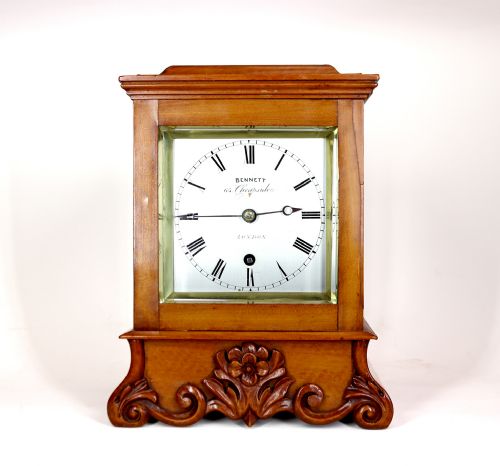


Vintage Library Clock
A vintage library clock brings mechanical precision and rich timber cases into your study, offering both reliable timekeeping and period character.
Vintage Library Clock
When you search for a vintage library clock, you encounter solid desk and mantel timepieces designed for quiet studies and reading rooms. These examples span Georgian and Victorian eras, alongside mid twentieth century interpretations.
The most common versions on this page are timber cased mantel clocks and table clocks housing fusee movements. Mahogany and satinwood predominate, often featuring brass fittings and glass panels that reveal the mechanism.
Makers such as Bush of London, Sir John Bennett, Walker, and Leith of London appear among these records. Alongside traditional timber models, you find industrial desktop compendiums and wall clocks connected to civic libraries.
How they were made
Cabinetmakers constructed the cases using dense hardwoods like mahogany and satinwood, sometimes housing them behind bevelled glass panes. Brass and silvered metal provided durable dials and bezel surrounds for daily use.
Clockmakers fitted single chain fusee movements or year going mechanisms to maintain even tension on the gear train. This engineering ensured steady, reliable timekeeping throughout long working hours in the library.
One desktop compendium arrives in the distinctive industrial manner of Andre Guilmet, proving that even librarians appreciate a bit of Victorian machinery.
What varies in quality
The refinement of the cabinetwork and the complexity of the movement separate ordinary timepieces from exceptional ones. Finer examples display carefully selected timber grain and precision movement engineering by noted makers.
Unusual complications, such as year going capability or specialised five glass cases, elevate a piece above standard domestic models. Originality of dial signatures and historical provenance further distinguish the better items.
Bush of London·Sir John Bennett·Walker·Leith of London·Andre Guilmet
The Vintage Library Clock Glossary
- Fusee
- A conical pulley used with a chain or cord to maintain even power as the mainspring unwinds. This mechanism is central to the accuracy of traditional British table clocks.
- Satinwood
- A lustrous hardwood with a yellowish sheen used extensively for fine cabinetmaking during the Georgian and Victorian periods. It gives smaller desk pieces a bright, decorative finish.
- Mantel clock
- A portable clock designed to stand on a shelf or mantelpiece rather than hang on a wall. These items frequently double as library and desk timepieces.
- Single chain fusee
- A movement driven by a chain rather than a gut line, transferring power from the fusee to the gear train. It represents a durable standard in nineteenth century clockmaking.
Vintage Library Clock: Frequently Asked Questions
What is a vintage library clock?
A vintage library clock is a portable mechanical timepiece built for use on a desk, table, or mantelpiece in a study or reading room.
These pieces typically feature timber cases, glass panels, and precise fusee movements dating from the Georgian and Victorian eras.
How do fusee movements work?
A fusee movement uses a conical pulley and a chain to regulate the pull of the mainspring.
This clever mechanical design ensures that the force delivered to the gears remains constant as the spring winds down, improving accuracy.
Where were library clocks placed?
They sat primarily on library desks, reading tables, or mantelpieces where quiet operation and reliable timekeeping were essential.
Some industrial or wall mounted variants also served civic spaces and municipal offices.
How do I identify the period?
You determine the period by examining the timber choice, case style, and signature style on the dial face.
Earlier pieces show Georgian mahogany proportions, while later examples often use satinwood or industrial brass compendium designs.