


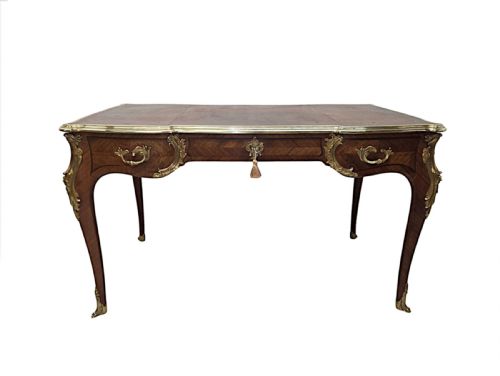
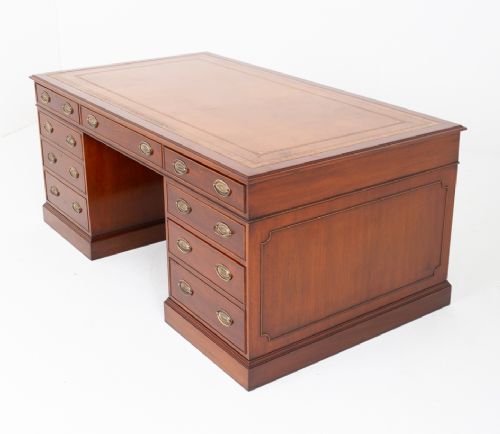
Vintage Leather Top Table
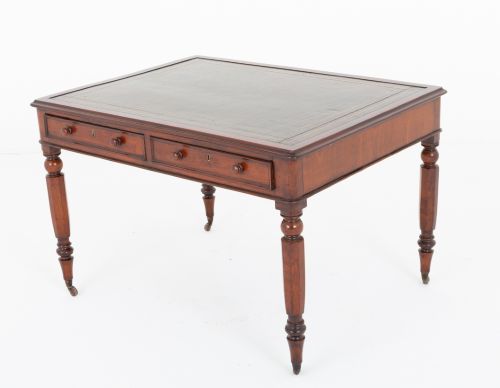
A vintage leather top table delivers a functional writing surface set into wood, bringing texture and character to a study or library.
Vintage Leather Top Table
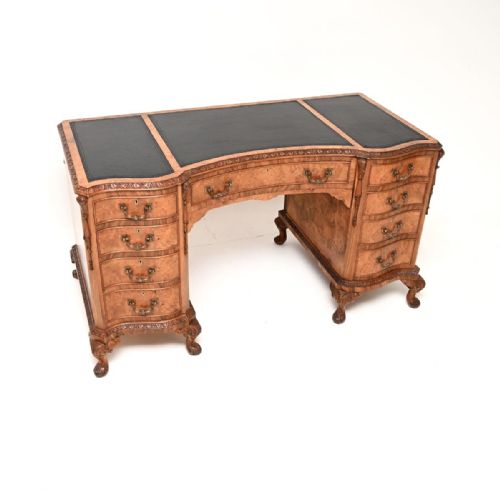
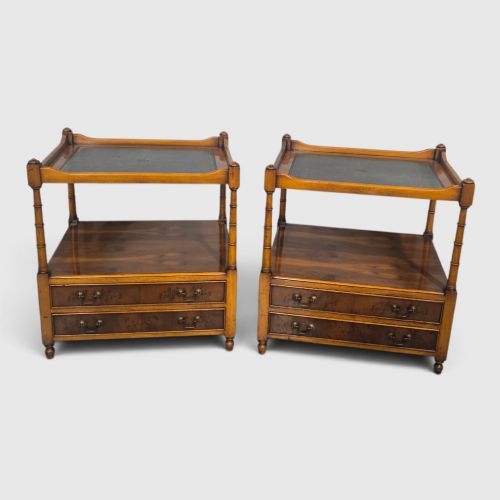
A vintage leather top table encompasses writing tables, pedestal desks, and occasional tables designed for practical use in studies and libraries. Buyers encounter these forms across multiple periods, with nineteenth-century pieces alongside Edwardian and Art Deco examples.
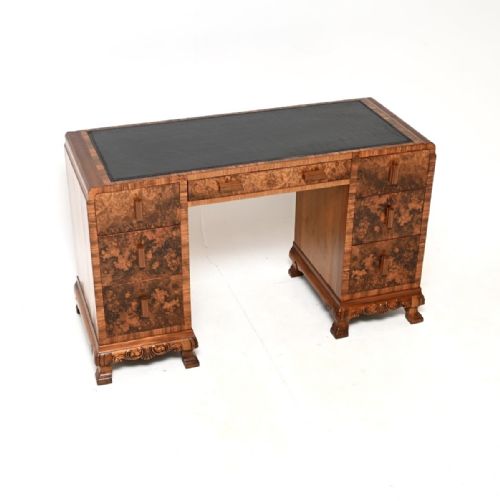
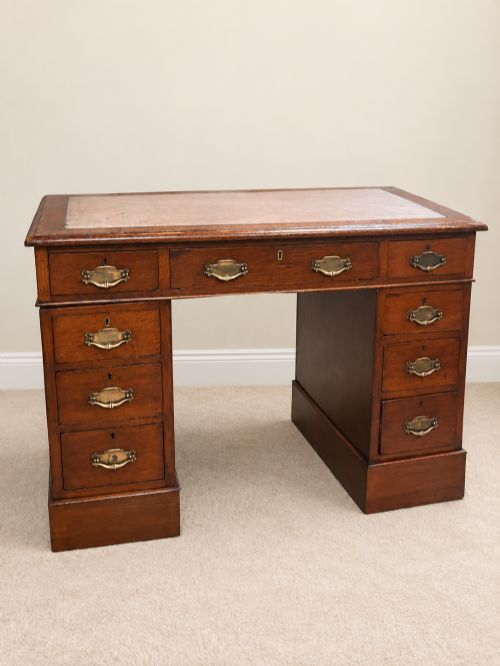
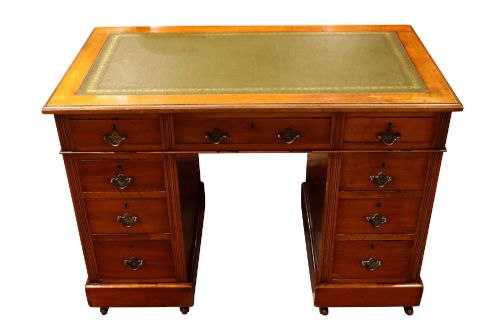
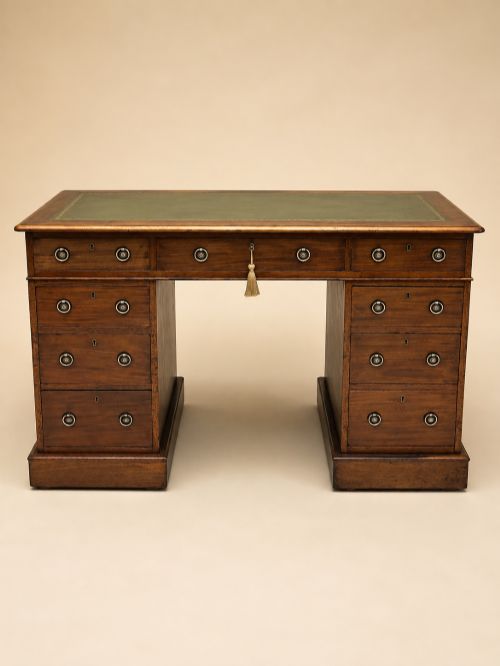
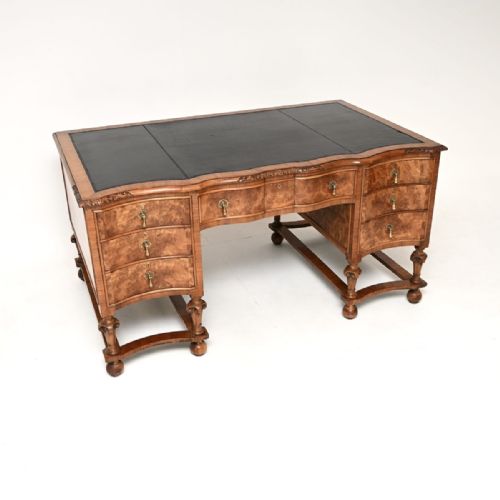
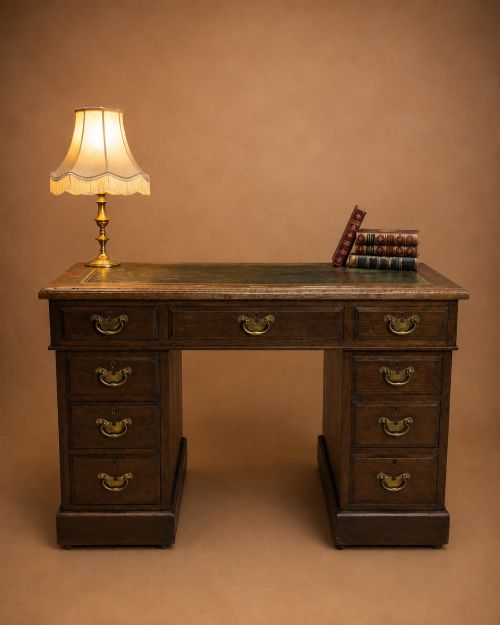
Pedestal desks and partners desks dominate the selection, often constructed with banks of drawers flanking a central opening. Smaller writing tables and lamp tables also appear, providing compact surfaces suited to domestic rooms.
Stylistic influences range from Victorian and Regency to Queen Anne Revival and Chippendale Revival. Makers adapted traditional proportions to suit changing domestic requirements throughout the nineteenth and early twentieth centuries.
Materials and construction methods
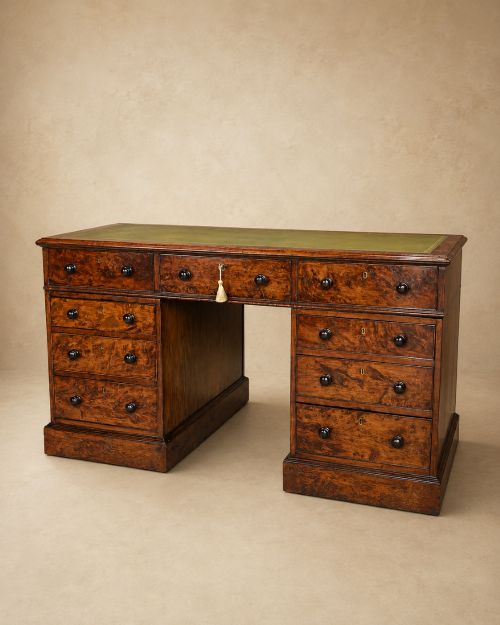
Timbers such as mahogany, burr walnut, oak, and satinwood form the structural carcasses of these pieces. Cabinetmakers selected these woods for their grain patterns and durability, often applying veneers to flat surfaces.
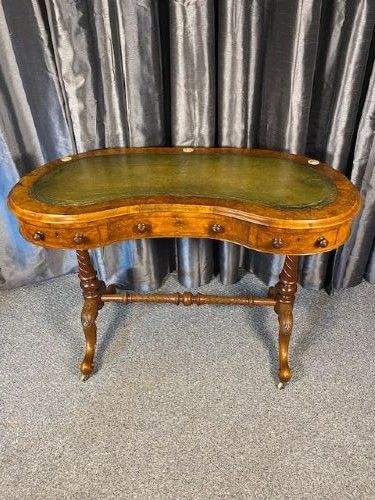
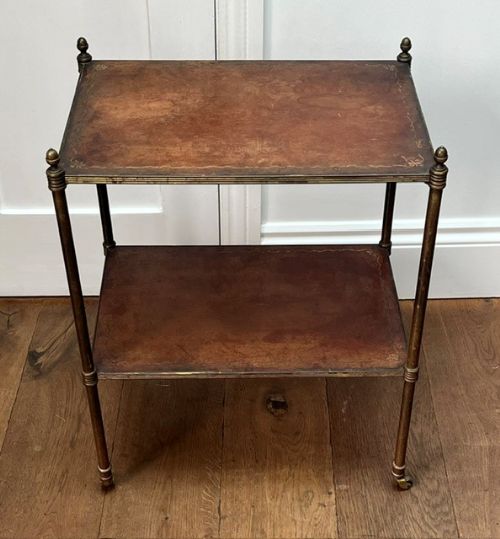
Writing surfaces feature inset leather panels, frequently decorated with gold tooling around the perimeter. Brass handles, key escutcheons, and castors provide functional hardware and decorative contrast to the timber.
Alongside heavy writing desks and boardroom tables, occasional listings include unexpected travel cologne bottle trios and scent bottles.
Distinctions in craftsmanship and materials
Quality rests in the selection of timber veneers, such as figured burr walnut or dense mahogany, and the precision of the cabinet work. Superior examples exhibit tightly fitted drawer joints and well-executed secondary timbers.
The execution of the leather writing surface and its surrounding blind-tooled or gold-tooled decoration indicates the grade of the piece. Workshops known for high production standards utilised finer brass hardware and more substantial framing.
Trollope and sons·Maple and Co·Holland and Sons·Wylie and Lochhead Glasgow
The Vintage Leather Top Table Glossary
- Pedestal desk
- A heavy desk comprising two freestanding pedestals of drawers supporting a top surface. A central kneehole sits between the drawer banks.
- Partners desk
- A large double-sided desk designed for two people to work opposite one another, featuring drawers and cupboards on both faces.
- Tooled leather
- Leather decorated with heated brass tools pressed into the surface to create patterns, often highlighted with gold leaf.
- Kneehole desk
- A compact desk with a central recess for the user's knees, flanked by single or multiple columns of drawers.
- Etagere
- A set of open shelves used for displaying small objects or serving, occasionally adapted with tiers for miscellaneous use.
Vintage Leather Top Table: Frequently Asked Questions
What is a partners desk?
A partners desk is a large, double-sided writing table designed with drawer space on both opposing faces. This configuration allowed two individuals to work simultaneously from the same piece of furniture.
These desks typically appeared in libraries, banks, and large administrative offices during the nineteenth century. They required substantial floor space and remain central focal points in modern room layouts.
How do I care for leather inserts?
Leather writing surfaces require gentle cleaning with a damp cloth and occasional application of appropriate leather cream to prevent drying. Avoid harsh chemical cleaners that can strip the gold tooling and surface finish.
Keeping the leather away from direct sunlight preserves the colour and prevents the material from cracking over time. Regular maintenance sustains the suppleness of the surface.
Where were pedestal desks used?
Pedestal desks served as primary workspace furniture in private studies, legal chambers, and commercial offices. Their enclosed drawer columns offered secure storage for documents and writing implements.
Freestanding versions allowed placement away from walls, enabling the desk to occupy the centre of a room. This arrangement provided access from multiple sides during daily tasks.
How do I identify Art Deco tables?
Art Deco writing tables and desks from the early twentieth century feature streamlined silhouettes and striking veneer choices like satin birch and burr walnut. Ornamentation relies on clean geometric lines rather than historical revival motifs.
These pieces reflect modern design shifts of the 1930s while maintaining traditional cabinet-making construction. They suit contemporary interiors through their compact and uncluttered proportions.