


Arts and Crafts Writing Table
An arts and crafts writing table brings sturdy timber and honest construction into a room, offering a dedicated surface for correspondence.
Arts and Crafts Writing Table
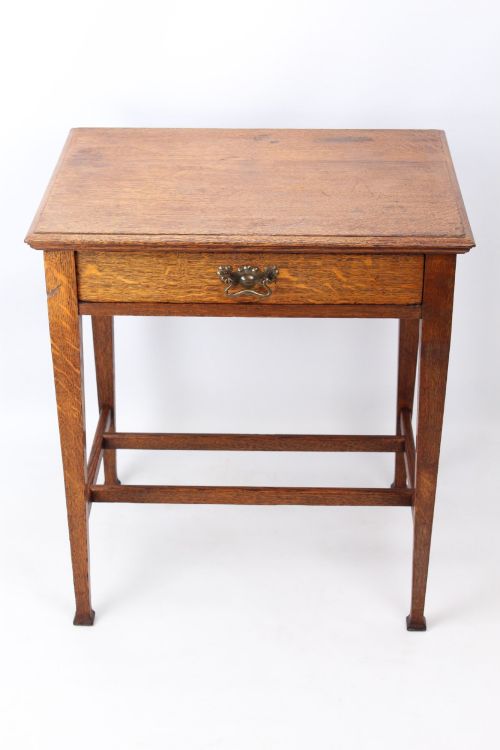
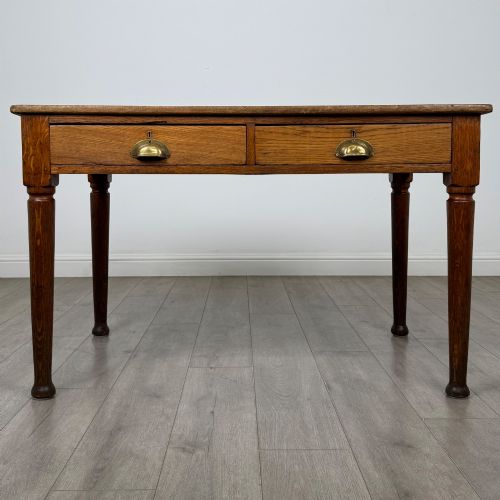
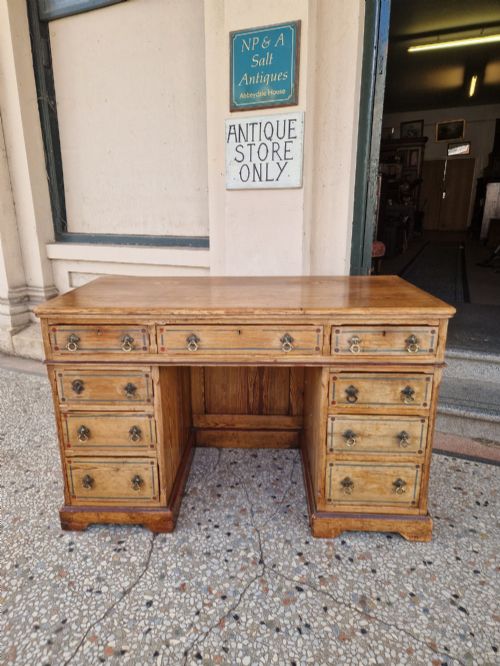
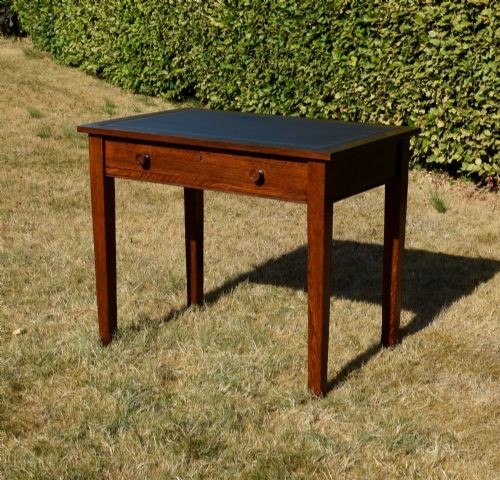
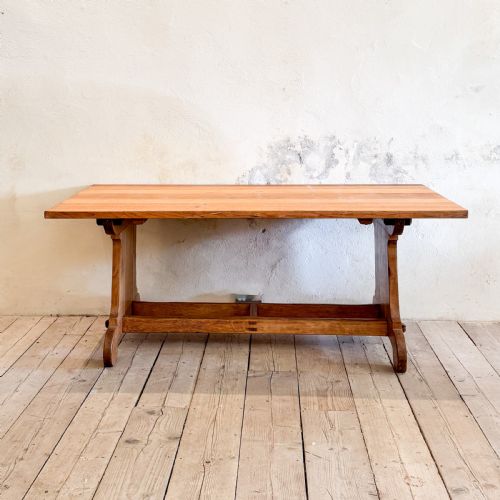
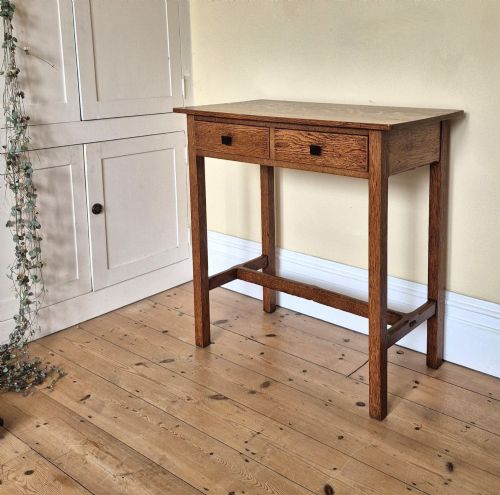
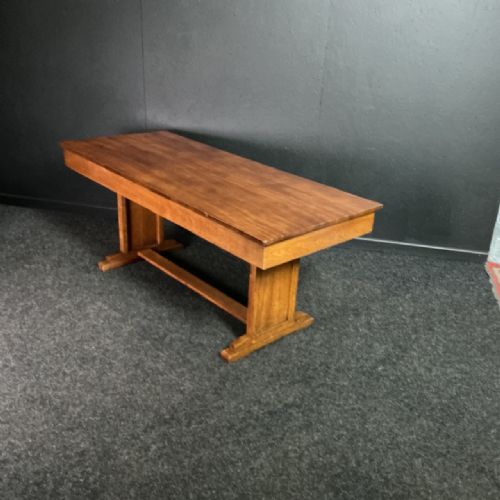
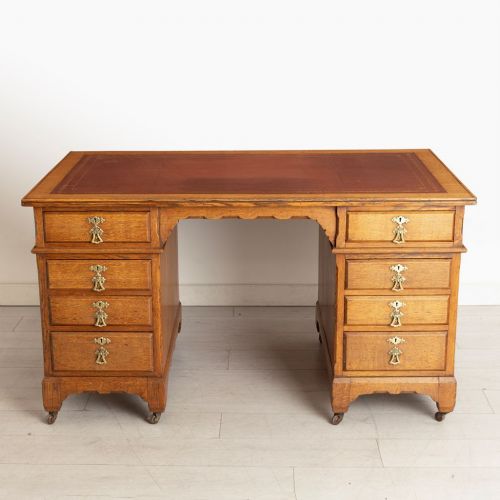
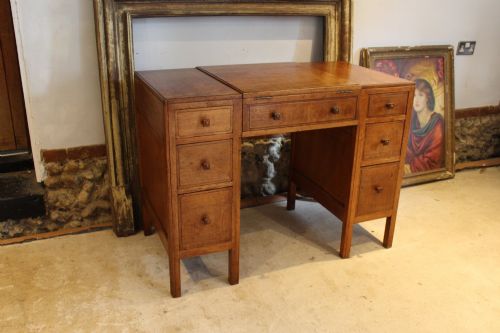
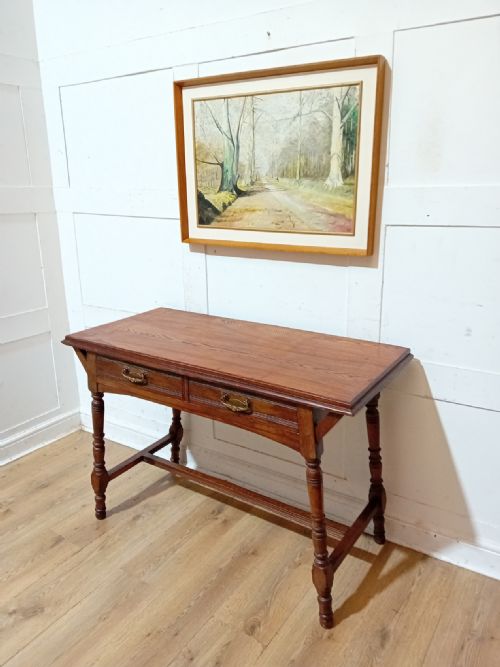
An arts and crafts writing table typically appears in oak, ash, or pitch pine, dating from the late nineteenth century through to the nineteen thirties. These pieces function as library tables, compact writing desks, or side tables fitted with drawers.
The domestic versions meet on this page alongside larger pedestal and partners desks, echoing the aesthetic of periods spanning Victorian, Edwardian, and the early decades of the twentieth century. Makers and retailers such as Liberty, Heals, and James Shoolbred shape the character of these designs.
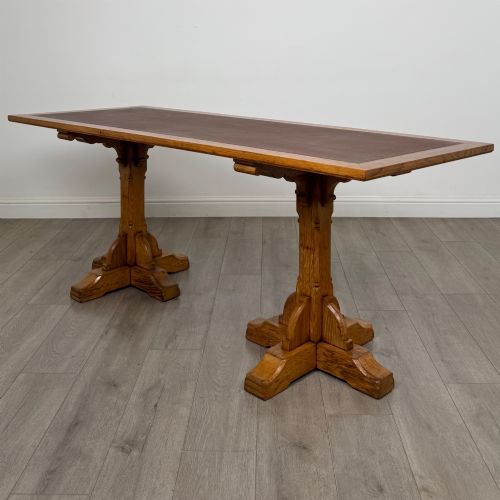
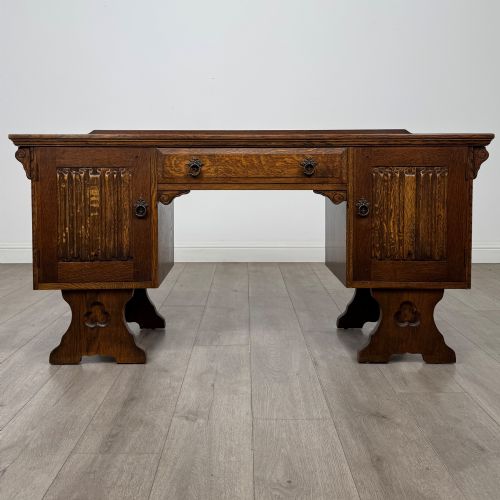
Gothic revival influences and carved linenfold details surface among the simpler utilitarian forms, reflecting the movement's interest in medieval craft traditions. The pieces range from modest childs desks to substantial library tables intended for institutional or public school use.
Design and execution
The quality of an arts and crafts writing table rests on the selection of timber, such as golden quartered oak, and the precision of the underlying joinery. Pieces associated with notable makers like Liberty or Heals demonstrate finer detailing in their brass fittings and structural proportions.
Proportion and restraint separate standard utility furniture from more ambitious workshop productions. The integration of functional elements, such as smoothly operating drawers and carefully fitted leather surfaces, marks the distinction between everyday items and superior examples.
The archive includes public school library tables alongside compact student desks.
Heal and Sons·Liberty·James Shoolbred·Gillow and Co·Lambs of Manchester·Hubert Simpson·Howard and Sons·Robertson and Colman
The Arts and Crafts Writing Table Glossary
- Linenfold
- A style of carved wooden panelling designed to resemble folded cloth. This decorative motif appears frequently on nineteenth century and Edwardian furniture.
- Pedestal desk
- A heavy desk built with two separate banks of drawers supporting the main writing surface. These large forms often accommodate drawers on both sides.
- Quartered oak
- Timber sawn radially from the log to expose the medullary rays in the grain. This cut provides stability and a distinctive decorative figure.
- Pitch pine
- A durable softwood with a prominent grain pattern used for robust furniture frames. It appears in several utilitarian pieces from the period.
Arts and Crafts Writing Table: Frequently Asked Questions
How do I date an arts and crafts table?
Dating relies on timber choice, construction methods, and stylistic cues recorded in the historical record. Pieces from the late nineteenth century often feature walnut or mahogany, while Edwardian and later examples lean towards golden oak and ash.
Makers stamps, paper labels, and attributed workshop traits help narrow the timeframe. Structural details like exposed joinery remain consistent across the era.
What is a partners desk?
A partners desk is a large double sided writing table designed for two people to work opposite one another. These pieces incorporate drawer banks on both sides.
They appear in larger formats, often finished in oak with leather writing surfaces. Their scale suits spacious rooms or libraries.
Are these tables suitable for daily work?
These tables provide sturdy writing surfaces with integrated drawers for storage. Their solid wood construction handles everyday use effectively.
Leather inserts require sensible care to preserve the surface for modern writing tasks. The compact models fit easily into domestic studies.
Did Liberty make furniture themselves?
Liberty retailed designs produced by various skilled workshops and manufacturers of the period. Their pieces carry distinct stylistic markers associated with the arts and crafts movement.
Items bearing the Liberty name often combine traditional joinery with characteristic brass hardware. Attribution relies on known retail patterns and workshop archives.