

Small Leather Top Desk
A small leather top desk brings compact workspace and traditional craftsmanship into a room.
Small Leather Top Desk
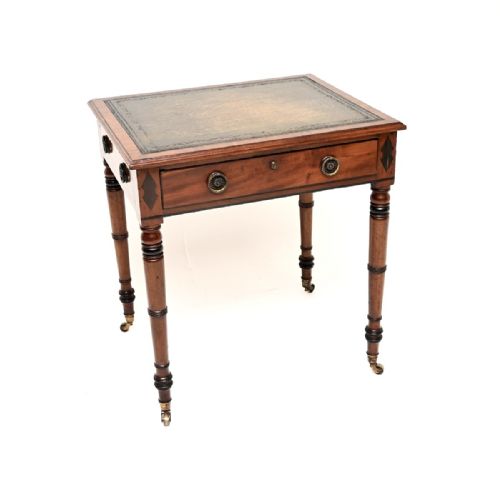
A small leather top desk combines writing surfaces with fitted drawers and compartments scaled for domestic rooms. Buyers seek these pieces for practical writing use or as side tables with historical presence.
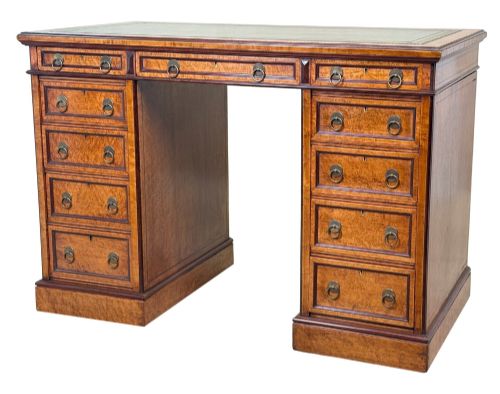
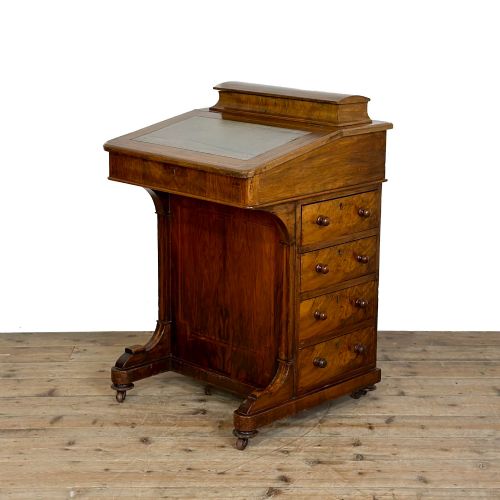
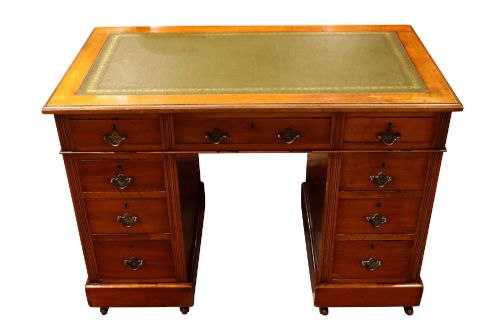
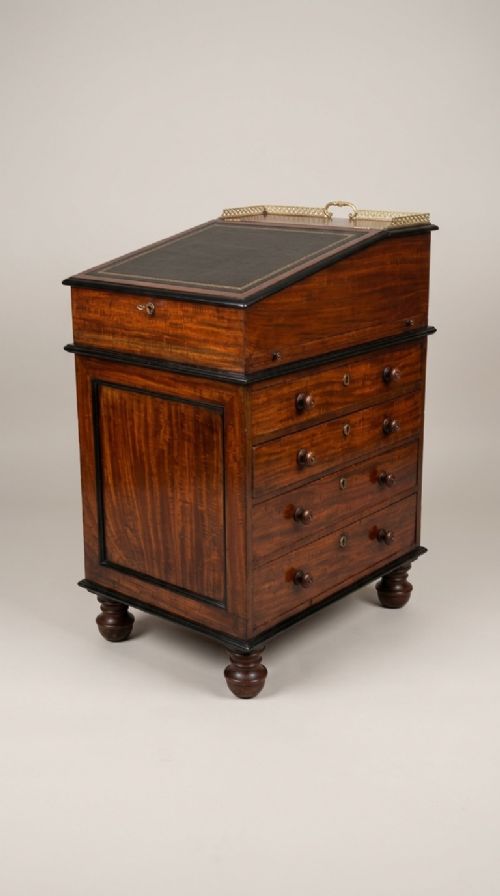
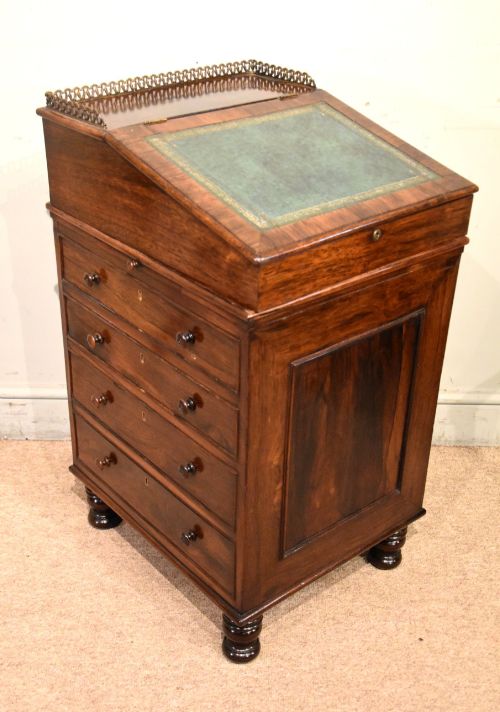
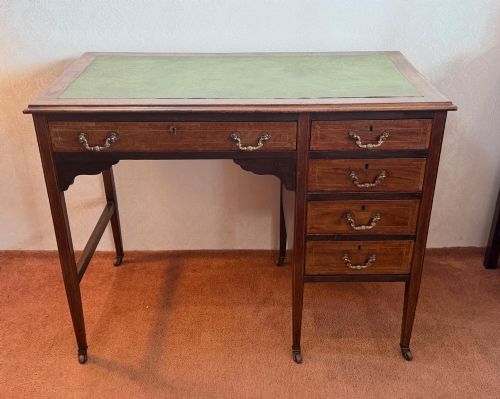
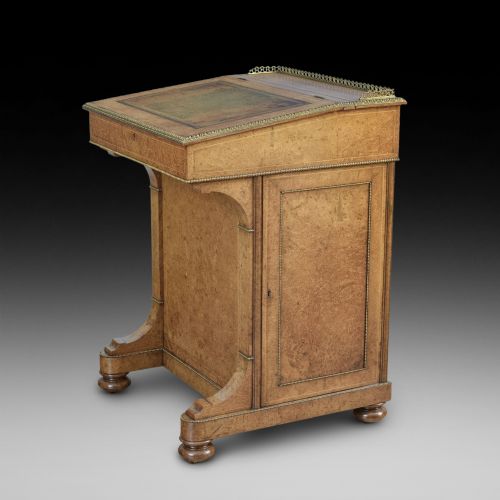
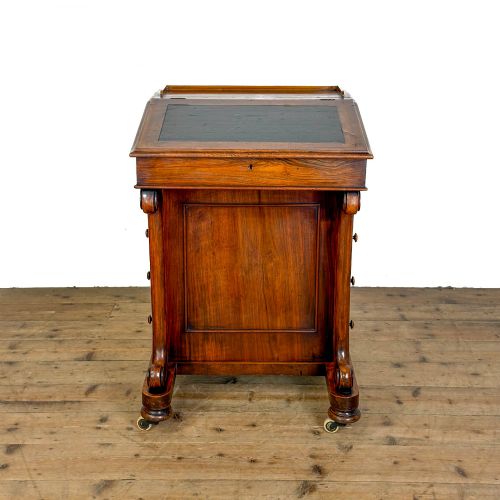
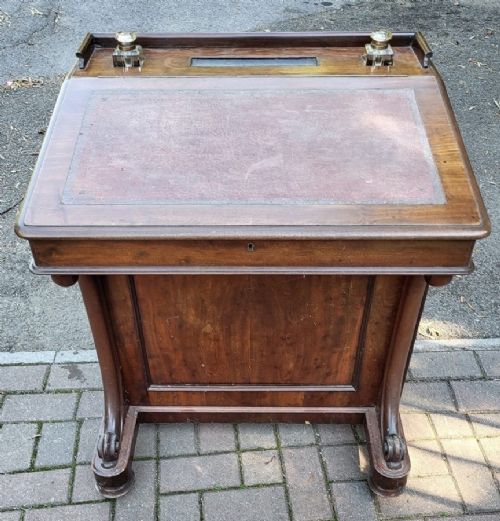
The selections span Victorian, Edwardian, and Regency periods alongside Georgian styles. Forms include compact Davenport desks, kneehole desks, and writing tables.
Mahogany and burr walnut dominate the construction, accompanied by rosewood, oak, and satinwood. Many examples incorporate leather inserts surrounded by timber crossbanding.
Materials and Construction
Cabinet makers utilised dense hardwoods such as mahogany, walnut, and rosewood for structural frames and drawer carcases. Timber veneers and crossbanding added decorative contrast to flat surfaces.
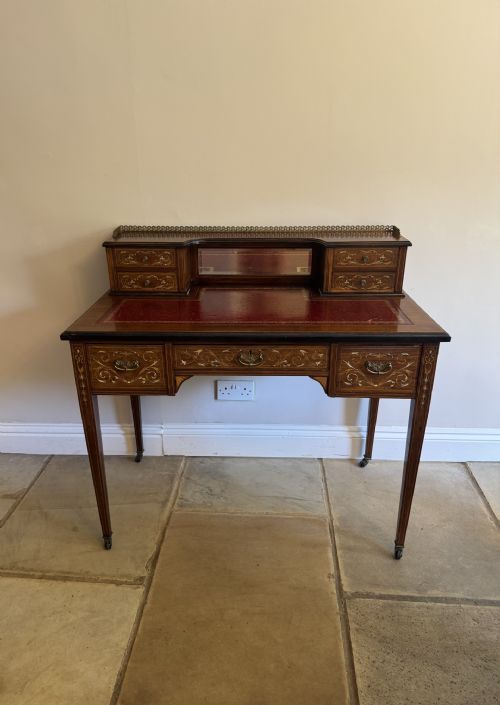
Writing surfaces were inset with panels of tooled leather, secured at the edges with brass studs or decorative gilt tooling. Brass handles, castors, and gallery rails completed the hardware fittings.
Secret compartments and hidden pen trays reward anyone willing to pull every small drawer completely out.
Quality Variations
Distinctions in quality rest upon the selection of timber veneers and the crispness of inlaid details. Finely figured burr walnut and carefully matched mahogany show superior workshop standards.
Internal secondary timbers, drawer construction, and the preservation of original brass hardware indicate the level of care given during production.
Gillows of Lancaster·James Shoolbred
The Small Leather Top Desk Glossary
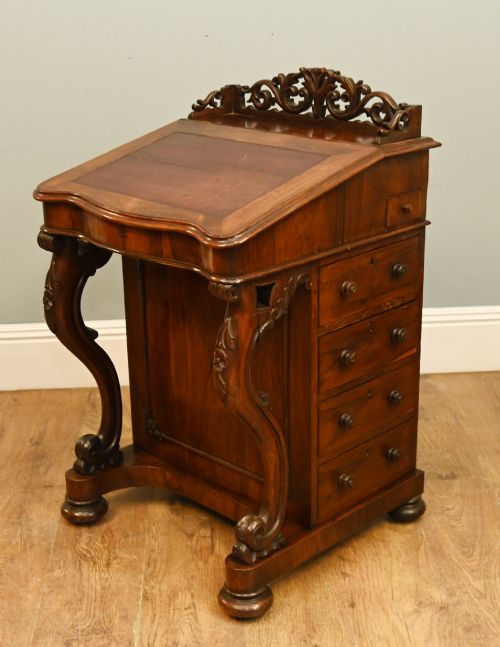
- Davenport desk
- A compact pedestal desk featuring a sloping writing surface and drawers opening to the side. This form gained popularity during the nineteenth century.
- Crossbanding
- A strip of veneer applied across the grain of the main surface to create a decorative border. It frames the timber panel neatly.
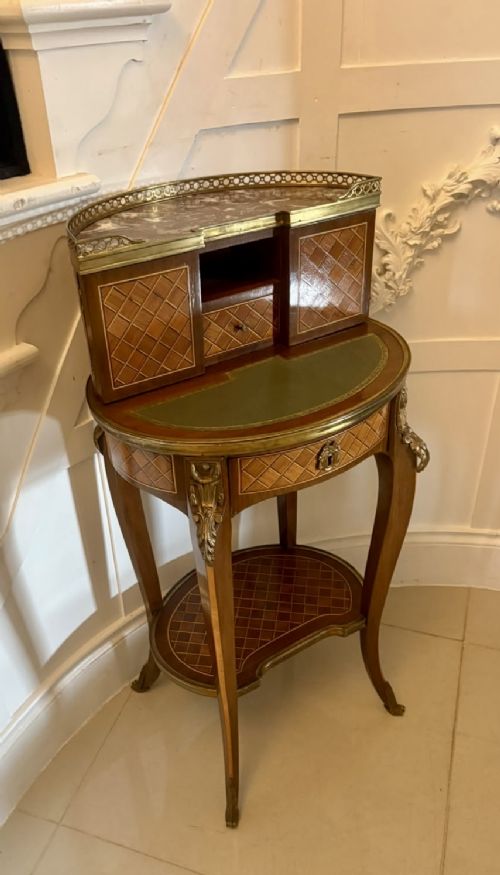
- Bonheur du jour
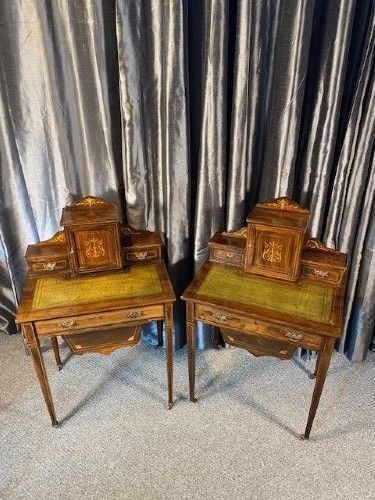
- A light writing table fitted with a small cabinet or set of drawers on the top surface. These tables originated in France during the eighteenth century.
- Escritoire
- A writing cabinet featuring a fall-front door that conceals internal pigeonholes and small drawers. It offers enclosed storage for correspondence.
Small Leather Top Desk: Frequently Asked Questions
How do I date a small leather top desk?
Dating relies upon timber selection, hardware styles, and structural characteristics associated with periods like the Regency or Victorian era. Cabinetmaking methods inside the drawers also provide clues to the decade of manufacture.
Examining secondary timbers and fixing methods helps confirm whether a piece is period or a later revival.
What is a Davenport desk used for?
A Davenport served as a compact writing desk where correspondence and papers could be stored inside the pedestal drawers. The sloping top provided a comfortable surface for writing letters.
Today, these desks fit well in small studies or living rooms as functional accent furniture.
Are leather writing surfaces original?
Many older desks have replacement leather inserts because the original material wore out from daily use over centuries. Replacement leather is often hand-dyed and gold-tooled to match historical precedents.
Inspect the edges of the leather to see how it integrates with the surrounding wood crossbanding.
Where should I place a small desk?
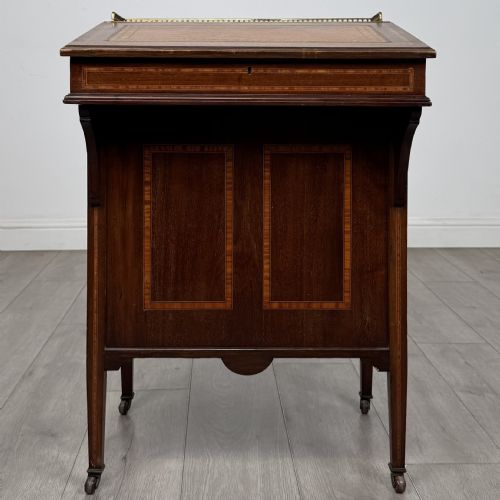
These compact desks suit corners, alcoves, or behind upholstery where larger furniture would overwhelm the floor plan. Freestanding writing tables look best positioned away from walls to show finished backs.
Ensure adequate natural light reaches the writing surface for comfortable daily use.