
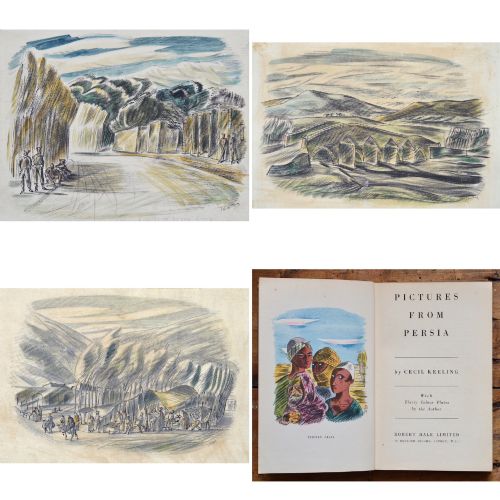
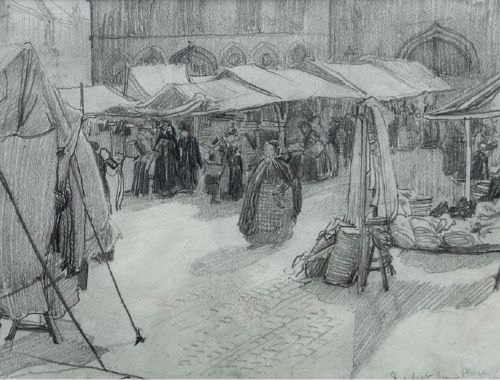
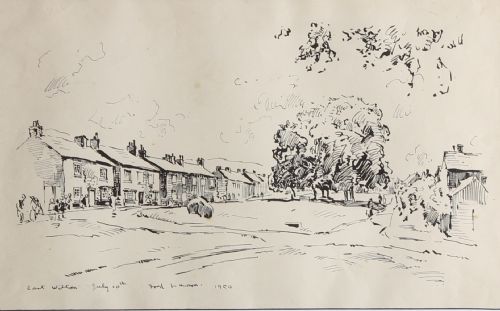
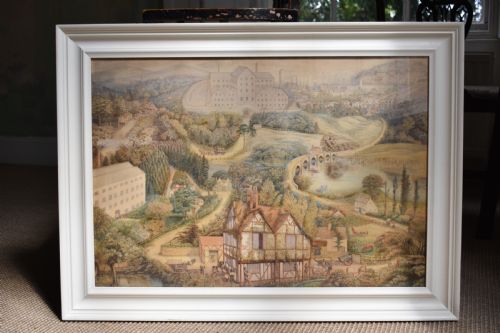


Vintage Landscape Illustration
These vintage landscape illustration pieces offer original works on paper spanning centuries, bringing historical scenery directly to domestic walls.
Vintage Landscape Illustration
A vintage landscape illustration search uncovers works on paper created across multiple eras, including Victorian, Edwardian, and mid-century periods. These pieces take the form of original drawings, watercolours, and architectural prints depicting natural vistas, buildings, and rural scenes.
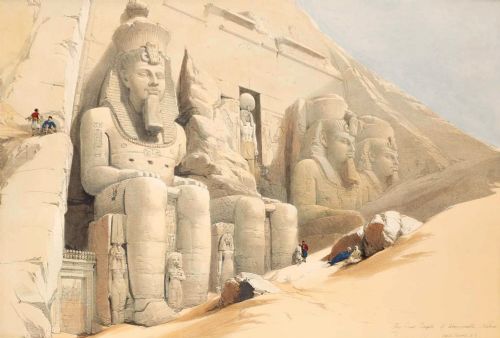
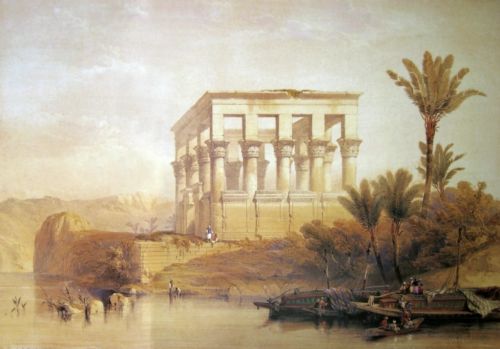
Buyers encounter works by named artists alongside pieces from British and continental schools. Common subjects range from English lake district views and northern townscapes to foreign monuments and coastal scenes.
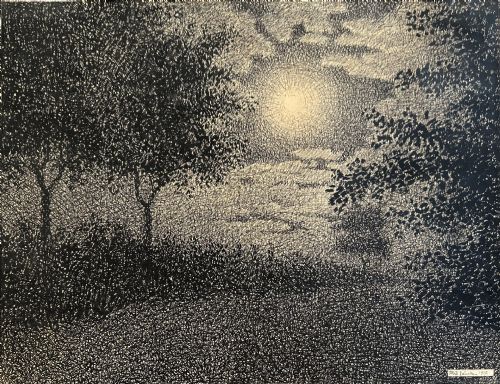
The selection leans heavily toward watercolours, ink sketches, and pencil drawings framed behind glass. Many examples preserve the handwritten titles, dates, or signatures of their makers on the front or mount.
Materials and techniques
Artists relied primarily on paper supports, applying watercolours in translucent washes alongside heavier ink and pencil line work. Coloured pencil and mixed media appear in later mid-century examples.
Gold leaf accents occasionally highlight architectural prints and formal Victorian compositions. Wood and glass typically enclose these works within period frames.
Drawings utilise pen-and-ink techniques to establish fine topographical details before colour is applied. Wash methods build atmospheric depth across skies and landscapes.
Listings feature works spanning from the eighteenth century through the mid-twentieth century, executed in watercolour, ink, and pencil on paper.
Factors that define quality
The surety of the draughtsmanship and the control of the pigment dictate the distinction between routine topographical records and superior artistic achievements. Strong compositions demonstrate confident brushwork and precise spatial awareness.
Context adds standing to a piece, particularly when a work connects to a published book, a known exhibition, or a documented artist's oeuvre. Provenance and original framing enhance the historical weight of drawings from earlier centuries.
Cecil Keeling·Henry Percy Huggill·Fred Lawson·David Roberts·Edward Dayes·J W Hogley·Frank Wood·William J Hodgson·Irene Lagut·J.Tim Macdonald·George De Paris·Eveline Lance·Minnie Smythe·Edward Burrows
The Vintage Landscape Illustration Glossary
- Watercolour
- A painting method where finely ground pigments are suspended in a water-based solution. This technique creates transparent washes that allow the texture of the paper to show through.
- Wash
- A thin, semi-transparent layer of diluted ink or watercolour pigment spread evenly across paper. It provides smooth backgrounds for skies and shadows.
- Works on paper
- An umbrella category encompassing drawings, watercolours, prints, and sketches. It separates flat paper media from canvas paintings and three-dimensional objects.
Vintage Landscape Illustration: Frequently Asked Questions
How should I frame a delicate paper drawing?
Works on paper require conservation mounting to keep the sheet from touching the glass directly. Acid-free materials prevent discolouration over time.
Keep these framed artworks away from direct sunlight to protect watercolours and inks from fading. Stable indoor humidity prevents the paper from warping.
What is the difference between a sketch and a finished watercolour?
Sketches usually employ pencil or ink lines to capture a subject quickly on location. They focus on structural outlines rather than fully blended tones.
Finished watercolours layer pigment and washes to build complete colour, light, and shadow. These pieces were often intended for exhibition or publication.
How do I date an unsigned landscape drawing?
Paper type, watermark evidence, and framing style provide initial clues to a work's age. Stylistic markers such as clothing or architectural details also point to specific periods.
Comparisons with dated works by the same regional school narrow down the decade of production. Inscribed titles on the reverse often record the exact year.
Are architectural prints considered original artwork?
Architectural prints are multiple-impression works produced via printing plates rather than direct hand-drawing. They served as illustrations or standalone records of buildings.
While printed rather than painted by hand, period prints carry historical value as contemporary records of past architecture.