


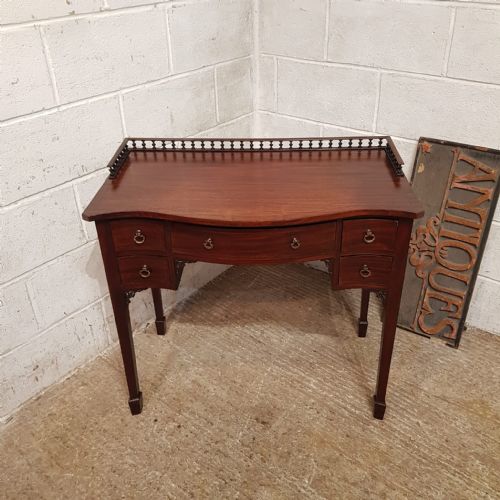

Vintage Ladies Bureau Desk
A vintage ladies bureau desk offers compact elegance and fitted drawers, bringing refined writing spaces into modern rooms.
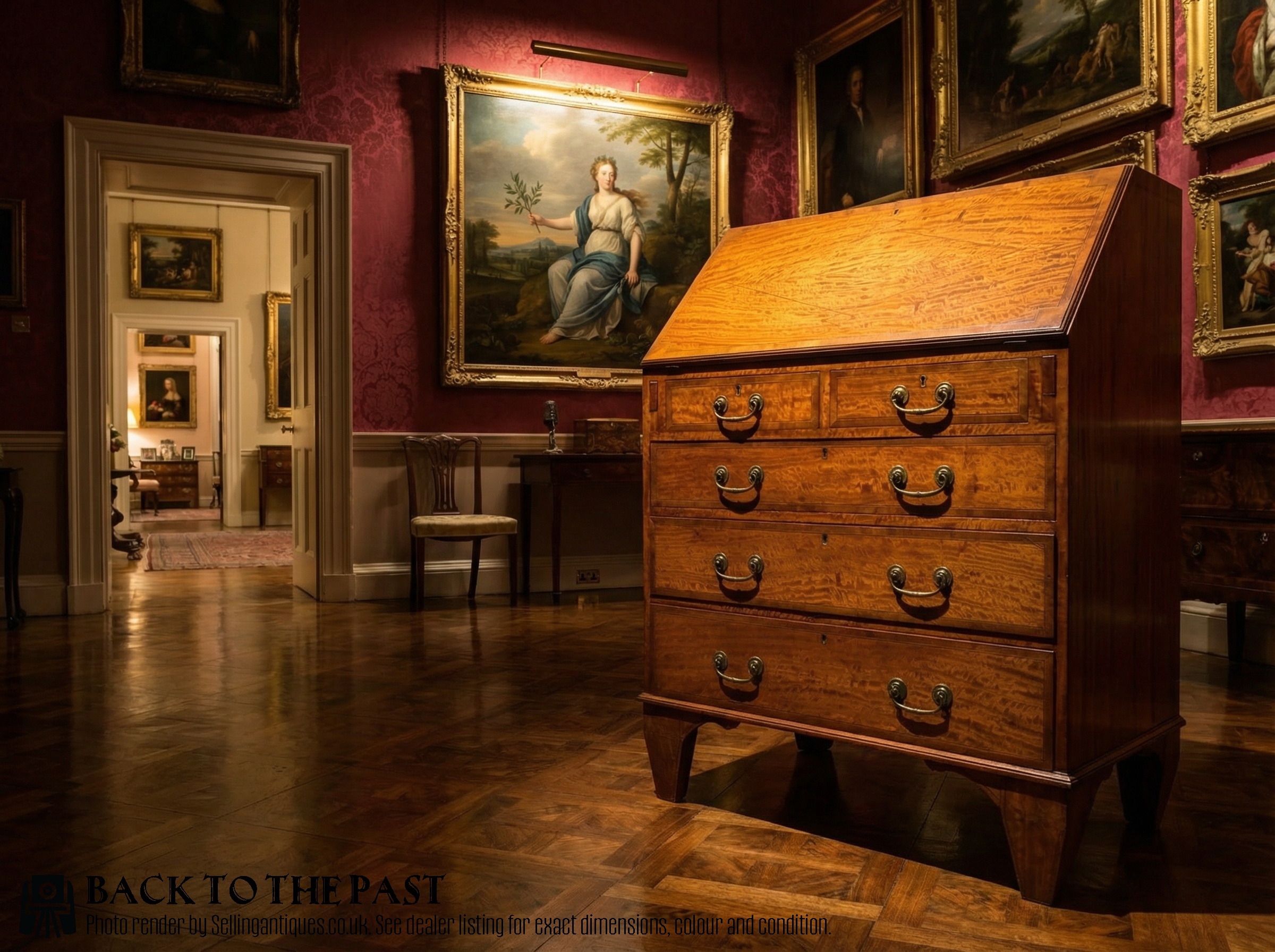
Vintage Ladies Bureau Desk
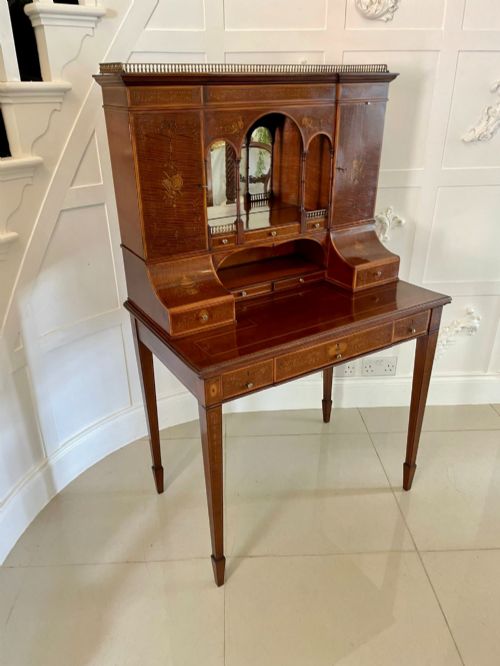
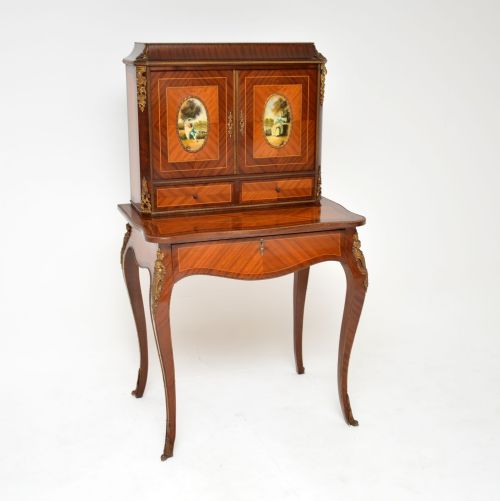
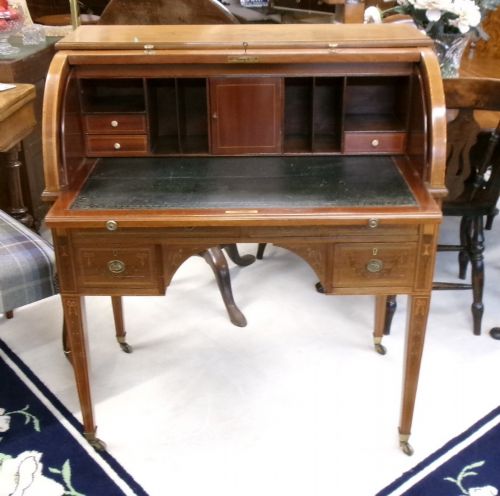
A vintage ladies bureau desk provides a compact surface for correspondence, frequently featuring fitted interiors with small drawers and pigeonholes designed for stationery. These pieces span periods from the Victorian era through the Edwardian years and into the early twentieth century, reflecting shifting domestic habits.
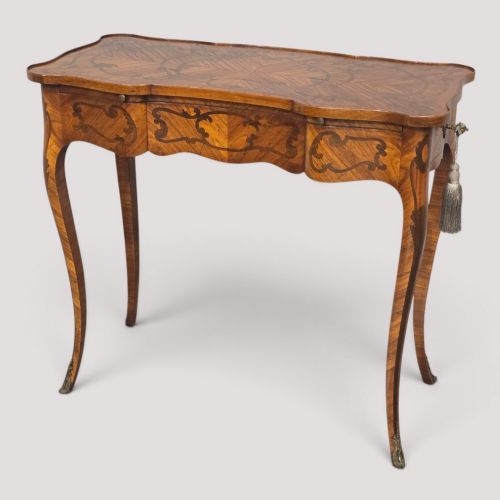
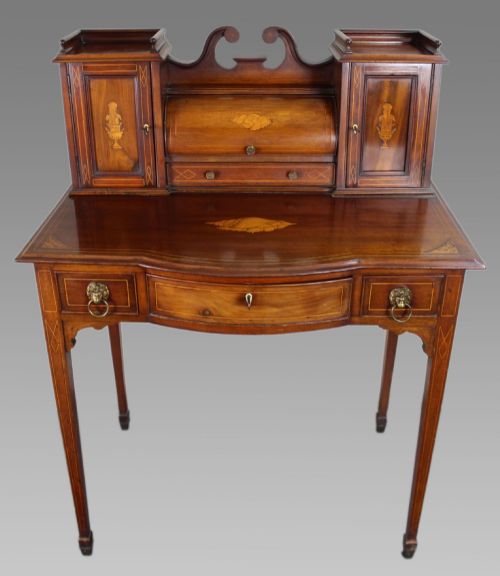
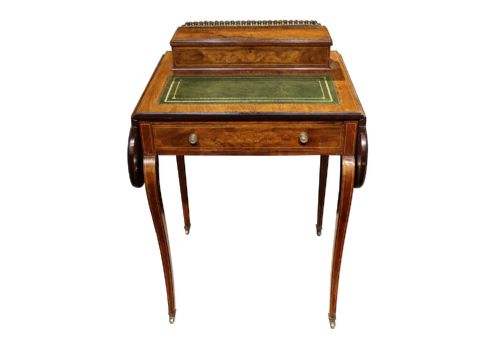
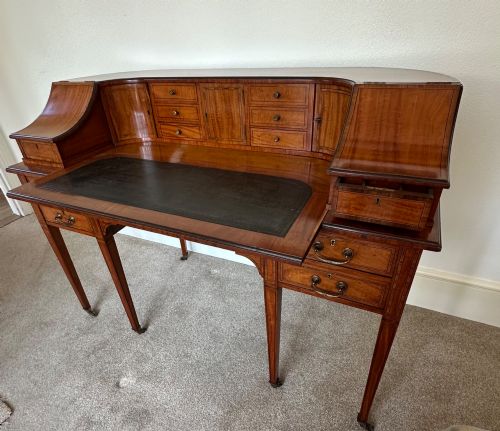
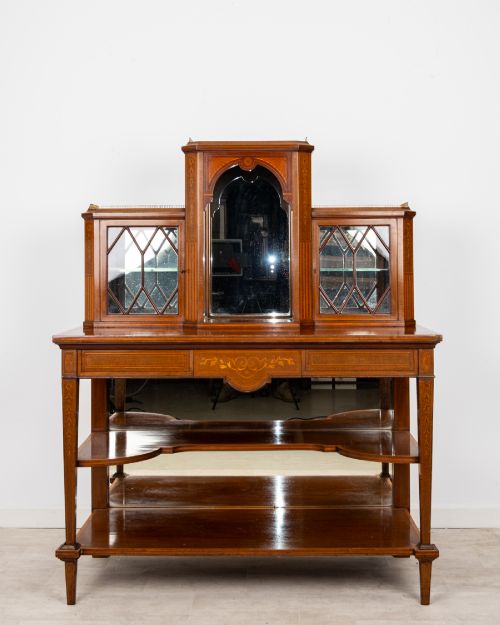
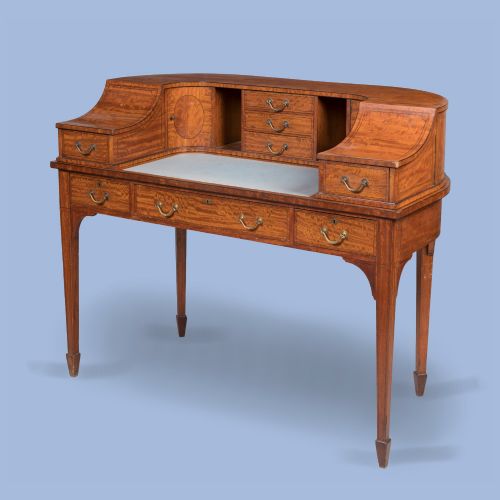
The stylistic influences draw heavily on earlier British and French traditions, including Sheraton Revival, Louis XV Revival, and George I styles. Buyers encounter freestanding desks, bureau de dame forms, and Carlton house desks equipped with raised superstructures.
How they were made
Cabinet makers utilised choice hardwoods like mahogany, satinwood, walnut, and rosewood, frequently enhancing surfaces with decorative veneers such as burr walnut, flame mahogany, and kingwood crossbanding. Inlays of contrasting timbers create delicate floral or geometric motifs across drawer fronts and tops.
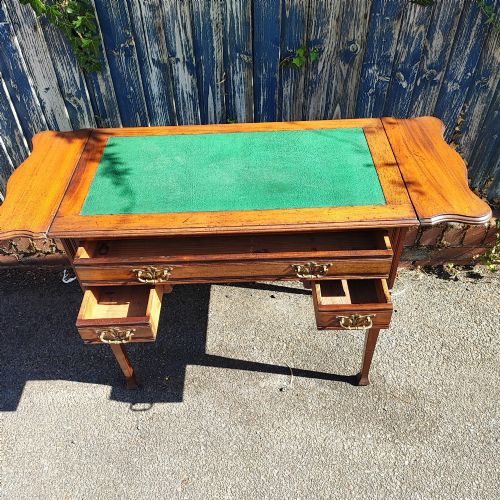
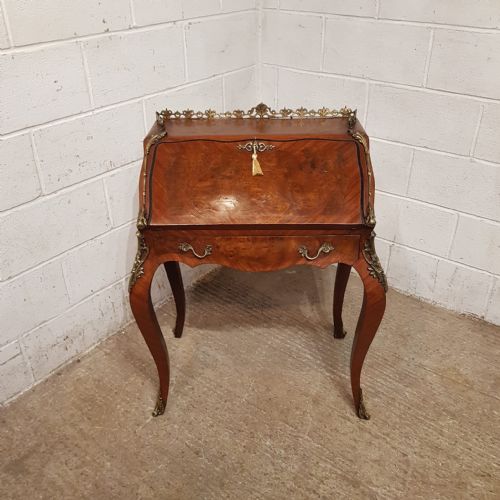
Fitted interiors often incorporate oak-lined drawers alongside inset leather writing surfaces, sometimes complemented by original brass handles and cast bronze or ormolu mounts. French pieces frequently employ intricate marquetry work featuring floral patterns across curved or serpentine panels.
Desks occasionally retain hidden compartments behind secret sliding panels, designed long ago for love letters and private notes.
What varies in quality
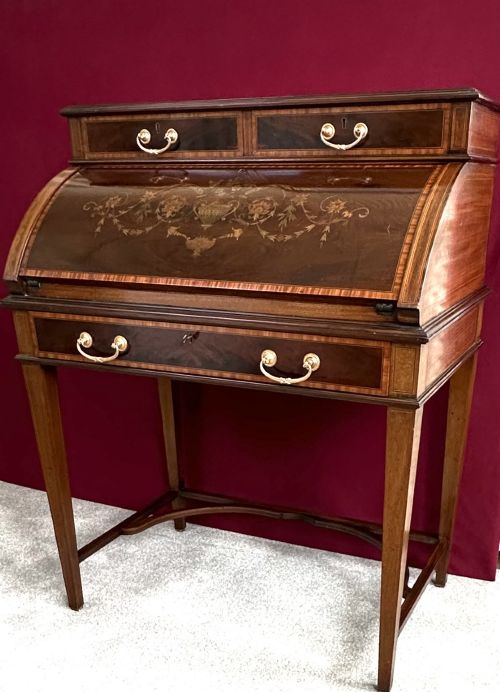
The refinement of the internal fitted compartments and the precision of the marquetry or stringing separate standard examples from finer works. Superior pieces exhibit seamless joinery on curved elements like cylinder tops and drop side flaps, alongside carefully selected timber grains.
Hardware choice and secondary wood selection indicate the original tier of manufacture, where oak drawer linings and chased ormolu mounts elevate the piece. The overall balance of proportions, particularly in smaller forms like kidney-shaped desks and bonheur du jour tables, dictates visual success.
The Vintage Ladies Bureau Desk Glossary
- Bureau
- A sloping front desk that opens to reveal a fitted interior of small drawers and pigeonholes. These forms conceal writing materials when closed.
- Bonheur du jour
- A light ladies writing desk featuring a small cabinet or superstructure with shelves and drawers above the main surface. This French form dates to the eighteenth century and saw revival popularity.
- Carlton house desk
- A Davenport-style desk with a horseshoe-shaped superstructure containing drawers and compartments around the writing surface. The curved arrangement provides numerous small storage spaces.
- Marquetry
- Inlaid wood patterns forming pictures or decorative designs using various tinted veneers. Craftsmen assemble these thin wood pieces to create floral or geometric table tops.
- Ormolu
- Gilded bronze mounts applied to furniture for decorative effect, common in French revival pieces. The metalwork adds ornate highlights to corners and drawer surrounds.
Vintage Ladies Bureau Desk: Frequently Asked Questions
What is a bureau de dame?
A bureau de dame is a ladies writing desk, often featuring a sloping fall-front or a cylinder top concealing fitted interior compartments.
Originating in France, these pieces are designed for intimate domestic spaces rather than formal libraries.
How do I use a Carlton house desk?
The curved superstructure contains numerous small drawers and pigeonholes intended for letters, inkwells, and writing accessories.
The central leather-lined surface pulls out or remains fixed, offering a compact writing area.
How do I date an Edwardian desk?
Edwardian desks date from the reign of King Edward VII between 1901 and 1910, though the style extends slightly either side.
These pieces often feature Sheraton Revival inlay work, lighter satinwood timbers, and slender tapered legs.
What is kingwood crossbanding?
Crossbanding involves applying a border of veneer where the grain runs perpendicular to the main panel.
Kingwood is a dense, richly figured timber utilised to create dark contrasting borders around mahogany or walnut surfaces.