
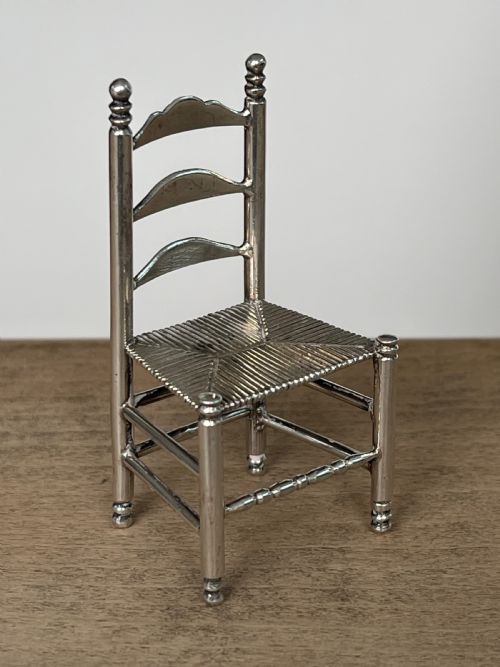
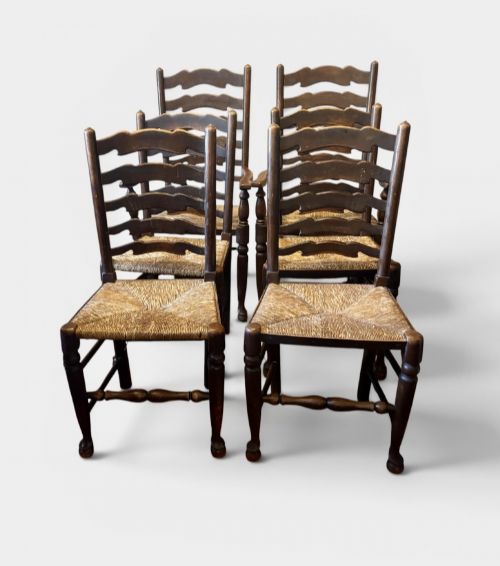


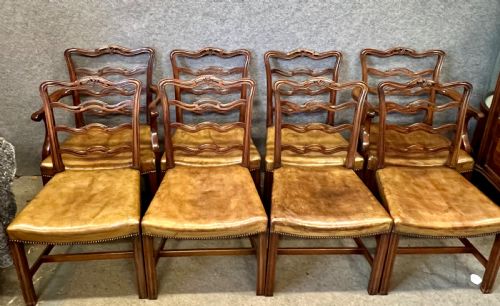


Vintage Ladderback Chairs
Vintage ladderback chairs bring enduring vernacular charm to dining spaces through traditional horizontal slats and woven rush seats.
Vintage Ladderback Chairs
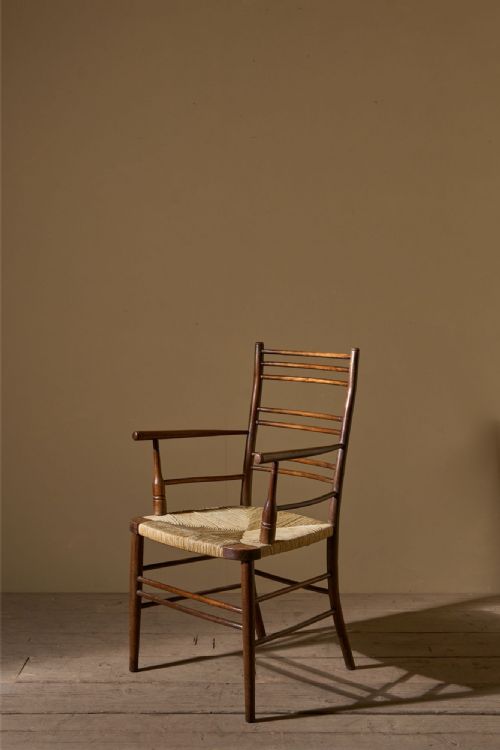
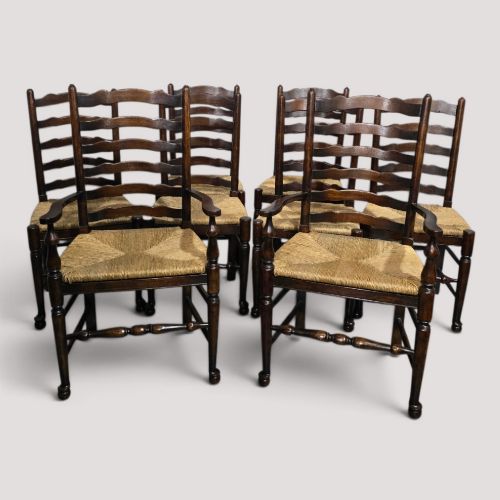
Vintage ladderback chairs encompass everyday seating built with horizontal wooden slats between the upright rear posts, drawing on centuries of vernacular woodworking traditions. These pieces appear in forms ranging from single kitchen side chairs to large matching dining sets, armchairs, and rocking chairs.
The selection on this page centres on sturdy regional and rustic interpretations from the nineteenth and early twentieth centuries, alongside Arts and Crafts and revival pieces. Buyers encounter oak, elm, ash, and beech frames fitted with rush, seagrass, fabric, or leather seats.
How they were made
Maker workshops constructed these frames from native timbers such as oak, elm, ash, and beech, often pairing turned upright posts with curved or graduated horizontal slats. Traditional joinery methods secured the framework without relying on modern fasteners.
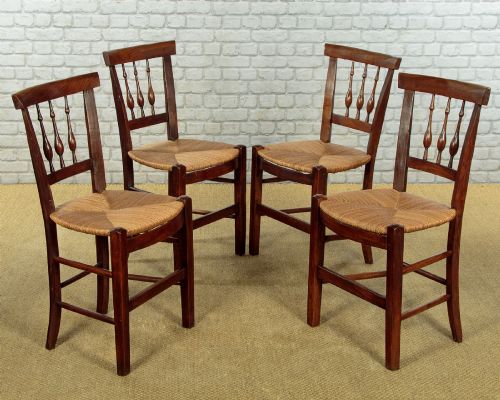
Seats utilised durable woven natural materials like rush and seagrass wrapped tightly around the internal frame rails. Some refined revival models incorporated upholstered drop-in pads finished in leather or fabric.
Materials recorded across the inventory include solid oak, elm, ash, beech, teak, rush, seagrass, leather, and brass.
What varies in quality
The integrity of the timber framing and the tightness of the woven seat dictate the standard of a chair. Pieces that retain their original timber patina and show minimal structural movement stand apart from heavily altered examples.
Sets matching in scale and timber tone demonstrate greater consistency than assembled groups. The subtlety of the slat turning and the proportion of the upright posts reveal the maker's hand.
Liberty & Co·Lawrence Neal·Dicon Nance
The Vintage Ladderback Chairs Glossary
- Ladderback
- A chair style defined by horizontal slats set between the rear upright posts. This design descends from centuries-old vernacular seating traditions.
- Rush seat
- A woven seating surface made from dried marsh grasses twisted into cords. Craftsmen wrap these cords tightly around the seat rails.
- Carver
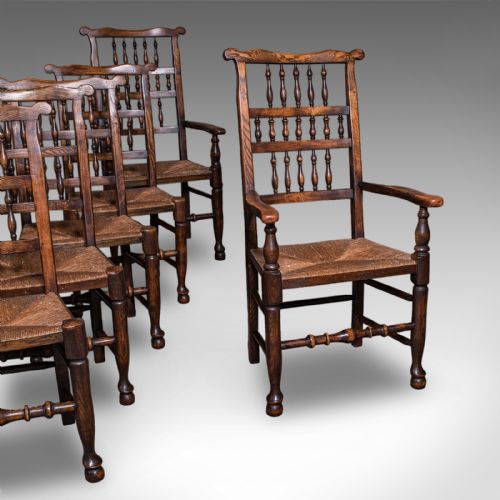
- An armchair designed to match a set of dining side chairs, traditionally placed at the head of the table. These often feature substantial arm supports.
- Vernacular
- Everyday furniture built by local joiners to traditional regional designs rather than high-style metropolitan fashions. These pieces prioritise functional utility.
- Spindle back
- A seating variation that replaces broad slats with numerous slender vertical turned wooden spindles. This construction lightens the visual weight of the frame.
Vintage Ladderback Chairs: Frequently Asked Questions
How do I care for rush seats?
Keep rush seating away from excessive moisture and direct heat sources to prevent the natural fibres from becoming brittle.
Clean the woven surface gently with a dry brush and apply a micro-thin layer of paste wax to the wooden frame periodically.
Are these chairs suitable for daily dining?
Solid timber construction and sturdy joinery make these seats practical for everyday household use around a kitchen or dining table.
Verify that the leg joints and woven rush remain firm before placing chairs under heavy daily loads.
How do I identify Arts and Crafts examples?
Arts and Crafts pieces emphasise visible hand-craftsmanship, honest material selection, and unadorned structural honesty.
Look for workshops associated with the movement, such as Liberty or St Ives makers, that retained traditional joinery and rush seating.
What is the difference between side chairs and carvers?
Side chairs are built without arms to tuck neatly beneath a dining table, while carvers include wooden armrests for added support.
Dining sets often combine six side chairs with two matching carvers for the head of the table.