


Vintage Laboratory Apparatus
Vintage laboratory apparatus brings tangible scientific history into a room, offering functional instruments built for precision across the nineteenth and twentieth centuries.
Vintage Laboratory Apparatus
Vintage laboratory apparatus encompasses scientific instruments and scientific apparatus created across various historical eras, including Georgian, Regency, Victorian, Edwardian, and mid-century periods. These objects served experimental, educational, and medical functions in laboratories and lecture halls.
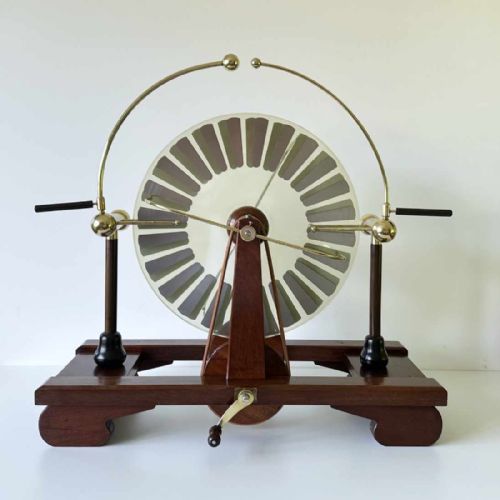
Buyers encounter forms ranging from delicate boxwood thermoscopes and cased microscopes to large electrostatic machines, induction coils, and vacuum tubes. Materials such as brass, glass, mahogany, iron, and steel dominate these functional survivals.
The pieces listed here showcase a progression from nineteenth-century industrial and scientific craftsmanship through to mid-century scientific engineering. Each item reflects the technological pursuits of its specific decade.
Materials and construction methods
Makers utilised polished brass and turned mahogany or boxwood for precision mountings, housings, and delicate components. These traditional materials provided structural stability and aesthetic dignity to scientific instruments.
Heavy iron and steel formed the robust chassis required for large electrostatic machines, Wimshurst devices, and galvanometers. Hand-blown glass formed fragile yet essential elements such as Geissler tubes and vacuum scales.
Later mid-century apparatus incorporated emerging industrial polymers like perspex alongside traditional metals. Rubber and early insulating materials also appeared in wiring and containment components.
Instruments documented in the listings incorporate diverse materials, combining brass, glass, mahogany, wood, iron, steel, perspex, and rubber.
Assessing quality and execution
Quality rests in the precision of engineering and the integrity of surviving original components, from finely graduated scales to intact glass elements. Superior examples display meticulous hand-finishing on brasswork and cabinetry.
The presence of signed maker details or specialised institutional origins elevates an apparatus beyond standard educational equipment. Maker signatures indicate a higher tier of workshop production.
The complexity of the mechanism, such as multi-plate electrostatic generators or intricate galvanometers, distinguishes advanced laboratory instruments from simpler demonstration models.
G. Adam of Paris·Watkins & Hill·Swift & Son·Heinrich Daniel Ruhmkorff·Physica
The Vintage Laboratory Apparatus Glossary
- Thermoscope
- An instrument that shows changes in temperature without necessarily measuring them on a standard numerical scale. Boxwood versions were common in the Regency period.
- Galvanometer
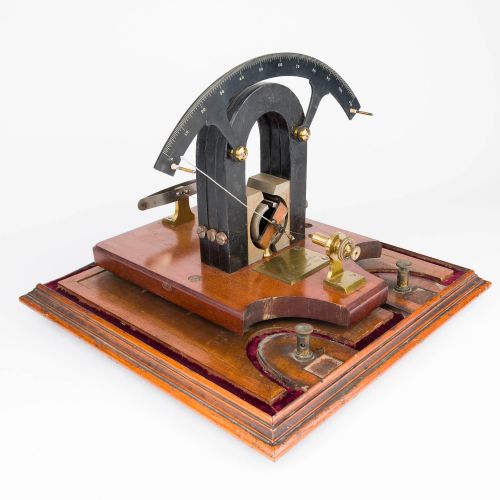
- An electromechanical instrument used for detecting and measuring small electric currents. Devices by makers such as G. Adam of Paris represent this category.
- Geissler tube
- A sealed glass cylinder used to demonstrate electrical discharge in gases at low pressure. Late Victorian examples often feature cross vacuum scales.
- Electrostatic machine
- A generator that produces static electricity at high voltages using rotating plates or cylinders. Large Victorian patterns required substantial wooden and brass frameworks.
- Induction coil
- An electrical transformer used to produce high-voltage pulses from a low-voltage direct current. Ruhmkorff coils are notable historical examples of this apparatus.
Vintage Laboratory Apparatus: Frequently Asked Questions
What is vintage laboratory apparatus used for today?
These objects function primarily as decorative display pieces and historical conversation starters in studies, libraries, and contemporary interiors. Collectors appreciate them for their sculptural qualities and mechanical complexity.
While many items retain their original mechanical integrity, they are generally acquired for aesthetic appreciation rather than active scientific experimentation.
How do I identify a Victorian scientific instrument?
Victorian instruments typically feature heavy brass components, polished mahogany or walnut bases, and hand-engraved inscriptions detailing the maker or institution. The styling reflects nineteenth-century industrial design.
Maker signatures and patent dates stamped directly into the metalwork help confirm the exact period of manufacture.
Are these scientific instruments still in working order?
Working capability varies significantly depending on the fragility of glass components, the condition of internal wiring, and the survival of organic materials like rubber and silk insulation. Some mechanical devices operate smoothly, while others are purely static display objects.
Buyers should examine each piece individually to understand its current mechanical state.
How should I clean brass and mahogany apparatus?
Brass components benefit from gentle dusting with a soft, dry cloth to preserve their historical patina rather than aggressive polishing that removes age. Mahogany bases require simple wiping with a dry or lightly oiled cloth.
Harsh chemical cleaners should be avoided entirely to protect delicate finishes and original maker signatures.