


Mahogany Scientific Apparatus
Mahogany scientific apparatus combines precision brass and glass optics with dense timber housing, built for nineteenth and early twentieth century research.
Mahogany Scientific Apparatus
When you search for mahogany scientific apparatus, you are looking at precision instruments housed in fitted timber cases or mounted on solid timber bases. These pieces date from the Georgian, Victorian, Edwardian, and early twentieth century eras, spanning roughly from 1800 to 1940.
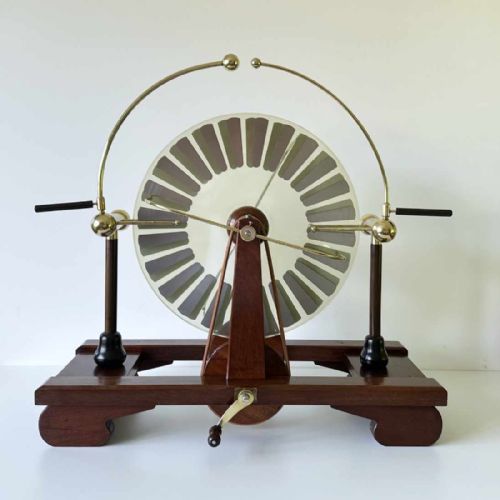
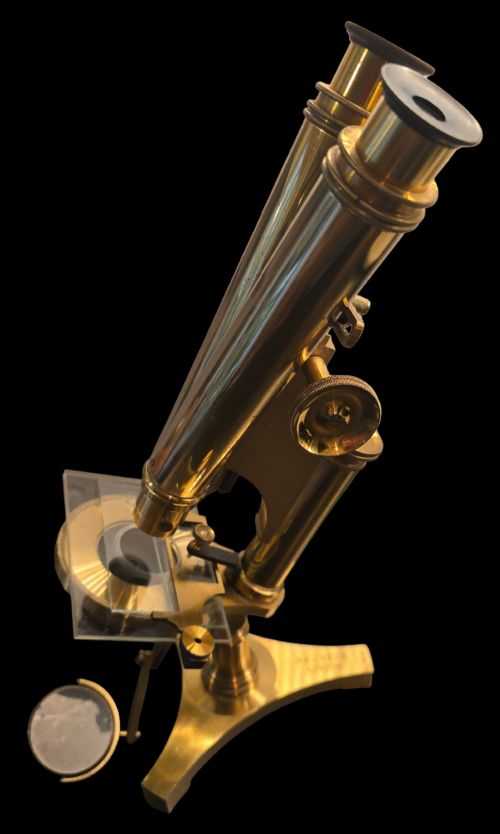
The versions you are most likely to meet on this page include cased microscopes, barographs, galvanometers, and electrical demonstration devices such as Wimshurst and electrostatic machines. Most examples originate from British and European makers, designed for laboratory, medical, or industrial testing use.
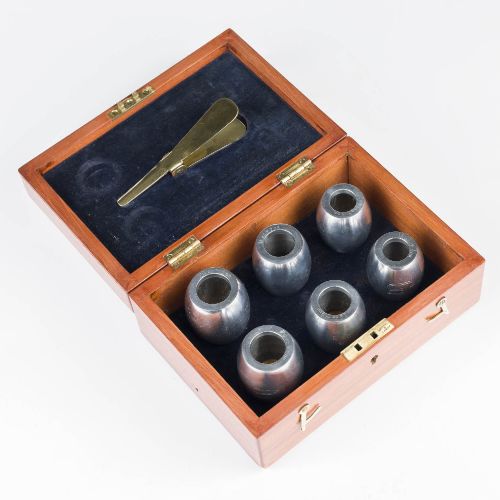
Many items retain their original fitted mahogany boxes, complete with brass carrying handles, velvet or cloth linings, and associated accessory compartments. The timber serves both a structural purpose for mounting delicate movements and a protective function for transport.
How they were made
Makers utilised seasoned mahogany for stability, ensuring the timber base or case would not warp and throw delicate mechanical alignments out of true. Brass fittings, dials, and armatures were cast and turned by hand, then polished or lacquered to prevent tarnishing.
Glass components, ranging from barometer tubes to microscope lenses, were integrated directly into the timber housings alongside iron and steel magnetic cores, coils, and springs. Velvet linings within custom pockets kept fragile instruments secure during movement.
Materials recorded across the inventory include brass, mahogany, glass, velvet, iron, metal, steel, and wood.
What varies in quality
The distinction between standard utility instruments and superior pieces lies in the precision of the mechanical engineering and the quality of the timber selection. Finer examples display finely dovetailed mahogany cases, crisp maker signatures engraved into brass plates, and complex multi-gear or multi-lens configurations.
Signatures of recognised instrument makers add historical weight, whereas unsigned or later utility pieces often show simpler construction methods. The completeness of original components, such as internal glass tubes, chart drawers, and auxiliary lenses, determines the integrity of the surviving apparatus.
De Grave Short And Co·G Adam Of Paris·R And J Beck·Robert Brettell Bate·Casella London·Swift And Son·Heinrich Daniel Ruhmkorff·William Ladd
The Mahogany Scientific Apparatus Glossary
- Barograph
- A self-recording barometer that plots atmospheric pressure over time onto a revolving paper drum housed within a glazed mahogany case.
- Galvanometer
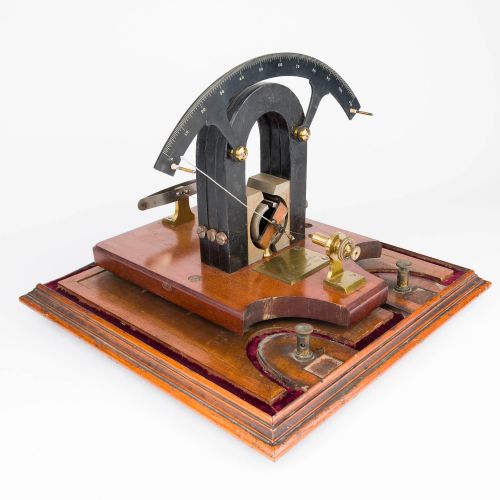
- An electromechanical instrument used for detecting and measuring small electric currents, often mounted on a polished timber base with leveling feet.
- Induction coil
- An electrical device that produces high-voltage alternating current from a low-voltage direct current supply, frequently featuring a primary coil wound around an iron core mounted to a wood board.
- Chondrometer
- A specialised weighing device utilised to determine the specific weight or bushel weight of grain, enclosed in a portable wooden transport box.
- Electrostatic machine
- A generator that produces static electricity through friction or induction, built with large glass plates and brass collectors supported by wooden frames.
Mahogany Scientific Apparatus: Frequently Asked Questions
How do I clean the mahogany wood?
Dust the timber gently with a dry, soft cloth to remove surface particles without disturbing delicate brass parts.
Avoid using modern liquid polishes or silicone sprays, as these can seep into joints and damage historic lacquered finishes.
Are these scientific instruments still operational?
Some mechanical devices, such as barographs and chidrometers, retain their physical functionality if internal linkages remain intact.
Electrical apparatus from the nineteenth century should be examined by a specialist before any attempt at operation due to aged wiring and high voltages.
Why is mahogany used for scientific instruments?
Mahogany provides exceptional dimensional stability, resisting the warping and twisting that would otherwise misalign delicate internal gears and optical paths.
The density of the timber also offers robust physical protection for sensitive glass tubes and calibrated brass scales during transport.
How do I identify the date of an instrument?
Look for engraved maker signatures, patent dates, and address details on the brass plates attached to the timber base or case.
Construction styles, such as Georgian dovetailing versus Edwardian machine production, also offer clear clues to the period of manufacture.