
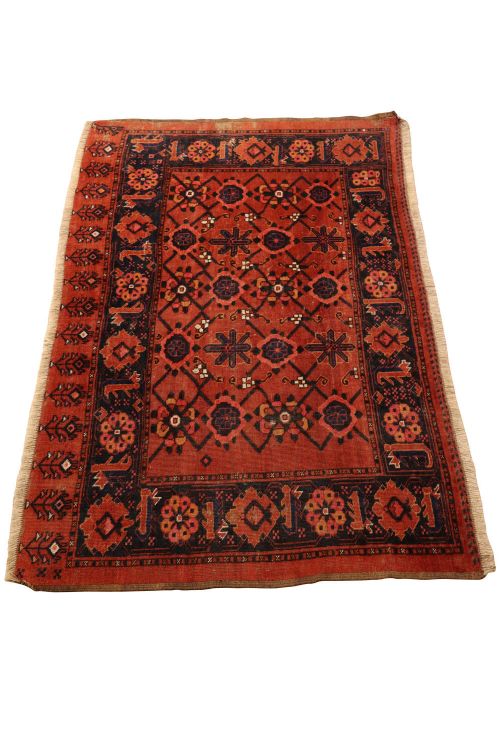


Vintage Kurdish Weaving
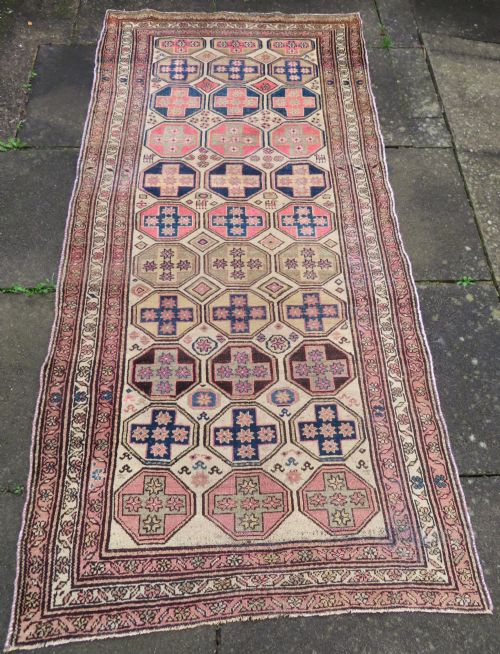
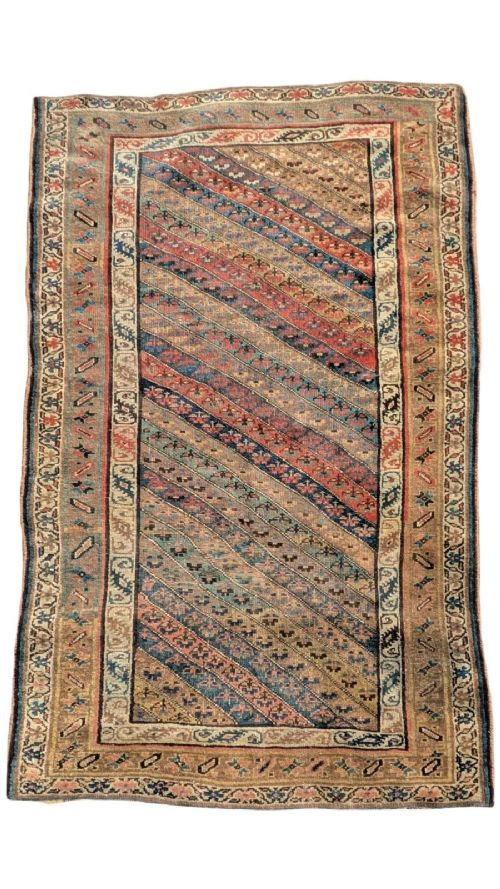
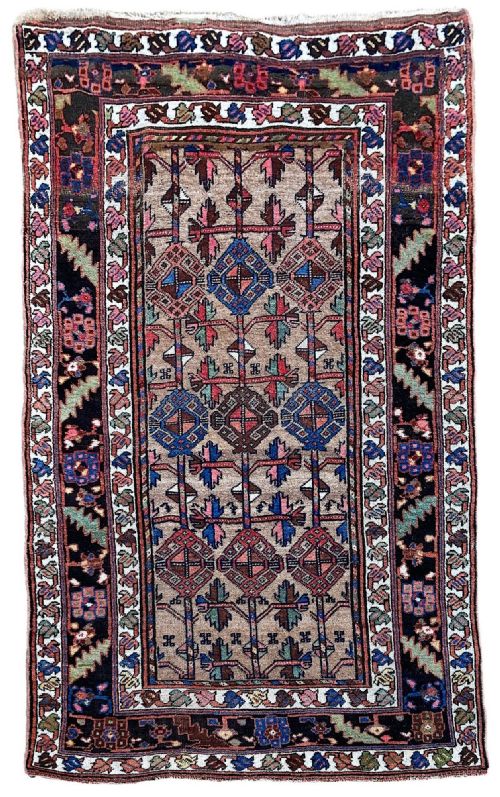
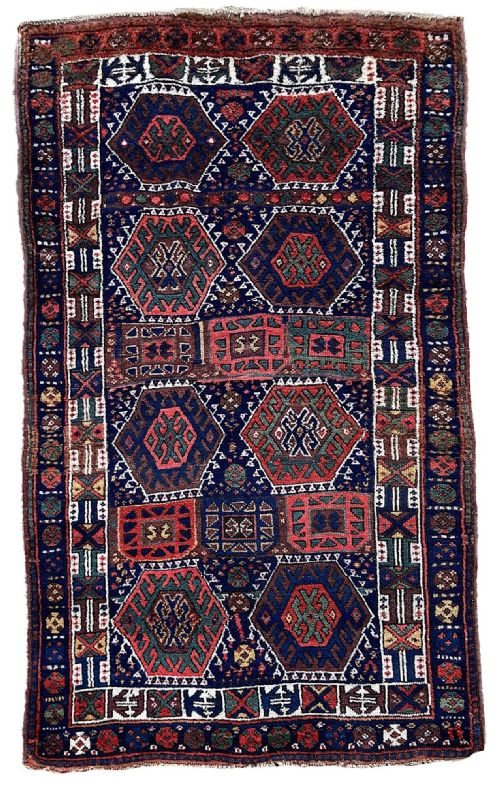
Vintage Kurdish weaving brings heavy tribal character, geometric motifs and rich wool into a room through rugs, runners and cushions.
Vintage Kurdish Weaving
Vintage Kurdish weaving encompasses hand-knotted rugs, long runners, saddlebags, grain sacks and cushions produced by tribal groups across regions spanning Persia, the Caucasus and Anatolia. When searching for vintage Kurdish weaving, a buyer encounters dense village floor coverings alongside smaller nomadic bag faces and utilitarian household textiles.
The pieces appearing on this page span the nineteenth century through the early twentieth century, showing strong tribal and nomadic designs. Forms range from compact square cushions to expansive kelleh long rugs and runners.
Makers include specific regional groups such as the Jaf, Senneh, Bidjar and Quchan Kurds, each bringing distinct local layouts to their textiles. Buyers find both room-sized carpets and smaller decorative pieces suited to diverse interior spaces.
How they were made
Weavers relied principally on wool, hand-spun wool and cotton, often utilising goat hair for sturdy selvedges and structural bindings. Hand-spinning imparted subtle irregularities and texture to the yarns before dyeing.
Natural dyes provided the palette, producing rich tones across yellow grounds, deep reds and dark blues that aged gracefully over decades. Weavers knotted these materials tightly onto cotton or wool foundations to create durable floor coverings and domestic textiles.
Some nineteenth-century grain sacks spent decades holding wheat before joining European country houses as prized floor art.
What varies in quality
The distinction between standard village production and finer examples rests in the density of the knotting and the handling of the wool. Tighter structures yield greater crispness in geometric motifs such as Memlinc guls and shrub designs.
Colour saturation and the clarity of natural dyes influence the visual impact of each piece. Superior examples display harmonious palettes and intricate drawing that reflect the highest skill of the tribal weaver.
The Vintage Kurdish Weaving Glossary
- Kelleh
- A large rectangular format of carpet, typically longer than a standard room rug but wider than a runner. These substantial pieces served major functions in tribal households.
- Gul
- A repeating medallion or octagonal design motif frequently found in tribal carpets. The term encompasses various geometric structures originating in central and western Asian weaving traditions.
- Juval
- A large storage bag face produced by nomadic tribes for household possessions. These textiles often feature complex repeating patterns designed for utility and display.
- Saddlebag
- A paired utility bag woven for transport on animals, often separated into two matching faces. Collectors prize complete pairs or individual bag faces for their compact, concentrated designs.
- Bidjar
- A renowned weaving centre in western Persia known for heavy, dense foundations and robust construction. Rugs from this town often earn the description of iron rugs due to their solid weight.
Vintage Kurdish Weaving: Frequently Asked Questions
Where were these woven?
These textiles originate from mountainous regions inhabited by Kurdish tribes, primarily across north-west Persia, Kurdistan, parts of the Caucasus and East Anatolia. Tribal groups moved through these valleys and plateau areas, bringing distinctive local knotting traditions to their domestic production.
Villages and nomadic camps each developed recognisable patterns, from the bold geometric layouts of the Jaf and Hamadan to the refined structures associated with Senneh and Bidjar.
How do I care for a vintage rug?
Protect antique wool textiles by placing a suitable underlay beneath them to prevent slipping and reduce friction against hard floors. Vacuum gently using suction attachments without rotating brush bars to keep the pile safe from aggressive pulling.
Rotate the floor covering periodically to ensure even exposure to foot traffic and sunlight. Professional cleaning suited to antique wool and natural dyes should occur only when necessary.
What is a tasheh?
A tasheh or tacheh functions as a wheat sack or grain bag woven by tribal groups for storage and transport. These utilitarian items exhibit the same robust hand-spun wool and natural dye palettes found in larger floor rugs.
Collectors value surviving agricultural sacks for their dense tribal iconography and compact scale. They frequently find new life as decorative display pieces within domestic interiors.
Are these pieces symmetrical?
Tribal and village weaving naturally incorporates slight irregularities in line, motif placement and colour distribution. Hand-spun wool and memory-based designs mean that absolute symmetry rarely occurs in authentic nineteenth-century nomadic work.
These minor variations confirm the hand-made origins of the textile rather than factory production. The asymmetry adds distinct character and visual depth to each individual piece.