






Vintage Khamseh Rug
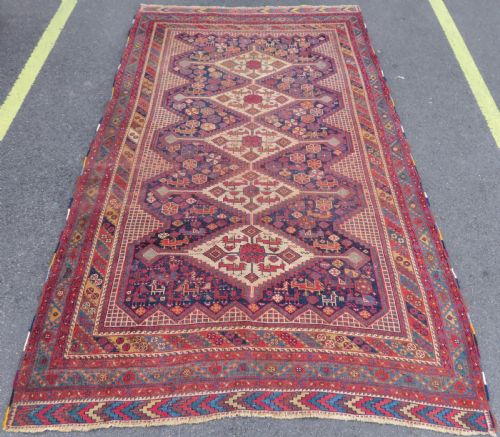
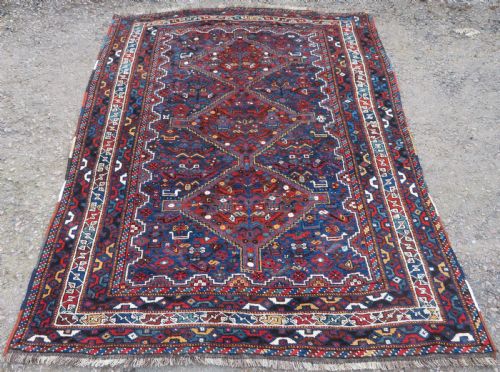
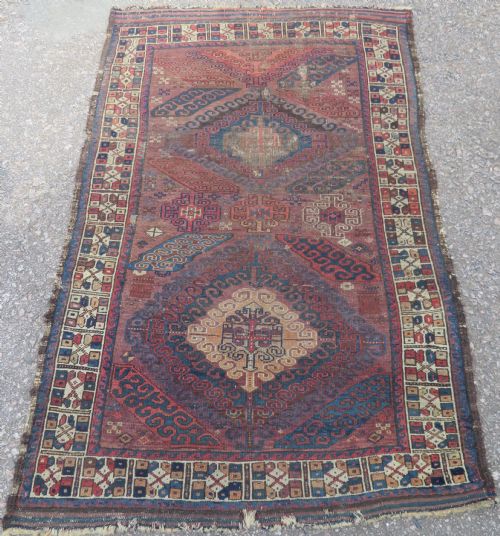
A vintage khamseh rug brings the bold weaving traditions of south-west Persian nomads directly into your home.
Vintage Khamseh Rug
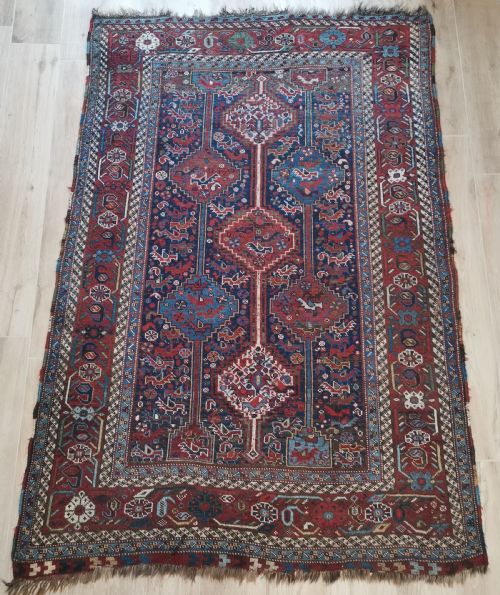
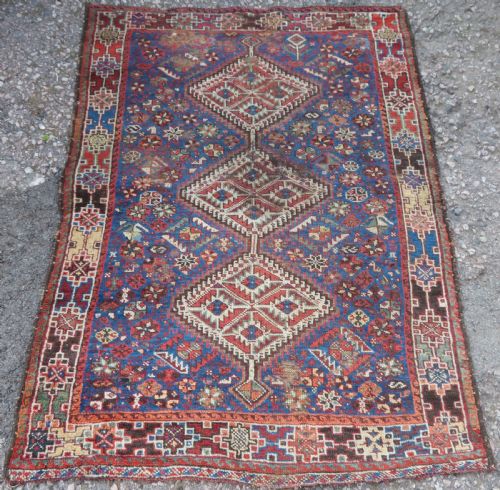
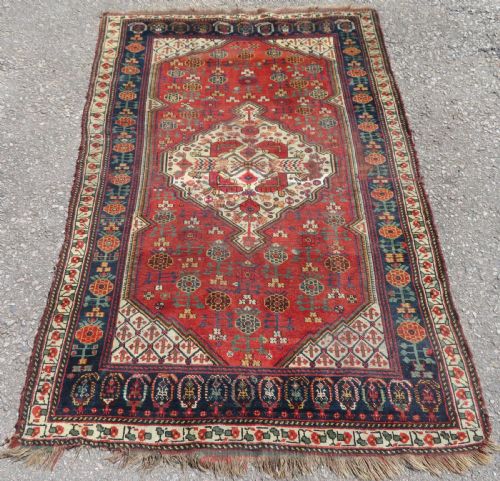
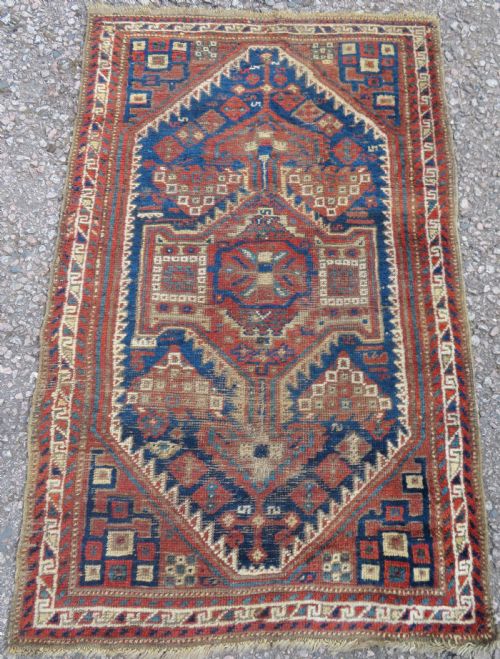
A vintage khamseh rug is woven by the confederated Arab, Basseri, Baharlu, and Arab-Jabbareh tribes of south-west Persia. These floor coverings emerge from nomadic traditions that span the late nineteenth century and the early decades of the twentieth century.
Most pieces seen here belong to the broader categories of tribal and nomadic weaving, often sharing stylistic crossover with neighbouring Qashqai and Luri groups. They appear as smaller area rugs or larger carpets, marked by distinct village and tribal aesthetics.
Materials and construction
Makers construct these textiles using hand-spun wool for the pile and cotton for the foundation structures. The reliance on natural dyes produces a rich, saturated palette that deepens gracefully over the decades.
The hand-woven knotting technique allows for intricate geometric patterns and tribal motifs to emerge densely across the surface of each carpet.
Vintage Khamseh Rug Retail Price Guide 2026
Typical asking prices for vintage khamseh rug among the pieces listed under this phrase on Sellingantiques today, from the lower quarter to the upper quarter. They describe what is for sale here now, not the wider market.
Eagle-eyed collectors occasionally spot whimsical peacock motifs woven quietly among the traditional geometric patterns of these nomadic carpets.
Assessing quality in tribal weaving
Quality rests on the density of the weave and the clarity of the tribal motifs executed by the weaver. Finer knots permit more intricate geometric articulation and sharper colour contrast.
The integrity of the hand-spun wool and the depth achieved through natural dyes also dictate the overall standard of the piece, alongside the preservation of the original tribal structure.
The Vintage Khamseh Rug Glossary
- Confederation
- A union of distinct tribes grouping together for mutual security and economic trade. In this context, it refers to the alliance of diverse groups producing shared textile designs.
- Nomadic
- Pertaining to pastoral peoples who move seasonally with their flocks. Their weaving traditions are adapted to portable vertical looms.
- Pile
- The upright loops or cut ends of yarn that form the usable surface of a rug. It is traditionally hand-knotted onto a warp and weft foundation.
- Natural Dyes
- Colourants derived from plants, insects, and minerals rather than synthetic chemical compounds. They yield subtle tonal variations across the wool.
Vintage Khamseh Rug: Frequently Asked Questions
What is a khamseh rug?
A khamseh rug is a hand-woven textile created by the nomadic and semi-nomadic tribes of south-west Persia. These pieces reflect the distinct cultural heritage of confederated groups such as the Basseri and Arab-Jabbareh.
Weavers utilise traditional techniques, local wool, and natural dyes to produce durable floor coverings filled with geometric motifs and tribal symbolism.
How old are these rugs?
The pieces available originate primarily from the late nineteenth century through to the early twentieth century. Dating relies upon structural analysis, wool characteristics, and traditional design markers.
Most examples span a period from the eighteen-seventies up to the nineteen-twenties, capturing a vital era of Persian tribal craftsmanship.
How do I style a tribal rug?
Tribal rugs serve as grounding elements in both traditional and contemporary interiors, adding texture and historical depth to a room. Their rich palettes and geometric patterns pair effectively with minimalist furniture and neutral flooring.
Placing them in high-traffic living areas or studies allows the dense wool pile to be both seen and enjoyed daily.
How do I distinguish Khamseh from Qashqai?
Distinguishing between Khamseh and neighbouring Qashqai weaving involves examining specific tribal motifs, colour combinations, and structural nuances. Both traditions stem from south-west Persia and share stylistic influences.
Khamseh pieces frequently incorporate specific sub-tribal signatures, such as those from the Basseri or Baharlu, alongside distinct dark blue or red fields.