


Vintage Karaja Rug
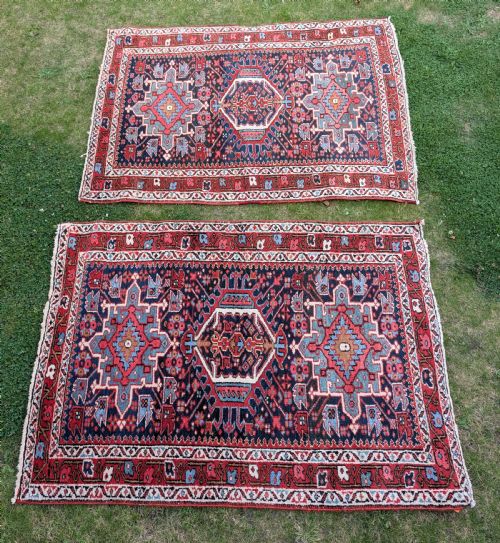
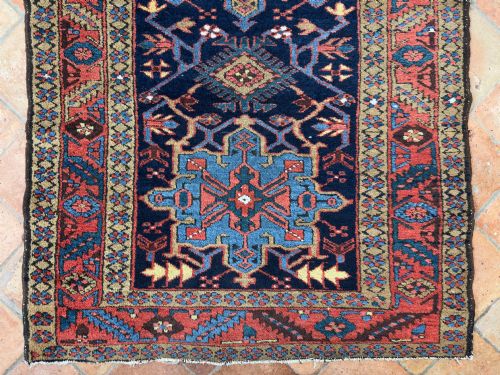
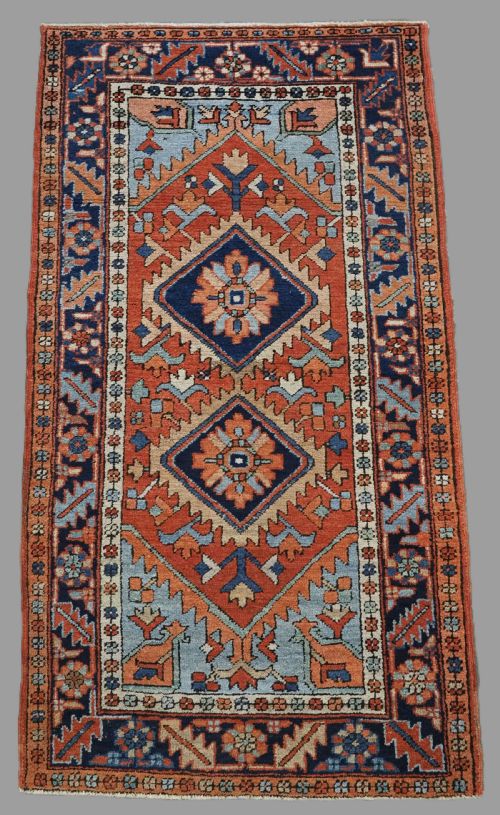
A vintage karaja rug brings bold geometric motifs and rich colour straight from North-West Persia into your hallway or sitting room.
Vintage Karaja Rug
When you examine a vintage karaja rug, you encounter traditional Persian tribal weaving originating from the Heriz region and broader North-West Persia. The selection spans the nineteenth century through to the early decades of the twentieth century, capturing decades of village craftsmanship.
Most examples on this page take the form of area rugs, small format floor coverings, or elongated hallway runners. You also find larger carpets and occasional pairs designed to anchor traditional rooms with distinct regional patterns.
How they were made
Weavers construct each vintage karaja rug using hand-knotted wool pile secured onto sturdy cotton foundations. This traditional technique creates a dense, resilient surface capable of withstanding heavy daily use.
The wool used in these pieces provides a durable structure that holds natural dyes securely over generations. Artisans in North-West Persia combined these materials to produce sturdy carpets and narrow runners.
The listings span from the 1870s through to the 1930s, featuring wool and cotton construction in both runner and area rug formats.
What varies in quality
The fineness of the knotting and the complexity of the geometric design distinguish individual pieces within this tradition. Tighter knots allow crisper rendering of traditional medallions and tribal motifs across the field.
Depth and saturation of colour also divide the standard examples from the exceptional works. Superior pieces display vibrant, varied hues achieved through skilled dyeing practices from the nineteenth and early twentieth centuries.
The Vintage Karaja Rug Glossary
- Karaja
- A style of rug originating from the village of Karajah in North-West Persia, known for geometric medallion designs. These rugs share stylistic traits with neighbouring Heriz productions.
- Runner
- A long, narrow carpet format specifically proportioned for hallways, corridors, and stairs. They guide movement through domestic spaces while protecting wooden floors.
- Hand-knotted
- A method where individual lengths of wool yarn are tied by hand onto warp threads one by one. This labour-intensive process forms the pile of traditional Persian carpets.
- Pile
- The upright yarn surface of a rug formed by the cut ends of knots. It provides the soft, protective layer walked upon daily.
- Medallion
- A large, central ornamental design motif placed in the middle of the rug field. Karaja weavers frequently employ geometric or polygonal versions of this shape.
Vintage Karaja Rug: Frequently Asked Questions
Where were karaja rugs made?
These pieces originate from the village of Karajah and the wider Heriz region located in North-West Persia. Local weavers developed distinctive geometric vocabularies distinct from city workshops.
The tradition spans generations of village production, resulting in durable floor coverings created for domestic use.
How do I use a runner rug?
Narrow runner formats suit hallways, corridors, and narrow entryways where traditional area rugs prove too wide. They soften footsteps and introduce warmth to transitional spaces.
Ensure you place a suitable underlay beneath the runner to prevent slipping and reduce wear on the cotton foundation.
How do I date an antique rug?
Dating relies on assessing the structural materials, dye palettes, and stylistic traits recorded across the piece. Examples on this page date from the late nineteenth century through to the 1930s.
Analysing the wool quality and the handling of the geometric motifs helps narrow down the period of production.
Are these rugs durable for daily use?
The combination of hand-knotted wool pile and cotton foundations creates a robust structure built for everyday living. Village weavers constructed these textiles to endure heavy foot traffic.
Routine care and gentle cleaning allow these historic floor coverings to remain functional in modern homes.