







Vintage Japanese Pottery
Vintage japanese pottery spans delicate hand-painted Satsuma porcelain and robust Imari vessels, bringing rich Meiji and Taisho craftsmanship into modern interiors.
Vintage Japanese Pottery
Vintage japanese pottery comprises a diverse selection of decorative vases, table lamps, bowls, and dishes spanning the late nineteenth century through the 1930s. Buyers encountering this selection will frequently find Satsuma ware and Imari porcelain pieces originating from major historical periods such as the Meiji and Taisho eras.
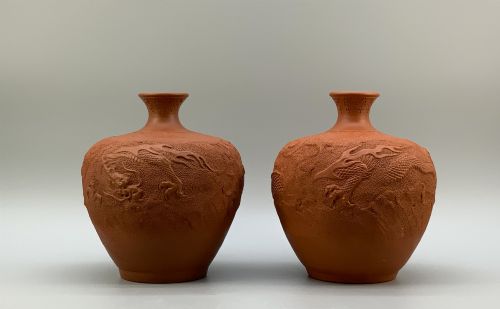
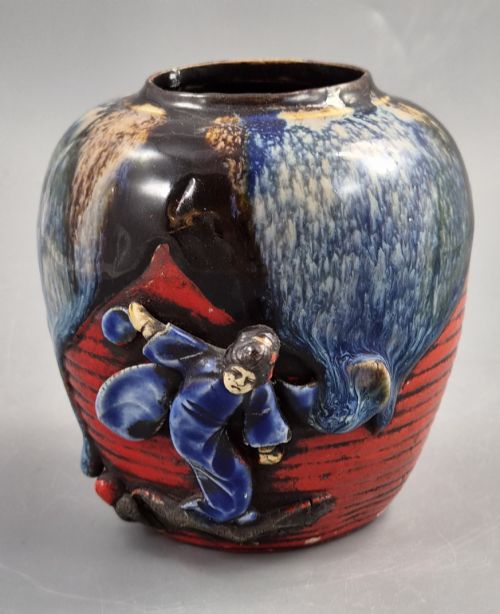
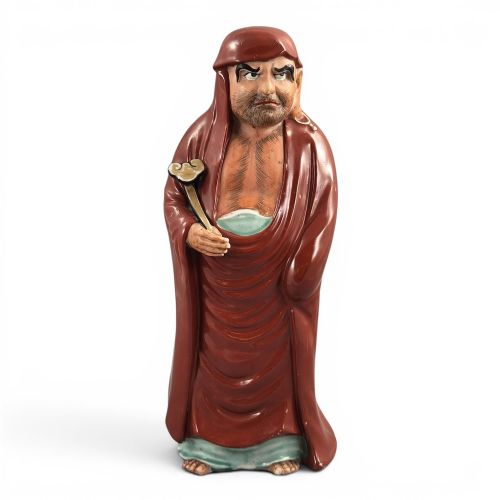
The objects range from miniature vases and tea jars to monumental floor-standing vessels, okimono figures, and complete sets of plates housed in storage boxes. Items like Sumida Gawa jars with applied figures and Tokoname red clay dragon vases represent distinct regional workshops and sculptural forms available in the current selection.
Materials and Techniques
Potters utilised porcelain, earthenware, stoneware, and red clay as foundational bodies, often shaping items on the wheel or forming them by hand. Applied clay elements, geometric inset panels, and sculpted figures appear frequently across Sumida Gawa and Satsuma objects.
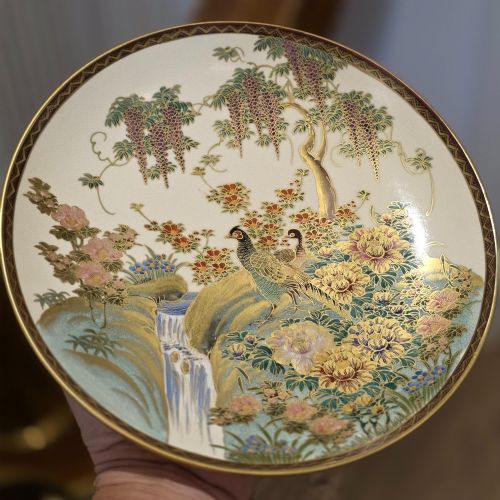
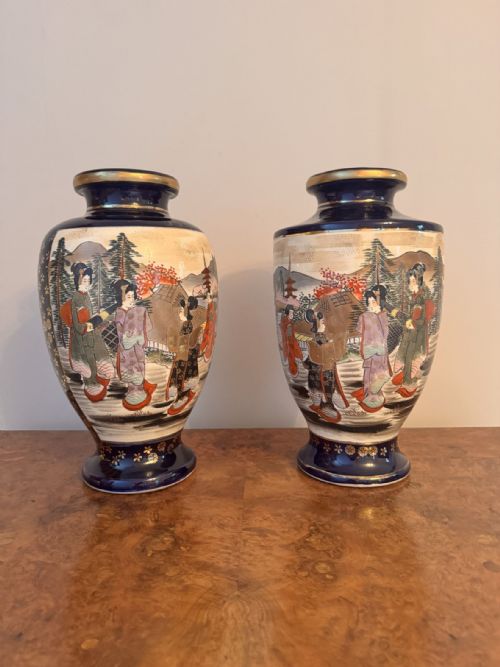
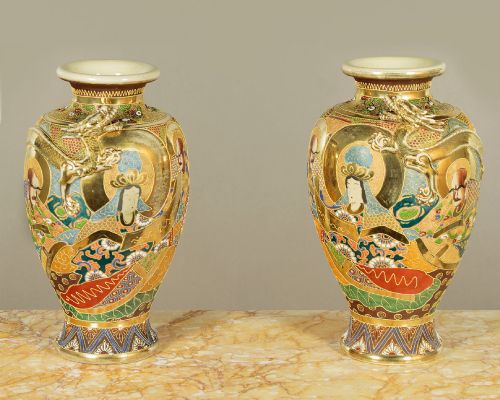
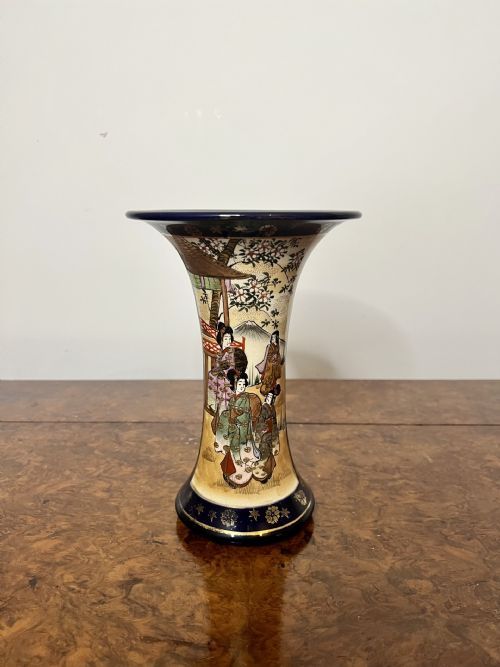
Surfaces received elaborate decoration through detailed enamel painting, blue flambé glazes, gold leaf, and gilt highlights. Signed works and specialised workshops employed intricate figural processions, landscape scenes, and mon emblems fired onto the ceramic body.
Vintage Japanese Pottery Retail Price Guide 2026
Typical asking prices for vintage japanese pottery among the pieces listed under this phrase on Sellingantiques today, from the lower quarter to the upper quarter. They describe what is for sale here now, not the wider market.
Recorded forms feature functional items like tea sets and table lamps alongside decorative vases, jars, and okimono figures.
Standards of Execution
The division between standard output and superior pieces rests upon the precision of the hand-painted enamel work and the finesse of the gilding. Master decorators from recognised kilns applied dense figural scenes and crisp linework that maintain clarity even on miniature vessels.
Structural ambition and sculptural complexity also distinguish the range, separating simple utilitarian forms from monumental bowls and vases featuring complex applied figures and deep relief. The presence of artist signatures, workshop seals, and original storage containers elevates the standing of individual pieces.
Koshida·Chosei·Hakusan·Kinkozan·Taniguchi·Makuzu Kozan II
The Vintage Japanese Pottery Glossary
- Satsuma
- A type of earthenware with a fine crackle glaze, typically decorated with polychrome enamels and rich gilt details. Originating from Satsuma Province, it became widely produced in Kyoto and Tokyo for export during the Meiji period.
- Imari
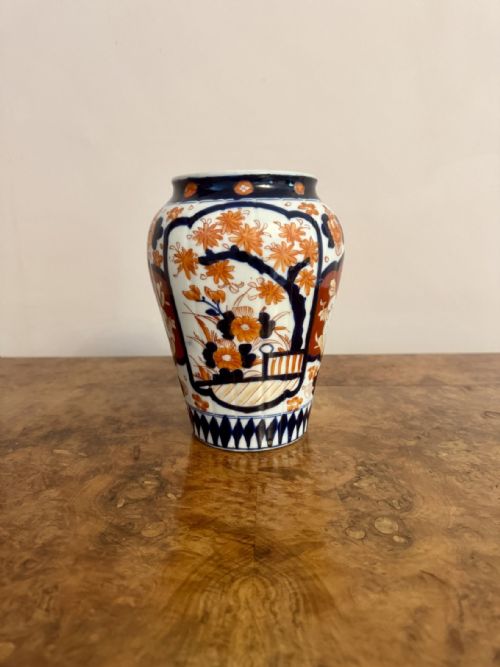
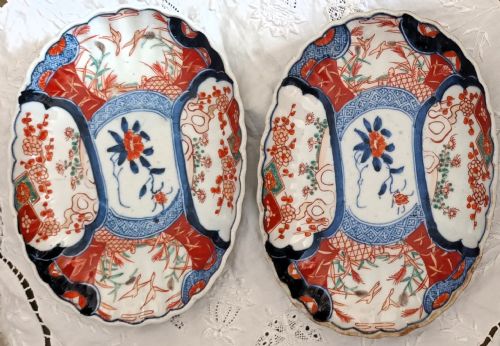
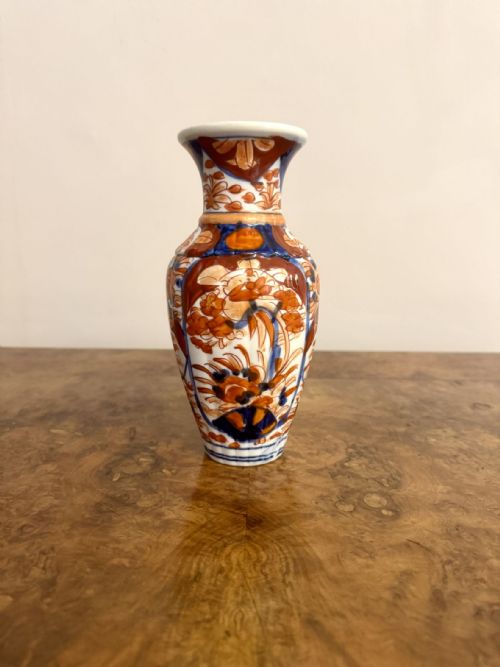
- Japanese porcelain decorated in underglaze blue and overglaze iron red, green, and gold, named after the port of shipment. These wares are noted for their bold patterns and durable porcelain bodies.
- Okimono
- A decorative statue or figurine designed for display on a shelf or in a tokonoma alcove. These sculpted ceramic figures often depict historical figures, deities, or mythical subjects.
- Mon
- A Japanese emblem or crest used to decorate garments, furnishings, and ceramics to indicate family lineage or clan affiliation. These crests frequently appear on high-status Satsuma and Imari vessels.
- Sumida Gawa
- A distinctive ceramic style originating near Tokyo, featuring heavy melting glazes and highly textured, sculptural figures applied directly to the body of the jar or vase.
Vintage Japanese Pottery: Frequently Asked Questions
How do I care for antique Japanese ceramics?
Dust these decorative pieces gently with a soft, dry cloth and avoid exposing them to direct sunlight or moisture to protect the delicate enamel and gold leaf decorations.
Keep them safely positioned on stable surfaces away from high-traffic areas, as older earthenware and porcelain bodies can be vulnerable to accidental knocks.
What is the difference between Satsuma and Imari ware?
Satsuma pieces are constructed from earthenware with a characteristic ivory-coloured crackle glaze, heavily embellished with enamels and gilding. They are designed primarily for decorative display.
Imari pieces utilise a harder porcelain body decorated in vibrant cobalt blue, iron red, and gold, historically serving both practical and decorative purposes.
How can I tell the period of a piece?
Examine the materials, painting style, and any artist signatures or workshop seals present on the base or body of the vessel. Meiji period items often display intricate gilding and traditional motifs, while Taisho and later pieces may incorporate different stylistic influences.
Reference the specific regional characteristics, such as the red clay of Tokoname or the melting glazes of Sumida Gawa, to narrow down the era of manufacture.
Were these items made for export?
Many of the Satsuma and Imari vessels produced during the late nineteenth and early twentieth centuries were specifically created for international trade and exhibition.
These export pieces combined traditional Japanese craftsmanship with Western decorative tastes, resulting in the diverse array of vases, tea sets, and decorative plates found today.