
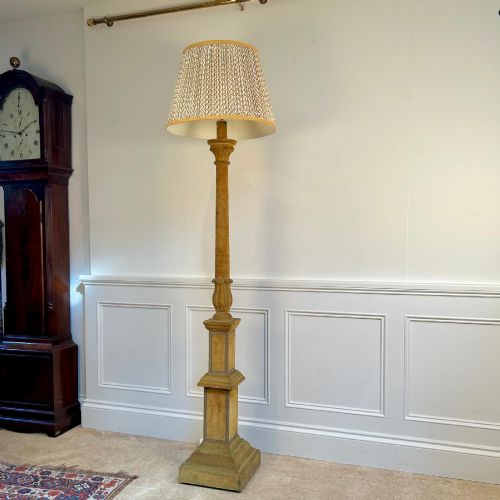


Vintage Italian Floor Lamp
These vintage italian floor lamp designs combine elaborate carving with gilded surfaces to illuminate large rooms with historic presence.
Vintage Italian Floor Lamp
A vintage italian floor lamp represents tall vertical lighting created in various historical periods ranging from Victorian and Edwardian eras back to the nineteenth century. Buyers searching this phrase encounter standard lamps and figural floor lamps rather than simple modern reading lights.
The most common examples on this page feature elaborate regional styles including Venetian Baroque, Italian Florentine, and Italianate Baroque. These pieces frequently take the form of carved wooden figures on stands or tall gilded shafts designed to command attention in a grand interior.
How they were made
Carved wood forms the structural core of these lamps, shaped by hand into intricate botanical motifs, classical details, or figural representations. Artisans applied gesso over the wooden base to create a smooth, responsive ground for subsequent decorative layers.
Surfaces received rich applications of gold leaf, giltwood, or polychrome paint to achieve their luminous metallic finishes and vibrant coloration. Certain examples incorporate glass and brass elements alongside marbleised details to enhance the visual weight and texture.
Listings span the nineteenth century up through the 1930s, utilising materials like giltwood, brass, and polychrome paint.
What varies in quality
The depth and precision of the hand carving separates standard production from superior craftsmanship, particularly in figural pieces where facial expressions and drapery folds demand high sculptural skill. Finer examples display crisp detail in the gesso work beneath the gilding rather than softened edges or heavy plaster buildup.
The integrity of the original surface finish dictates the character of the piece, with well-preserved gold leaf and authentic polychrome paint holding greater aesthetic appeal. Restoration work impacts overall quality depending on how sympathetically past interventions respect the original nineteenth or early twentieth century materials.
The Vintage Italian Floor Lamp Glossary
- Giltwood
- Wood that has been coated with thin sheets of gold leaf. This technique provides a durable and reflective metallic surface that catches lamplight.
- Gesso
- A mixture of binder mixed with chalk or plaster applied to wood. It creates a smooth white foundation essential for detailed carving and gilding.
- Polychrome paint
- Decoration executed in multiple colours. It brings lifelike hues to carved wooden figures and architectural ornament.
- Standard lamp
- A traditional British term for a tall floor lamp. These freestanding vertical fixtures traditionally support fabric lamp shades.
- Venetian Baroque
- An ornate artistic style originating in Venice characterised by dramatic movement and rich decoration. It influences the sweeping curves found in these lamp bases.
Vintage Italian Floor Lamp: Frequently Asked Questions
What is a vintage italian floor lamp?
A vintage italian floor lamp is a tall freestanding lighting fixture produced in Italy during periods like the Victorian era or the 1920s. These pieces often feature hand-carved wooden structures and gilded surfaces.
They serve both practical illumination needs and decorative roles in high-ceilinged rooms. Collectors value them for their distinct regional craftsmanship and historic character.
How do I style a standard lamp?
These tall floor lamps work best in spacious living rooms, studies, or hallways where their height commands attention. Position them beside large armchairs or in empty corners to create warm ambient illumination.
Pair them with traditional fabric shades that complement their gilded wood or polychrome finishes. Ensure the scale of the shade matches the substantial presence of the carved base.
How can I tell the period?
Dating relies on examining the specific carving techniques, materials, and stylistic markers recorded in the evidence. Pieces from the nineteenth century often display distinct Victorian or Edwardian joinery alongside denser wood preparation.
Later examples from the 1920s and 1930s sometimes show transitional design elements while retaining traditional Venetian or Florentine motifs. Comparing the giltwood application and gesso texture helps clarify the age of the item.
Were these lamps originally electrified?
Many nineteenth-century and early twentieth-century standards began life as oil lamps or candle stands before conversion to electricity. This evolution means internal wiring routes have often been adapted during subsequent restorations.
Buyers should examine how electrical cords integrate with the historic wooden shaft. Professional rewiring is frequently required to ensure safe modern operation while preserving the antique stand.