



Vintage Italian Bronze Statue
These vintage italian bronze statue pieces bring classical motifs and academic realism into your rooms.
Vintage Italian Bronze Statue
When you search for a vintage italian bronze statue, you are looking at cast metal works originating from Italy, spanning the nineteenth and early twentieth centuries. These figures range from classical figures and literary busts to animal studies produced for the Grand Tour market.
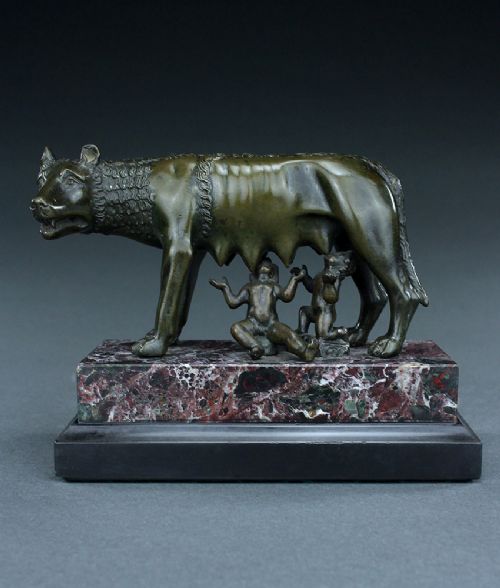
The versions you are most likely to meet on this page include Grand Tour souvenirs, classical revival figures, and animalier studies. They often incorporate marble plinth bases alongside the bronze casting.
Makers recorded in these listings include Luigi Secchi, Muñoz, Giuseppe Moretti, Vannetti, and Ugo Cipriani. Their subjects cover mythological figures, historical writers, and animal groups.
How they were made
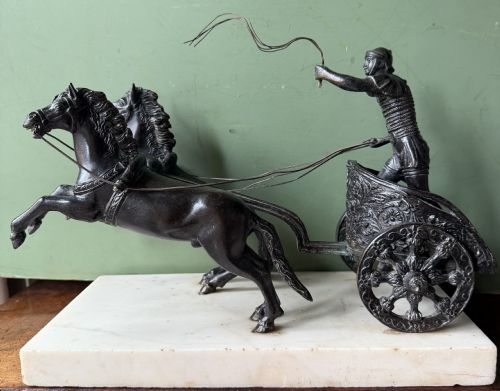
The pieces on this page are formed from bronze and silvered bronze, utilising traditional casting methods. Certain examples receive a green patination to alter the appearance of the metal surface.
Many of these sculptures are mounted upon stone or white marble plinth bases. This combination of cast metal and carved stone provides stability and contrast for the figures.
Materials recorded across the current selection include bronze, silvered bronze, stone, and white marble.
What varies in quality
Quality in these sculptures rests upon the crispness of the cast and the treatment of the surface patina. Softer details and muddy patination separate lesser examples from works with sharp definition.
The integration between the bronze figure and its marble plinth base indicates the care taken during production. Well-fitted mounts and stable stone bases demonstrate superior workmanship.
Luigi Secchi·Giuseppe Moretti·Vannetti·Ugo Cipriani
The Vintage Italian Bronze Statue Glossary
- Bronze
- An alloy of copper and tin used for casting sculpture. It takes fine detail and develops a patina over time.
- Grand Tour
- A traditional trip through Europe undertaken by upper-class young men in the eighteenth and nineteenth centuries. Souvenirs included small bronzes of classical monuments and figures.
- Patina
- A thin layer that forms on the surface of bronze through age or chemical treatment. It can range in colour from dark brown to green.
- Animalier
- A nineteenth-century art movement focusing on the realistic portrayal of animals. Sculptors in this style often depicted wild beasts and domestic creatures in natural poses.
- Plinth
- A heavy base supporting a statue or bust. In these listings, they are frequently made of white marble or stone.
Vintage Italian Bronze Statue: Frequently Asked Questions
What is a Grand Tour bronze?
A Grand Tour bronze is a small souvenir figure purchased by travellers in Italy during the nineteenth century. These pieces typically reproduced classical sculptures or ancient architecture.
They allowed travellers to bring classical history and mythology back to their homes.
How do I care for bronze?
Bronze requires minimal maintenance to keep its surface stable. Dusting with a dry, soft cloth prevents the accumulation of grime.
Avoid using liquid cleaners or polishes, as these can strip the original patina from the metal.
Why are marble bases used?
Marble bases provide a heavy foundation that keeps tall or top-heavy bronze figures upright. They also create a visual contrast against the dark metal.
Many nineteenth-century sculptures relied on these stone plinths for structural balance.
What does green patination mean?
Green patination refers to the deliberate chemical colouring applied to the bronze surface. It mimics the appearance of ancient weathered bronze.
This finish was commonly used on Grand Tour pieces to evoke antiquity.