


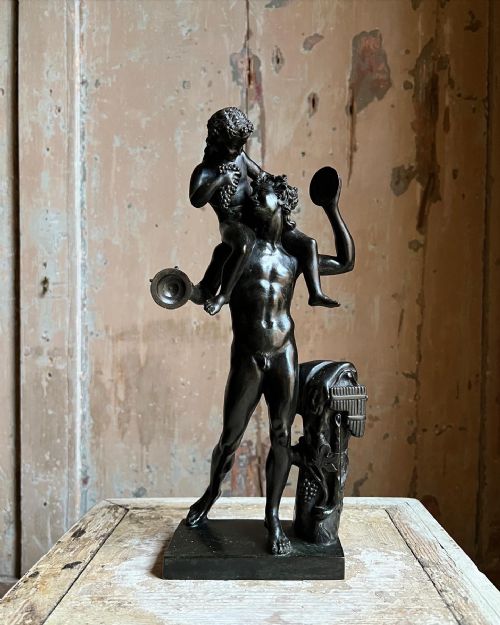


Bronze Bacchus Figure
A bronze bacchus figure brings classical mythology into the room through heavy cast metal and patinated detail.
Bronze Bacchus Figure
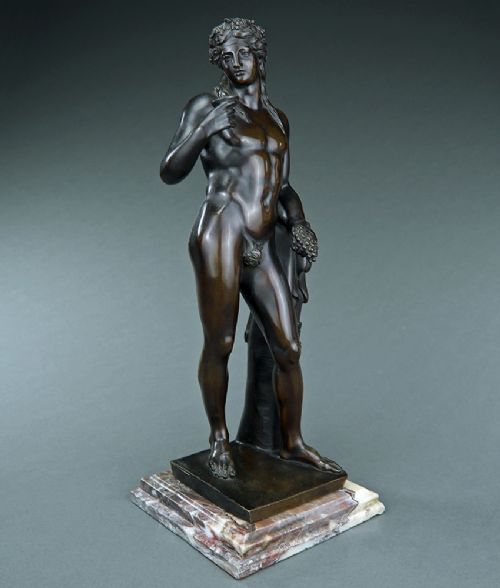
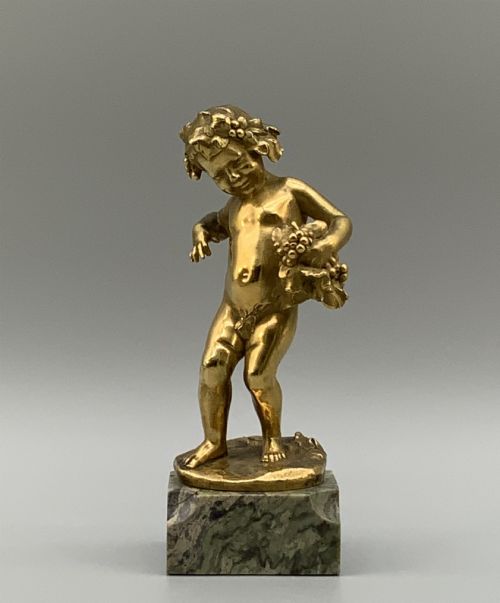
A bronze bacchus figure represents the classical god of wine, revelry and agriculture, often shown as a youth or infant accompanied by grapes, pan pipes or satyrs. These sculptures emerge from the nineteenth century, including Grand Tour productions from Italy and French neoclassical foundry work.
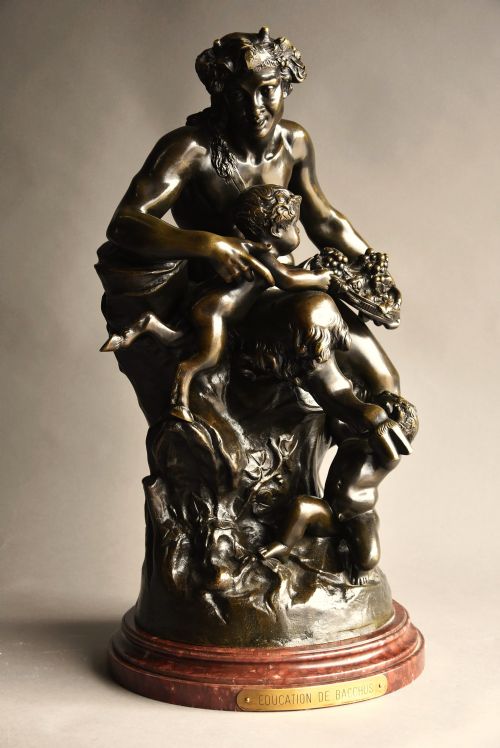
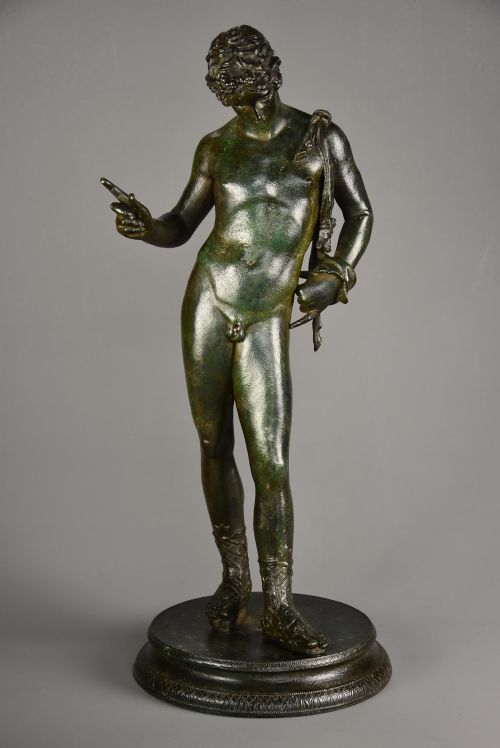
The objects take several distinct forms on this page, ranging from single standing figures to complex groups featuring putti, maidens and fauns. Many follow ancient Roman prototypes discovered at Pompeii or classical marble statues seen by travellers on the Grand Tour.
Most examples date across the nineteenth and early twentieth centuries, utilising traditional lost-wax casting methods. The modelling draws heavily on antique sculpture and the distinct style of eighteenth-century French sculptors like Claude Michel Clodion.
Materials and casting methods
Foundries shaped these works using bronze, sometimes applying gilt highlights or rich green and dark brown patination to simulate aged metal surfaces. Many figures incorporate stone or marble bases that provide weight and structural support.
The casting process relied on traditional methods to capture fine details such as hair curls, grape clusters and animal pelts. Skilled chiselling and filing followed the initial cast to sharpen the definition before the chemical patina was applied.
Listings feature works cast in patinated bronze, gilt bronze and marble across the nineteenth and early twentieth centuries.
Judging sculpture quality
Quality rests in the crispness of the chasing and the depth of the casting, where sharper musculature and clear facial expressions separate superior work from softer recasts. The richness and stability of the patination also indicate how much care the foundry invested in the final surface.
Compositional complexity further divides the range, as multi-figure groups involving putti, satyrs and detailed bases demand greater skill in assembly and balance than simple single-figure statuettes.
Charles Louis Malric·Susse Frères
The Bronze Bacchus Figure Glossary
- Patination
- The chemical treatment applied to the metal surface to create colour and age. It protects the bronze while giving depth to the skin tones and drapery.
- Grand Tour
- A cultural journey undertaken by wealthy Europeans through France and Italy to study classical antiquities. Figures bought on these trips were often small bronzes copied from famous museum sculptures.
- Lost-wax casting
- A metalworking method where a wax model is melted out and replaced with molten bronze. This technique allows for intricate undercut details and delicate forms.
- Putto
- A plump, naked male child often depicted in classical art as an angelic or mythological attendant. In these groupings, putti frequently play around the central figure of Bacchus.
- Neoclassical
- An artistic movement drawing inspiration from the classical art and culture of ancient Greece and Rome. It values restraint, proportion and mythological subject matter.
Bronze Bacchus Figure: Frequently Asked Questions
What is a grand tour bronze?
A Grand Tour bronze is a nineteenth-century souvenir cast in Italy or France for travellers visiting classical antiquities. These pieces reproduced famous museum sculptures for private display at home.
They capture the aesthetic of ancient Rome and Greece using traditional foundry techniques and patination.
Why do some bronzes have green patination?
Green patination mimics the natural oxidation found on ancient buried bronzes recovered from archaeological sites. Foundries applied chemical solutions to achieve this aged aesthetic.
This green finish was particularly popular on nineteenth-century Grand Tour sculptures to evoke antiquity.
Who was Clodion in sculpture?
Claude Michel Clodion was an eighteenth-century French sculptor known for his terracotta reliefs and figures of nymphs, satyrs and bacchanalian scenes. His lively style influenced many nineteenth-century bronze casters.
Later bronzes often replicate his dynamic groupings of dancing figures and playful putti.