
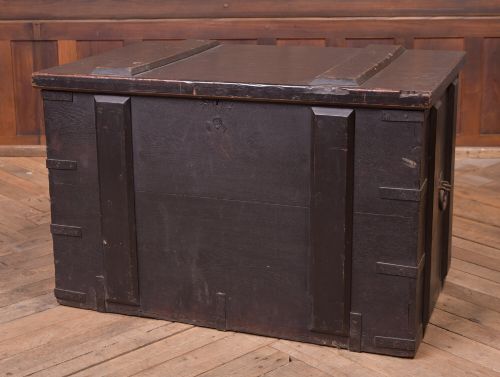
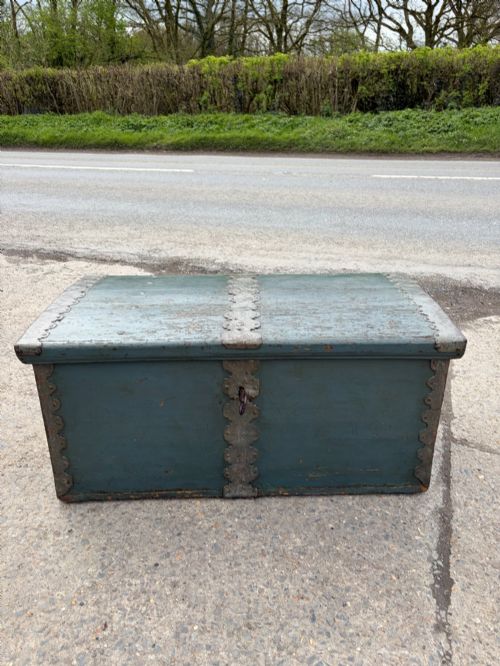


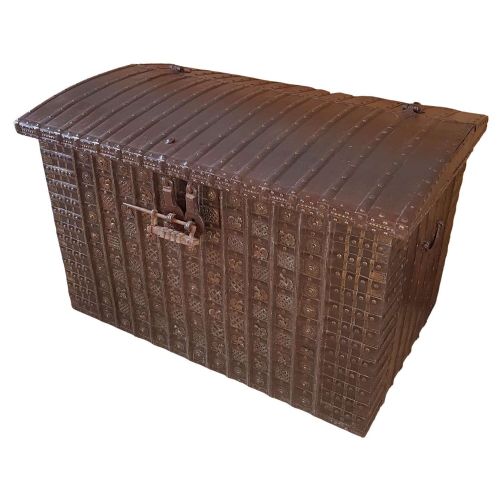


Vintage Iron Strapped Box
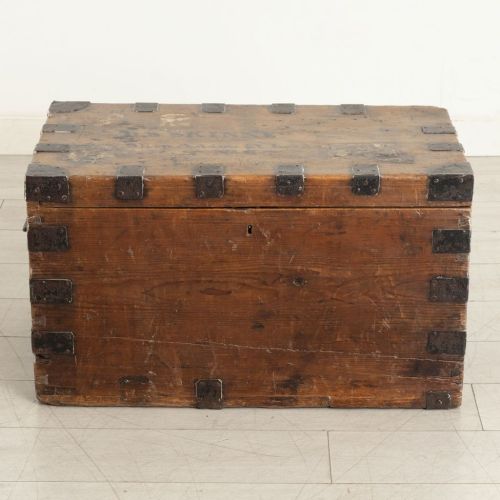
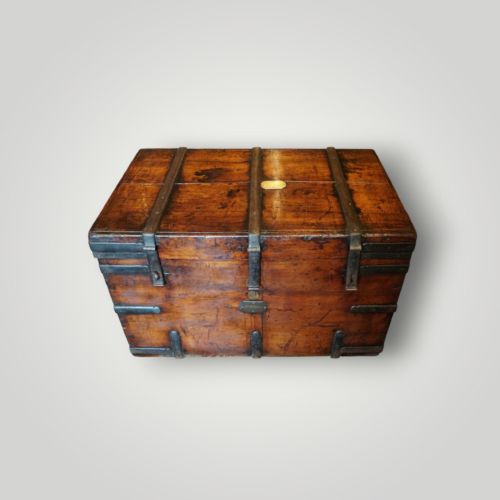
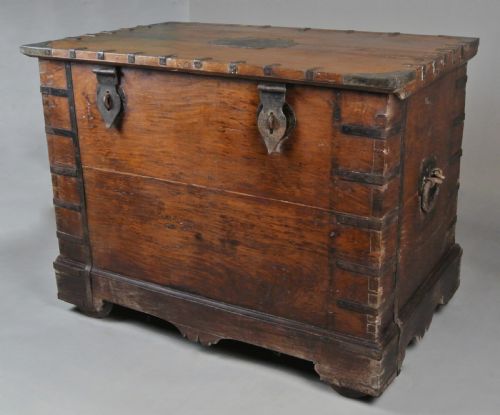
These robust pieces of vintage iron strapped box design combine solid timbers with heavy metal reinforcement for secure household and travel storage.
Vintage Iron Strapped Box
A vintage iron strapped box serves as a heavy-duty container designed for travel, storage, or the protection of valuables such as silver and documents. These pieces range from compact boxes and caskets to large travel trunks, dome top coffers, and dowry chests.
The most common examples encountered on this page are constructed from pine, oak, teak, or walnut, reinforced with functional iron bands, straps, and corner brackets. Origins span across English, Victorian, Georgian, Scandinavian, French, Japanese, and Indian traditions, reflecting both domestic utility and global transport.
Buyers look for these items to anchor a room with functional history, utilising them as coffee tables, blanket chests, or prominent storage furniture. The sturdy construction ensures they withstand everyday modern use while retaining their period character.
How they were made
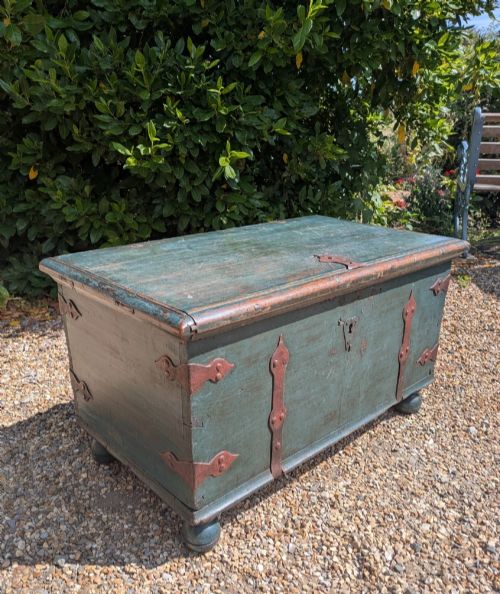
Construction relies heavily on durable timbers such as pine, oak, teak, elm, and walnut, joined to withstand heavy loads and long journeys. Many surfaces retain original paint finishes or natural grain sealed with traditional methods.
Iron strapping, hand-forged straps, hinges, and hasps are affixed to the wooden bodies using rivets or hand-beaten nails to reinforce corners and lids. Brass elements occasionally appear alongside iron work, adding secure locking mechanisms and lifting handles for transport.
Materials recorded across the inventory include solid pine, oak, teak, walnut, elm, painted surfaces, wrought iron, and brass fittings.
What varies in quality
The distinction between standard utility items and exceptional pieces rests upon the integrity of the original hardware and the preservation of surface finishes. Hand-forged iron strapwork integrated with complex lock mechanisms elevates the execution of a piece.
Depth of provenance and originality of the timber surface determine the desirability of a trunk or coffer. Pieces retaining untouched original paint, fitted silver interiors, or specific historical associations stand distinctly apart from heavily restored examples.
Sir Randolph Isham Routh KCB·Jessie Degan Cole
The Vintage Iron Strapped Box Glossary
- Strapwork
- Metal bands or strips applied to the exterior of a box or chest to reinforce the wooden structure. This ironwork often wraps around corners and lids for added strength.
- Coffer
- A heavy wooden chest traditionally used for holding valuables or documents. These storage pieces frequently feature secured hinged lids and iron reinforcement.
- Dowry chest
- A traditional trunk created to hold possessions for a bride as part of her marriage settlement. These items often showcase regional decorative styles and robust metal banding.
- Dome top
- A curved lid design utilised on travel trunks and coffers to encourage water runoff. This shape provides additional interior height for bulky textiles and garments.
- Silver chest
- A specialised reinforced storage box lined to protect table silver or plate. These sturdy oak or pine containers often include fitted internal trays and brass or iron hardware.
Vintage Iron Strapped Box: Frequently Asked Questions
What were iron strapped boxes originally used for?
These robust containers served primarily for secure storage and transport of personal possessions, silverware, and important documents during travel. Their heavy iron strapping protected the contents from damage on long journeys by sea and land.
Over time, many of these utilitarian containers transitioned into permanent household fixtures, holding blankets, linens, and dowry items within the home.
How do I care for the wood and iron?
Maintenance requires keeping the timber and metal away from direct heat sources and excessive moisture to prevent warping or rust formation. A light application of appropriate wax protects the wooden surfaces while preserving the natural dry finish.
Iron straps and hasps benefit from occasional dusting and checking to ensure surface stability without stripping the historic patina earned over centuries of use.
Are the locks on these trunks still functional?
Many trunks retain their original working locks and iron hasps, though some historical mechanisms operate best with their surviving period keys or specialised attention. Certain pieces have undergone minor adjustments to ensure the lids open and close smoothly.
It remains wise to verify the exact locking status of individual boxes if secure closure is a primary requirement for daily use.
How can I tell the regional origin apart?
Regional characteristics appear clearly in the choice of timber, the style of iron strapwork, and decorative paint applications. Scandinavian and continental European pieces frequently display folk art painted finishes on pine, whereas English examples often favor exposed oak, mahogany, or pine with formal brass and iron hardware.
Asian and Anglo-Indian variants typically utilise dense hardwoods like teak and heavy brass or iron banding suited to tropical climates and long-distance maritime trade.