


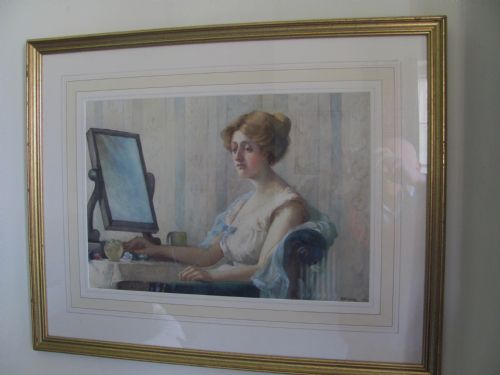
Vintage Interior Watercolour
A vintage interior watercolour captures domestic spaces from past decades with pigment on paper, offering buyers a genuine fragment of historic domestic life.
Vintage Interior Watercolour
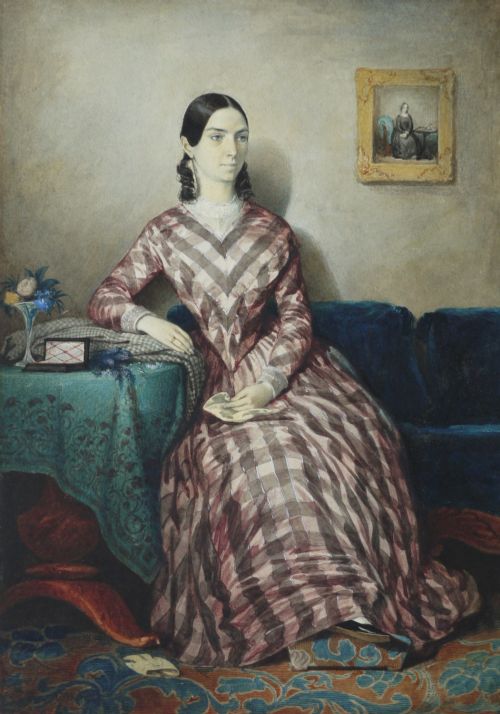
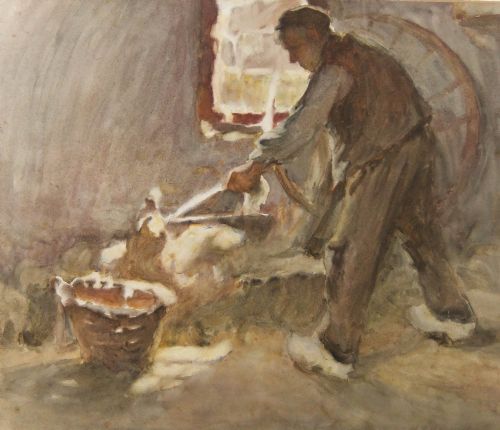
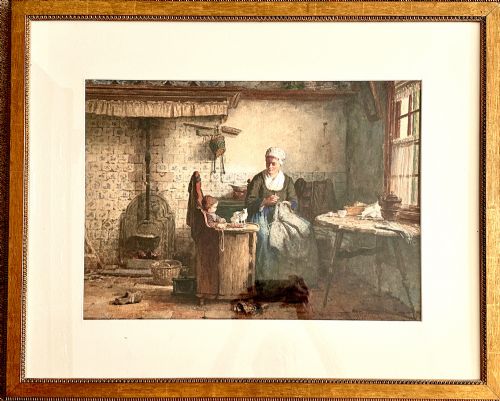
When you search for a vintage interior watercolour, you encounter original works on paper depicting rooms, domestic tasks, and domestic occupants from periods including Victorian, Edwardian, and mid-century. These paintings record domestic scenes through the eyes of artists working in British Impressionism, Scottish School, and Dutch Realism styles.
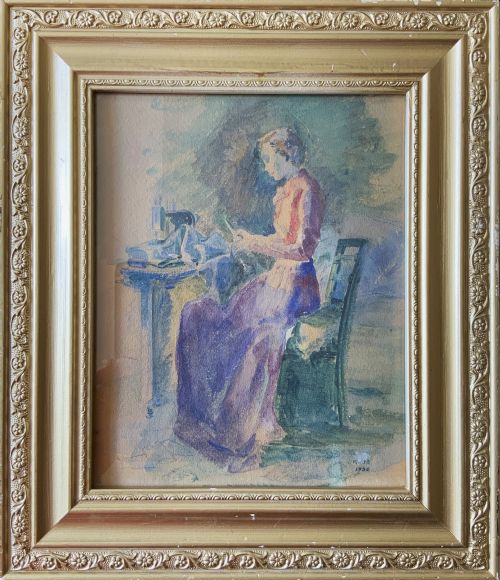
The subjects range from intimate portraits of seamstress figures and pianists to detailed studies of historic houses like Hatfield House and Dacre Castle. Most works arrive framed in wood, gilt wood, or burr frames that complement the age and character of the paper within.
You will find these paintings categorized under various object types such as framed painting, original painting, and wall art. Each piece serves as a direct window into the domestic aesthetic of its specific decade.
Materials and techniques
These works rely on pigment and watercolour applied directly to paper supports, sometimes utilising sepia tones for depth and mood. Artists built up transparent washes of colour to create light and shadow within the depicted rooms.
Framing materials typically comprise wood, glass, and occasional gold leaf or gilt wood frames that protect the delicate paper surfaces from atmospheric damage. Specialised design works also incorporate gouache or ink alongside watercolour to draft furniture and decorative schemes.
Makers housed these watercolours behind protective glass within custom-built frames, often utilising burr wood or moulded timber to finish the presentation for domestic display.
One recorded watercolour depicts a dedicated puppet maker at work, capturing an unusual cottage industry from the mid-twentieth century.
What separates the finest works
Quality in these watercolours rests on the artist's handling of light, perspective, and atmospheric depth within a confined domestic space. Superior examples demonstrate confident brushwork and precise architectural draughtsmanship rather than stiff, formulaic room layouts.
The condition of the paper and the vibrancy of the pigments dictate the overall desirability of the piece. Works that retain their original period framing and bear documentation of the artist or specific location command greater appreciation from collectors.
Henry Silkstone Hopwood·Hendrik Valkenberg·Robert Eadie·Roland Batchelor·Owen Bowen·Margaret Thompson·K B Curtis·Kent and Dawes·Maison Krieger
The Vintage Interior Watercolour Glossary
- Watercolour
- A painting method where the paints are made of pigments suspended in a water-based solution. It is traditionally applied to paper surfaces to create translucent layers of colour.
- Gilt Wood Frame
- A wooden picture frame covered with a thin layer of gold leaf or metallic gilt paint. This traditional finish adds brightness and historical authenticity to antique paintings.
- Sepia
- A reddish-brown pigment derived from the ink sac of the common cuttlefish. Artists used sepia monochromatic washes to establish tonal depth in early interior studies.
- Chinoiserie Revival
- A decorative style reflecting European artistic imitation of Chinese and East Asian artistic traditions. It appears in period design watercolours illustrating exotic cabinetwork and lacquer finishes.
Vintage Interior Watercolour: Frequently Asked Questions
How do I hang a watercolour safely?
Hang your watercolour away from direct sunlight to prevent the pigments and paper from fading over time. Maintain stable room humidity to protect the paper support and wooden frame from warping.
Ensure the frame hangs securely from picture moulding or appropriate wall fixings. Keep the glass clean using dry or slightly damp cloths without spraying liquid directly onto the frame rebate.
What defines an interior watercolour?
An interior watercolour depicts indoor domestic or architectural scenes rather than open landscapes or seascapes. These works focus on furnished rooms, inhabitants engaged in daily routines, or decorative design proposals.
Artists record the specific furniture, textiles, and lighting of past eras within these compositions. This genre offers tangible historical records of domestic life and interior decoration.
How are periods identified?
Period identification relies upon stylistic clues within the depicted furniture, clothing, and architectural details of the room. Signatures, dates, and framing styles further help anchor the artwork to a specific decade.
Documentation on the reverse or artist records assist in narrowing down the date of execution. Stylistic movements like Edwardian or mid-century impressionism provide reliable chronological markers.
Why use glass on paintings?
Glass shields fragile paper surfaces and water-soluble pigments from dust, moisture, and airborne pollutants. It prevents accidental physical contact with the delicate painted medium.
Historic pieces retain glass as an essential protective barrier against environmental degradation. Proper framing preserves the integrity of the paper over generations.