
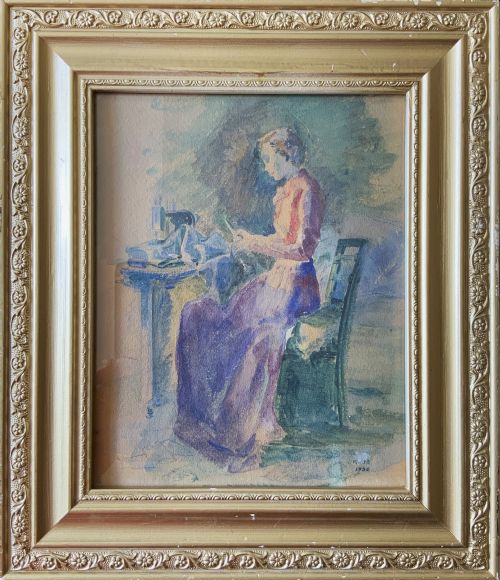


Framed Interior Watercolour
A framed interior watercolour brings domestic or historic rooms to life on the wall through pigment on paper preserved behind glass.
Framed Interior Watercolour
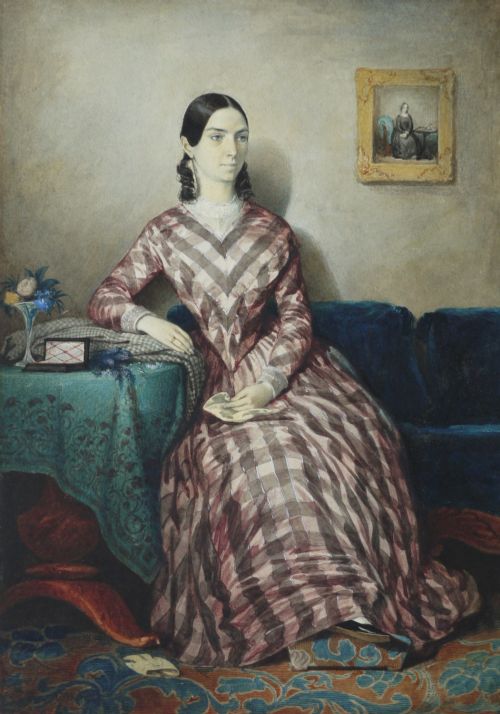
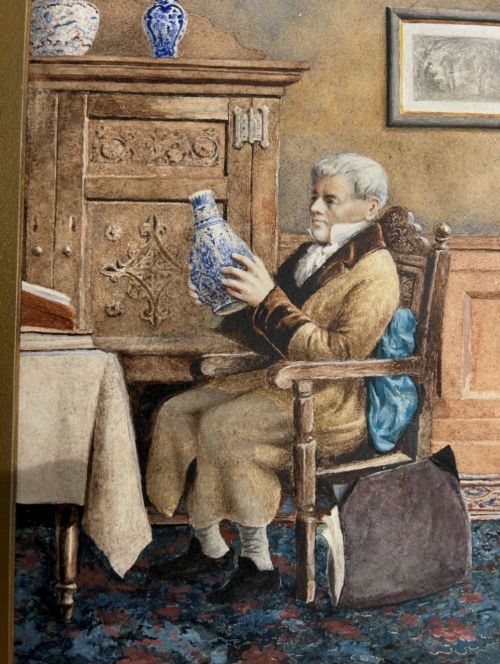
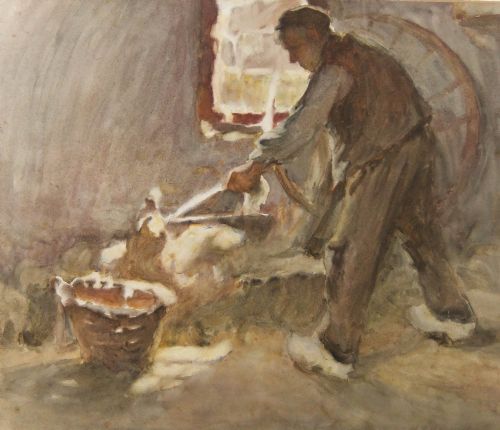
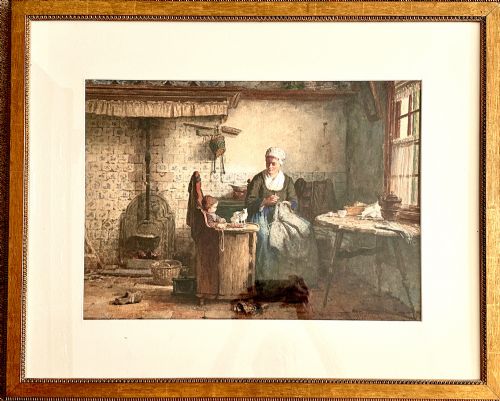
A framed interior watercolour depicts domestic scenes, country houses, smithies, inns and galleries captured by artists across the nineteenth and twentieth centuries. These paintings record specific domestic spaces, figures at work or leisure, and grand historic rooms set behind protective glass.
Most examples hail from the Victorian era up to the mid-twentieth century, including works by named painters and regional British or Dutch schools. Common subjects range from quiet cottage corners and fireside naps to detailed studies of long galleries and drawing rooms.
Buyers encounter everything from naive folk art depictions to accomplished impressionist and realist watercolours created by exhibited members of Scottish and English societies. Each piece arrives ready to hang in its period timber or gilt frame.
Materials and technique
Artists painted these scenes using watercolour paint on paper, often layering washes to build depth in shadowed interiors and architectural details. Some works employ sepia tones, while others use a full palette to render furnishings, costumes and daylight.
Framing typically involves wood, gilt wood, gold leaf or burr timber to surround the paper, with glass fitted over the front to protect the fragile pigment from dust and moisture. These original housings are integral to the survival of the artwork.
Listings feature works from the nineteenth century through the 1950s, utilising paper, watercolour paint, glass, wood, gold leaf and gilt wood.
The markers of quality
Quality depends upon the draughtsmanship and the artist's ability to handle light and perspective within a confined indoor space. A skilled hand renders fabrics, architectural mouldings and human expressions with precision and atmosphere.
The sophistication of the framing also marks out the better examples, with period gilt wood and burr frames enhancing the presentation of the painting. Condition of the paper and the retention of the original housing elevate individual works.
Henry Silkstone Hopwood·Hendrik Valkenberg·Robert Eadie·Henry Spernon Tozer·John R Houston·George Goodwin Kilburne·Owen Bowen·George Cattermole
The Framed Interior Watercolour Glossary
- Watercolour paint
- A water-soluble medium composed of pigment and binder that produces translucent washes on paper.
- Gilt wood
- Timber carved and coated with a thin layer of gold leaf or metallic gilt, common in period framing.
- Burr framed
- A frame constructed from burr wood veneers, showing swirling grain patterns prized for decorative warmth.
- Sepia
- A brownish monochrome pigment derived from cuttlefish ink, used here for tonal interior studies.
Framed Interior Watercolour: Frequently Asked Questions
What subjects appear in these interior watercolours?
The paintings show domestic rooms, grand historic halls, cottages, smithies and local inns populated by figures or empty of people. Scenes range from everyday chores and fireside rests to portraits and architectural studies.
Artists recorded both humble rural spaces and wealthy drawing rooms, offering a window into past domestic life across Britain and Europe.
How do I date an interior watercolour?
Dating relies on the style of the interior, the clothing of any figures, the framing materials and signatures or inscriptions left by the artist. Many pieces carry explicit dates or reference the Victorian and Edwardian eras.
Framing styles such as gilt wood or burr timber often correspond to the period when the painting was made.
Are these watercolours always signed by the artist?
Not every piece bears a signature, as many surviving works are attributed to broader regional schools or recorded simply as English School or Dutch Realism. Unsigned works can still offer exceptional artistic quality and historical detail.
Signed examples often link the painting to exhibited members of artistic societies or known regional painters.
How should I hang and care for these paintings?
Keep watercolours away from direct sunlight to prevent the pigments and paper from fading over time. Maintaining a stable indoor humidity protects both the paper and the wooden or gilt frame.
The glass front should be cleaned gently without letting moisture seep behind the mount into the artwork.