

Vintage Interior Wall Painting
Vintage interior wall painting brings domestic scenes and furnished rooms onto the canvas, offering a glimpse into past spaces.
Vintage Interior Wall Painting
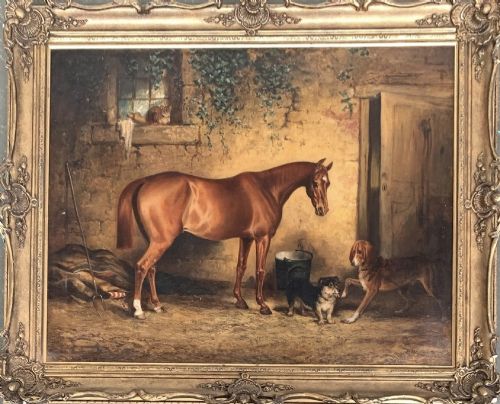
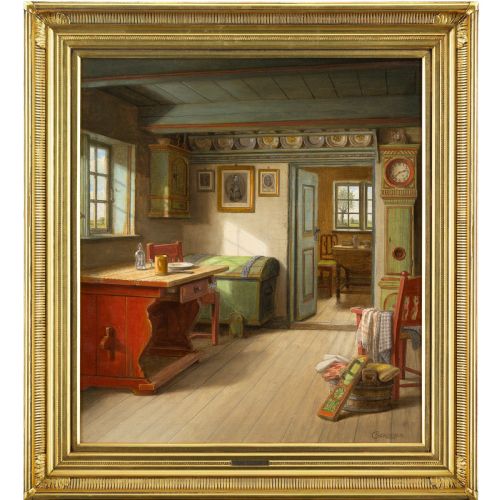
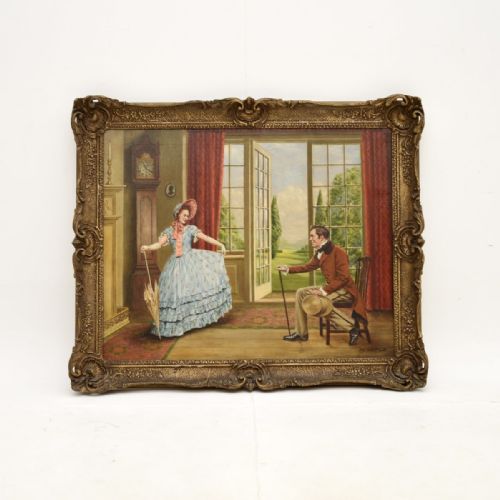
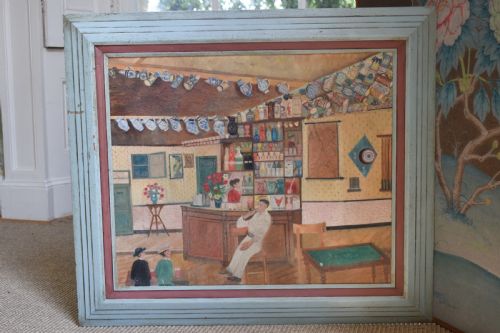
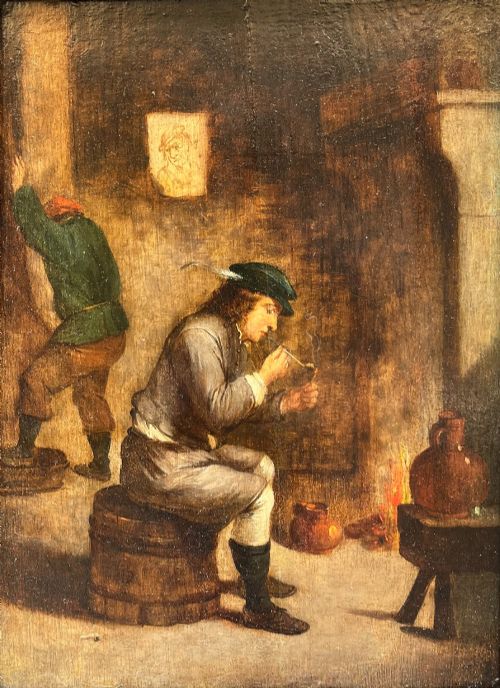
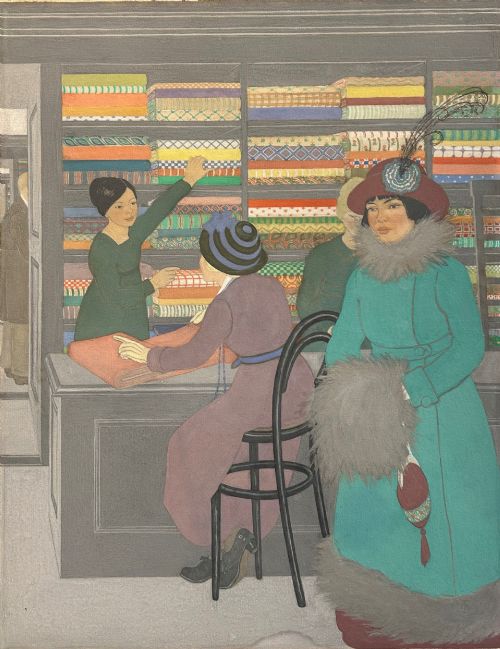
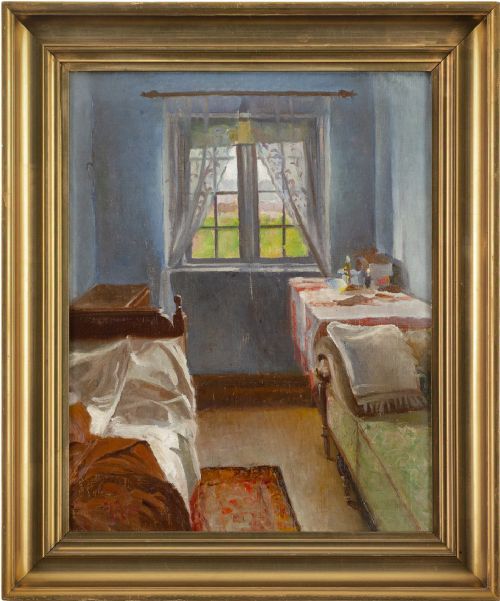
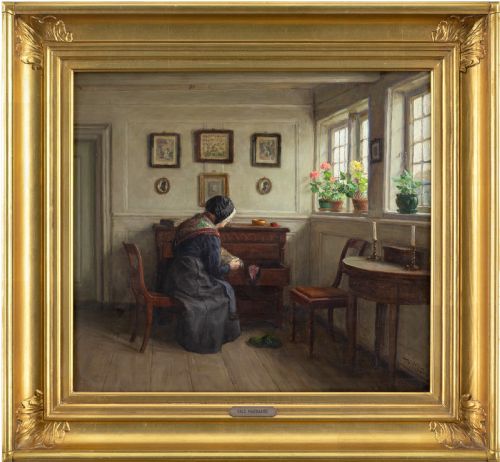
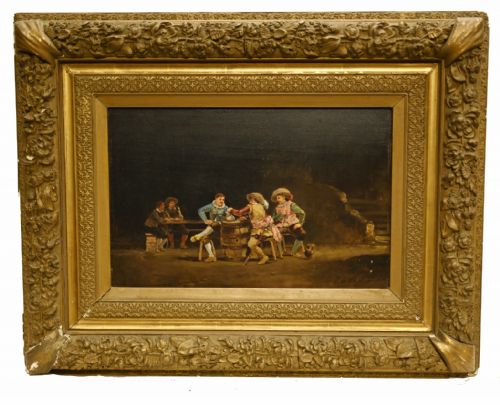
A vintage interior wall painting captures domestic scenes, tavern rooms, and quiet domestic moments, predominantly rendered in oil on canvas or board. These works span from the nineteenth century through the mid-twentieth century, recording domestic life, studies of rooms, and genre scenes.
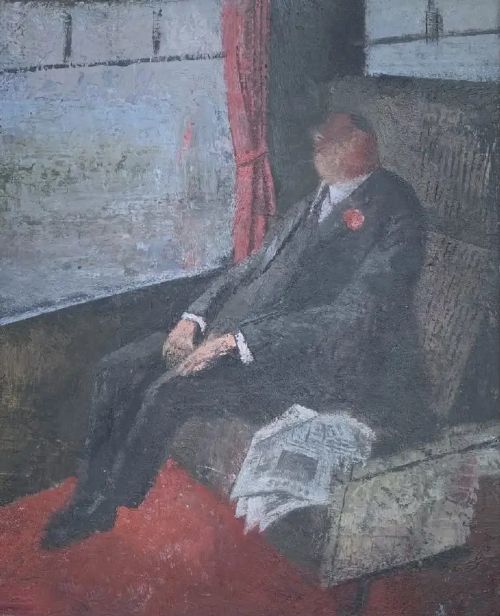
The selections encountered here range from European realist compositions to modernist interpretations and naive depictions. Alongside traditional oil paintings, watercolour paintings and works on paper occasionally appear to represent interior spaces.
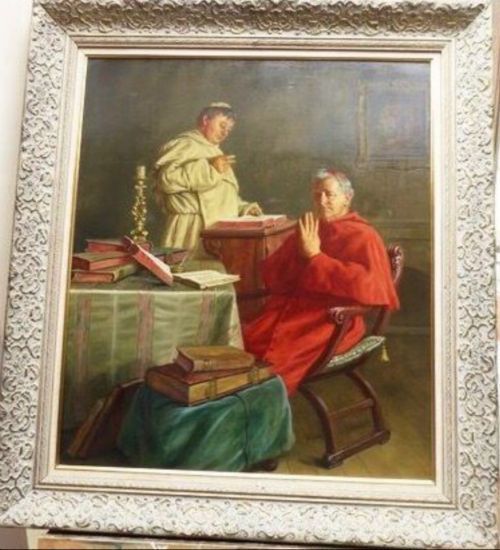
Makers represented include named European artists and British school painters working across various regional styles. The primary focus remains on domestic interior scenes, church rectories, and intimate household settings.
Materials and Techniques
Pigments applied in oil paint form the primary medium across canvas, board, and panel supports. Many pieces utilise traditional grounds, while others employ gold leaf accents or glass protection.
Watercolour and printed fabrics appear among related works on paper, demonstrating the breadth of interior representation. Applied brushwork varies from tight Victorian realism to looser post-impressionist and modernist strokes.
The inventory records British genre painting, Victorian realism, Dutch Golden Age influences, and Scandinavian regionalism.
Distinctions in Execution
Quality rests upon the artist's handling of light, perspective, and spatial depth within the depicted room. Stronger examples display confident handling of chiaroscuro and atmospheric interior lighting.
The preservation of the original paint surface and canvas tension distinguishes better preserved pieces. Finer works demonstrate a more sophisticated command of colour harmony and tonal balance within domestic settings.
C Sørensen·Alfred Lyndon Grace·David Teniers·Beatrice Saunders·Harry Kluge·Valdemar Magaard·J De Ninville·Albert Clark·John Watkins Chapman·Benjamin Cam Norton·Thomas Couture·Hans Temple·Roland Batchelor·Charles Bilger Spalding·Ludolf de Jongh·Gustav Goemans·Ruth Prowse·Charles Cameron Baillie·John Percy Cooke·Samuel John Carter·Pauline Delacroix Garnier·Henry Silkstone Hopwood
The Vintage Interior Wall Painting Glossary
- Chiaroscuro
- The treatment of light and shade in a painting, defining three-dimensional volume through contrasting illumination. This technique is often seen in tavern and interior scenes.
- Genre Painting
- The pictorial representation of scenes from everyday life, typically depicting domestic interiors or ordinary people. These works focus on mundane activities rather than grand historical subjects.
- Post-Impressionism
- An artistic movement extending impressionism while rejecting its limitations, favouring more symbolic content and expressive use of paint. Artists in this tradition explored bolder interior colour palettes.
- Intimist
- A style of painting focusing on quiet, intimate interior domestic scenes. Such works emphasise the privacy and comfort of home life.
Vintage Interior Wall Painting: Frequently Asked Questions
What is a vintage interior wall painting?
These artworks depict domestic rooms, tavern scenes, and household spaces created during the nineteenth and twentieth centuries. They record historical living environments through the eyes of contemporary artists.
Most examples utilise oil paint on canvas or board, capturing domestic life with varying degrees of realism and modern abstraction.
How were these paintings used?
Artists painted these interior scenes to record contemporary domestic architecture, furnishings, and daily household routines. They served as decorative artworks for homes or pieces for exhibition.
Over time, collectors valued them as historical records of interior design, fashion, and domestic atmosphere across different European regions.
How do I live with an oil painting?
Hang the canvas away from direct sunlight and damp conditions to preserve the oil pigments and canvas support. Stable room temperatures prevent the paint layer from cracking.
Pair the artwork with complementary wall colours that highlight the tonal palette of the interior scene without competing with the composition.
How can I tell periods apart?
Nineteenth-century works often employ traditional realism and detailed brushwork to document domestic spaces or portraits. Twentieth-century pieces frequently embrace modernist abstraction, looser brushwork, and altered perspective.
Examining the canvas preparation, framing style, and artist signature provides further clues to the decade of creation.