



Figurative Interior Scene
A figurative interior scene captures domestic and public life through oil and watercolour, offering a direct window into past rooms.
Figurative Interior Scene
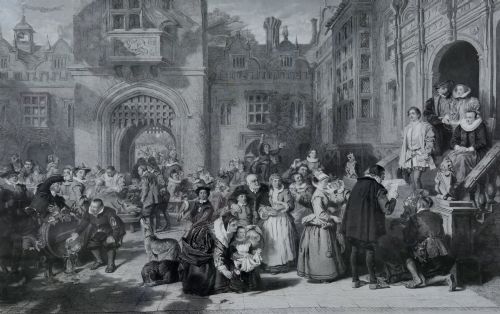
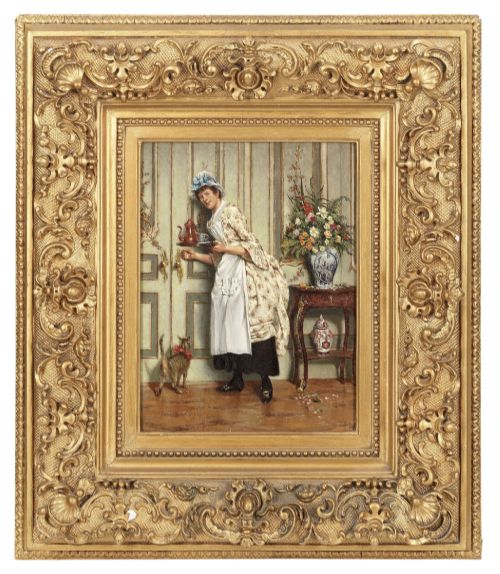
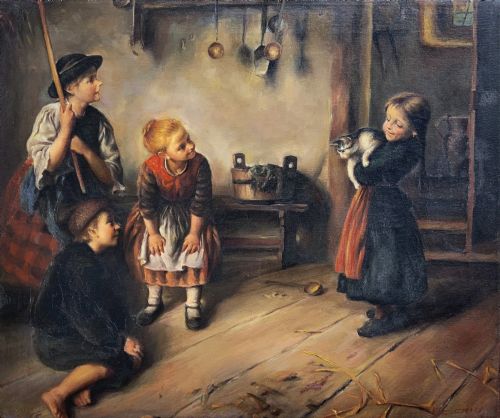
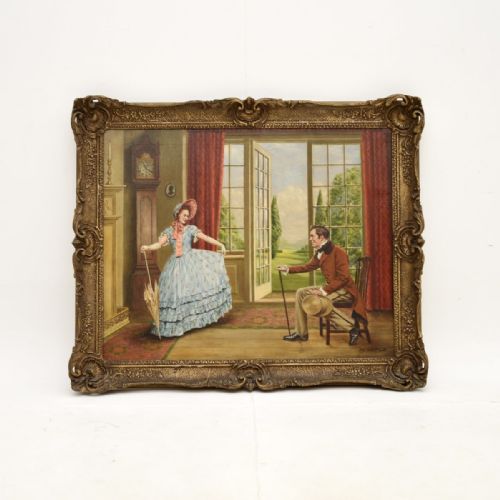
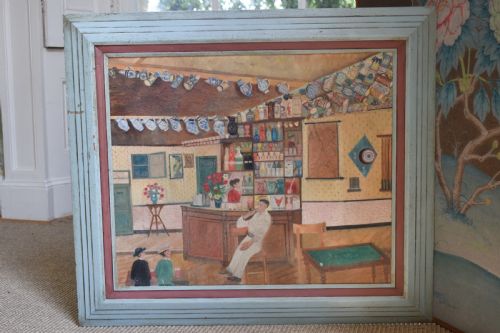
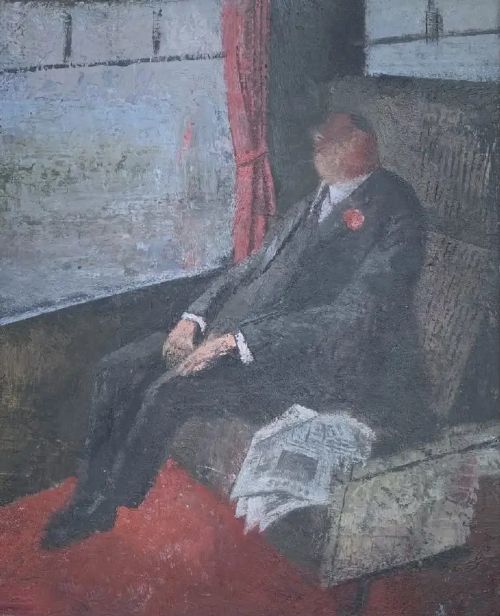
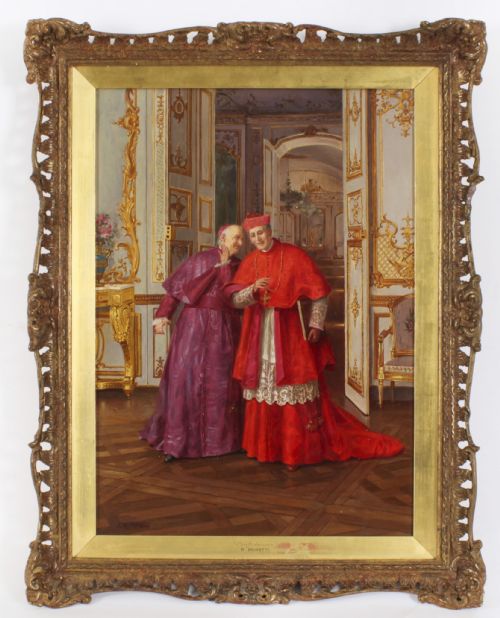
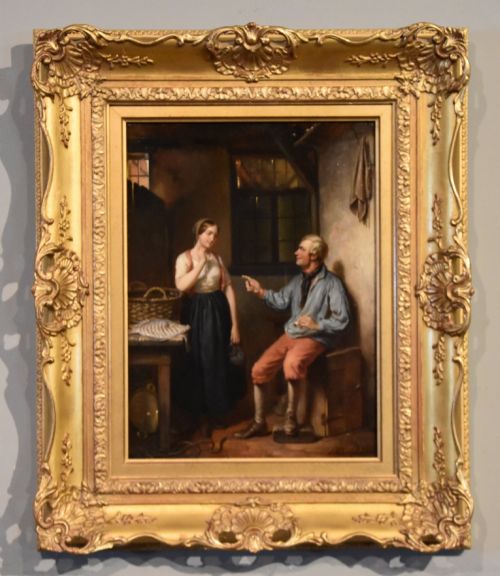
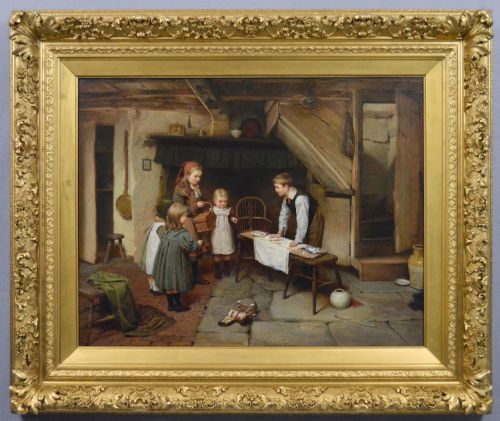
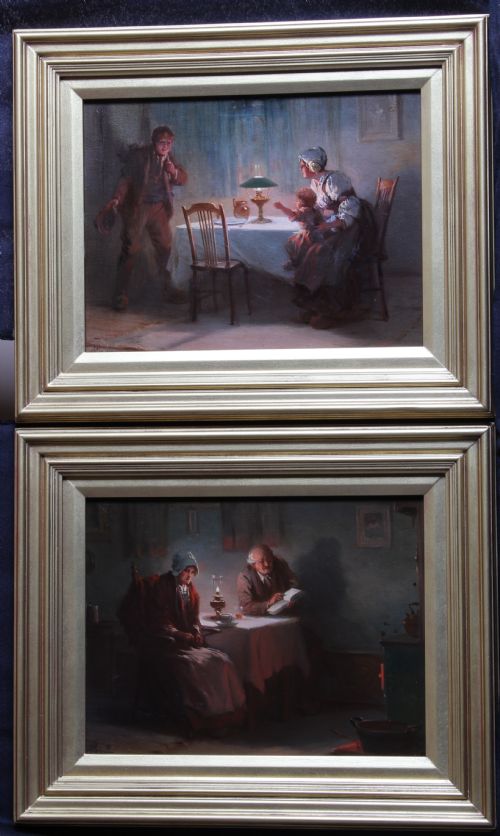
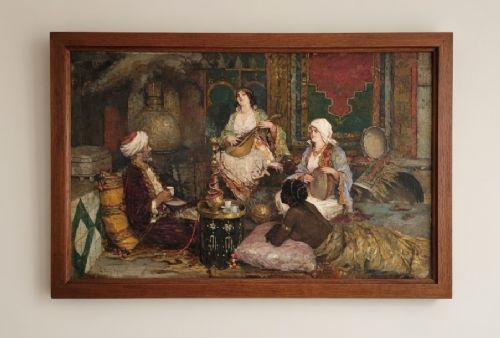
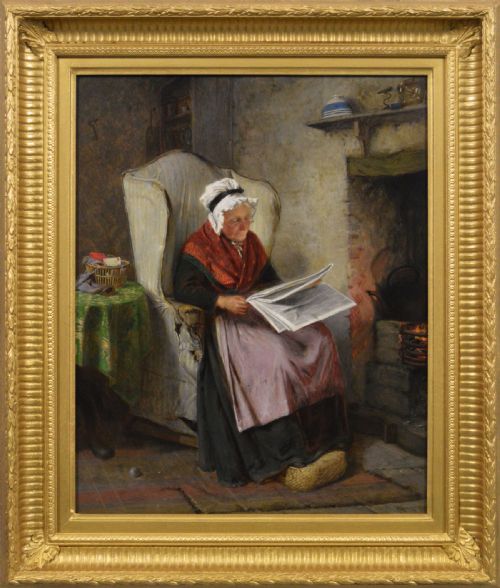
A figurative interior scene portrays people within domestic, social or institutional rooms, from country houses to palace ballrooms and cottage kitchens. These works record everyday domestic moments like tea time, spinning, or children playing, alongside historical and social gatherings.
The pieces span periods from the nineteenth century to the mid-twentieth century, drawing on Victorian, Rococo Revival, and realist traditions. British and continental European artists dominate the selection, working in oil on canvas, panel, or board, as well as watercolour on paper.
How They Were Made
Artists built these works primarily using oil paint applied to canvas, wood panels, or paper, occasionally employing watercolour for lighter compositions. Canvases are stretched over wooden supports and frequently housed in giltwood frames with gesso ornamentation.
Brushwork ranges from detailed realism to looser, intimist handling, depending on the period and school. Panel paintings utilise stable wooden supports, while canvas works rely on traditional woven textiles primed for oil media.
Expect quiet domestic moments interrupted only by a chess problem or a kettle coming to the boil.
What Varies in Quality
Quality rests upon the artist's ability to render light, shadow, and architectural depth within a confined room. Superior works demonstrate precise handling of human expression and textile textures, while simpler naive examples offer charm through directness.
The integration of figures within their surroundings distinguishes skilled composition from static arrangement. Preservation of the original paint surface and the presence of period giltwood frames also influence the standing of an individual piece.
Stephen Samuel Lewin·Alfred Lyndon Grace·Renato Moretti·Jacob Akkersdijk·James Hayllar·Harry Brooker·Alexander Rosell·Gabriel Puig Roda·Haynes King·James Kyd·Robert Eadie·Robert Alexander Hillingford·George Smith·Hans Temple·Roland Batchelor·Ernst Stierhof·Carlo Ferranti·Henry Collins·Henry Silkstone Hopwood·Thomas Gist·Jan Steen·Zsuzsanna Suger
The Figurative Interior Scene Glossary
- Genre painting
- Depiction of aspects of everyday life by depicting ordinary people engaged in common activities. These scenes form a substantial portion of the figurative interior works available.
- Gesso
- A plaster mixture used as a smooth base for painting or moulded into relief decoration on frames. It underpins the giltwood surrounds housing many nineteenth-century canvases.
- Intimist
- An artistic style focusing on intimate, private domestic interiors and quiet personal moments. Bonnard-esque examples capture this subdued, contemplative atmosphere.
- Panel painting
- A painting executed on a flat piece of wood rather than canvas. These provide a rigid support utilised by various nineteenth- and twentieth-century artists.
Figurative Interior Scene: Frequently Asked Questions
What is a figurative interior scene?
A figurative interior scene is a painting or watercolour depicting human figures situated inside a room, whether a modest cottage or a stately home.
These artworks focus on human activity and social interaction within built environments, recording domestic habits and historical dress.
How were these paintings displayed?
Historically, these works hung in domestic reception rooms, parlours, and galleries, often mounted in decorative giltwood frames.
Today, they suit similar residential walls where traditional lighting highlights the depth and texture of the oil or watercolour medium.
How do I date a figurative interior?
Dating relies on stylistic clues, artist signatures, framing techniques, and the depicted costume or interior architecture.
Nineteenth-century works often show detailed realism and heavy gilt frames, while mid-century pieces exhibit broader brushwork and simpler framing.
What is genre painting?
Genre painting represents scenes from everyday life involving ordinary people rather than historical or mythological subjects.
In interior scenes, this includes activities such as tea time, reading, or family gatherings in cottages and rectory rooms.