
Framed Interior Painting
Framed interior painting brings domestic life and social scenes of past centuries onto the wall, captured through the observation of artists working in oil and watercolour.
Framed Interior Painting
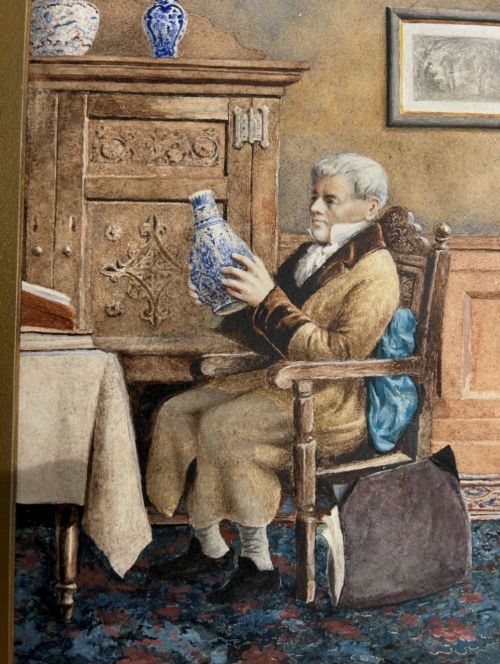
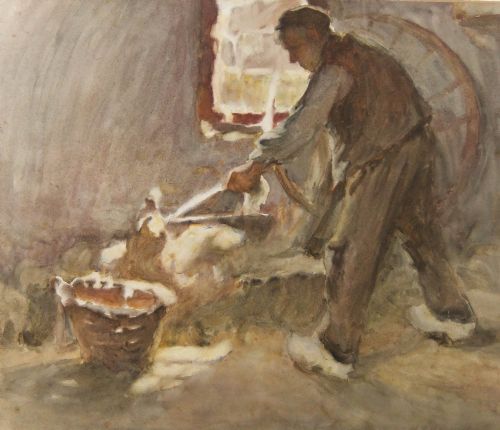
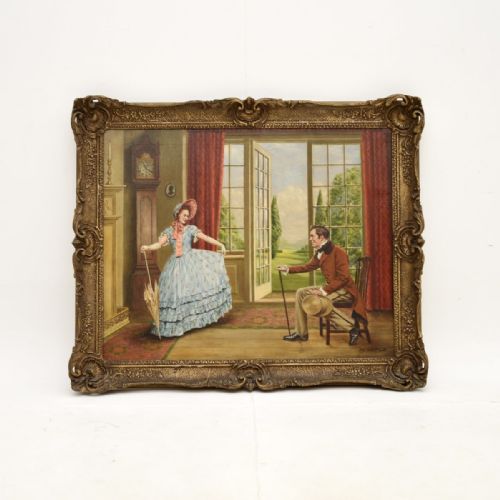
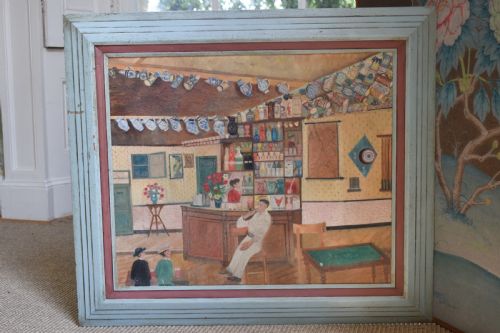
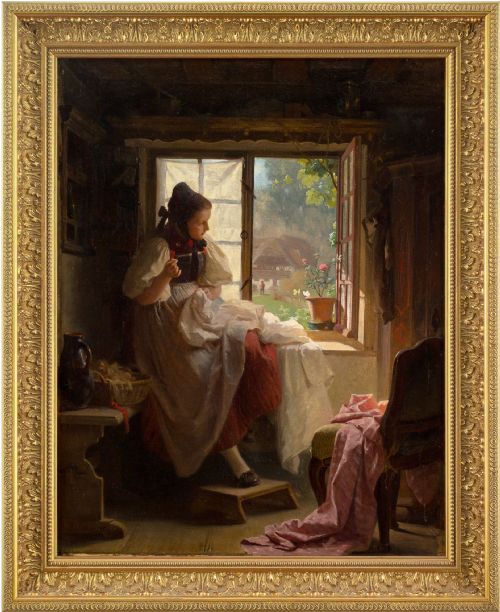
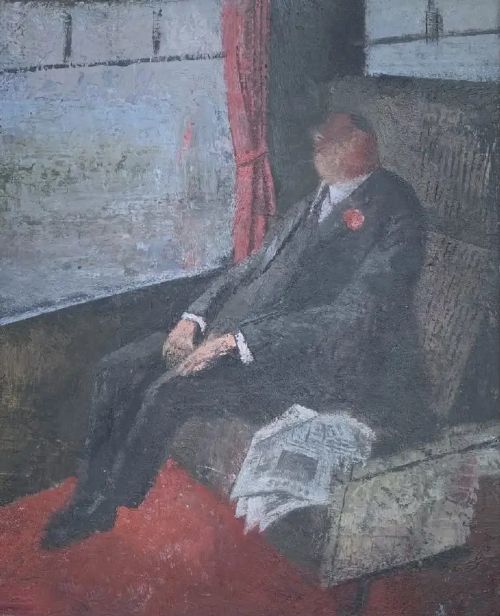
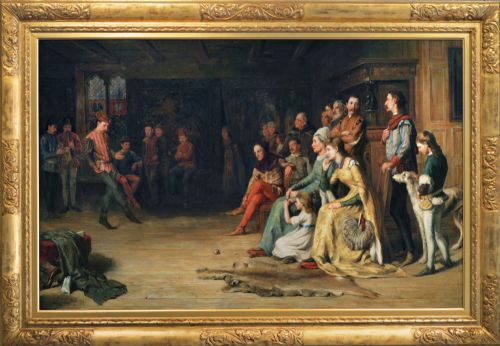
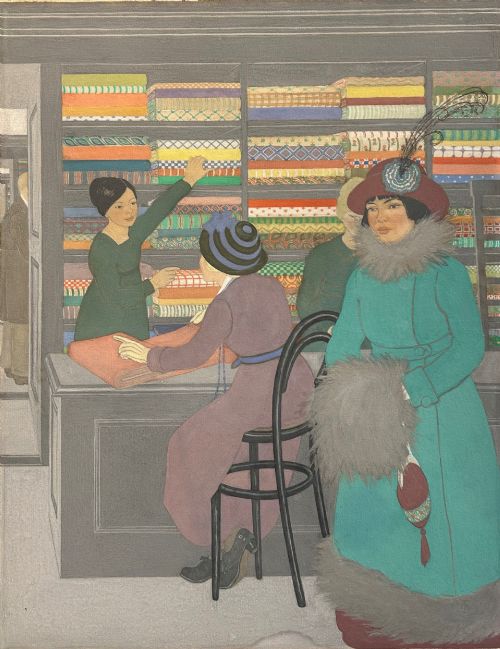
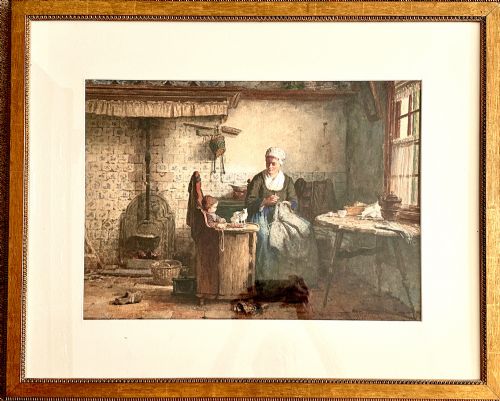
A framed interior painting depicts domestic rooms, tavern scenes, and quiet domestic moments captured across the nineteenth and twentieth centuries. These works place the viewer inside historical country houses, cottage kitchens, and artists' studios populated by figures reading, sewing, or dining.
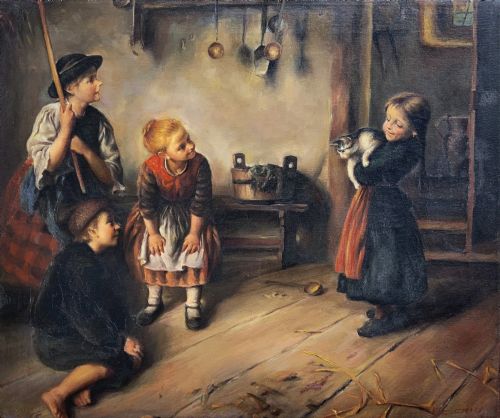
The common form on this page is the oil on canvas or oil on board, accompanied by watercolours executed on paper. Subjects range from Victorian genre paintings of children and card players to Scandinavian realism and mid-century impressions of everyday domestic spaces.
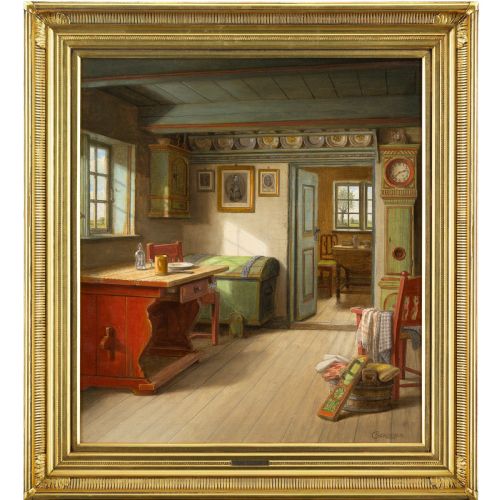
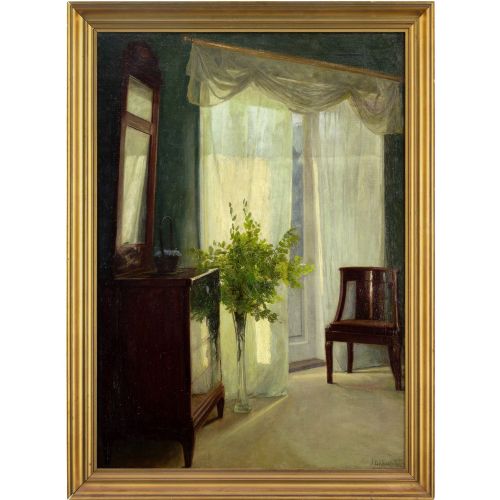
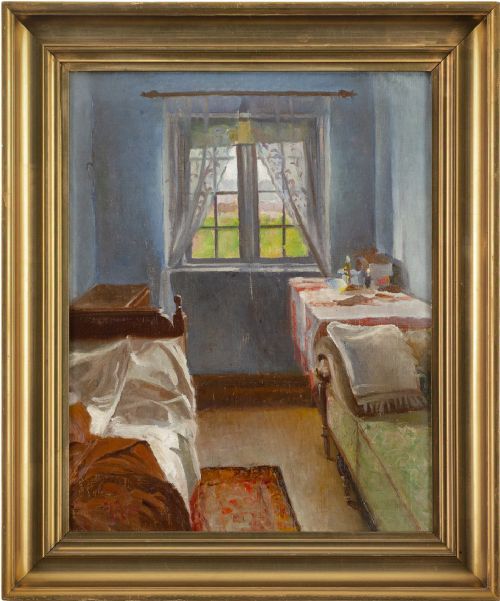
Originating largely from British and continental European schools, these artworks offer a direct window into historical interior design and social customs. They combine narrative storytelling with careful rendering of light filtering through windows and doorways.
Materials and methods of execution
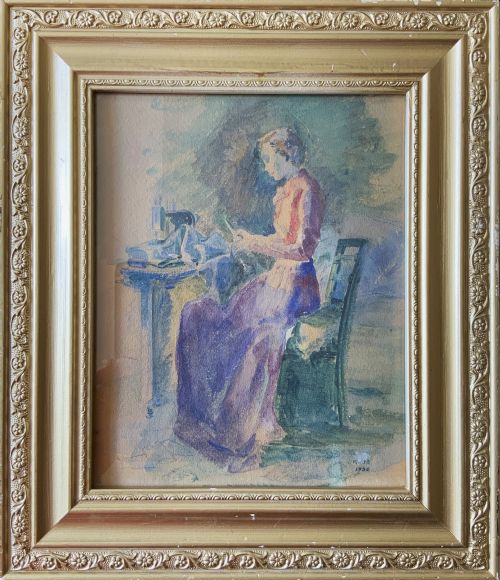
Artists painted primarily with oil paint on stretched canvas or wooden board, building compositions through layered pigments that allowed for rich tonal depth and chiaroscuro effects. Watercolours on paper utilised transparent washes to capture lighter, more immediate atmospheric effects within domestic spaces.
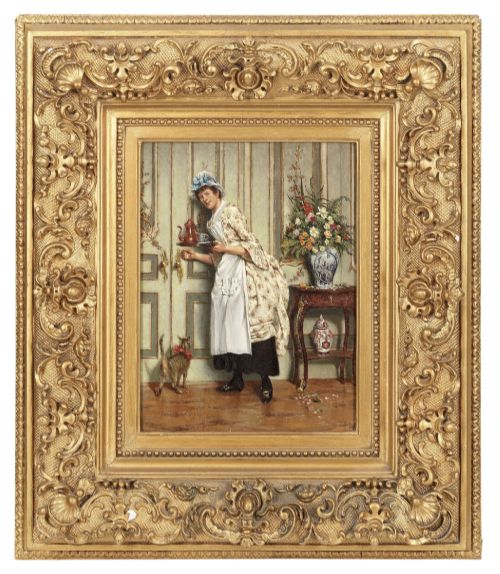
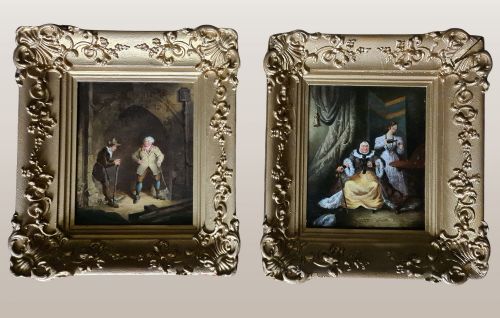
Presentation relied heavily on timber framing, often utilising carved gesso embellished with gold leaf and giltwood to complement the tonal palette of the artwork within. These frames served both to protect the painting and to separate the domestic scene from the surrounding room.
The inventory records various physical enclosures, including carved giltwood frames and specialised maritime shadow boxes.
Distinctions in quality and execution
Quality rests upon the artist's handling of light, particularly the convincing depiction of natural illumination entering a room through windows or doorways. Superior works demonstrate precise command over perspective and spatial depth, grounding figures naturally within their surrounding architecture.
The fidelity of figurative drawing and the psychological expression of the subjects separate finer academic or realist pieces from more formulaic decorative productions. Additionally, the preservation of the original pigment layers and the retention of period-appropriate giltwood framing influence the integrity of the piece.
Stephen Samuel Lewin·Henry Silkstone Hopwood·Alfred Lyndon Grace·John Lübschitz·Max Kaltenmoser·James Hamilton·Beatrice Saunders·Harry Kluge·Hendrik Valkenberg·Bernard De Hoog·David Teniers·Valdemar Magaard·Renato Moretti·Jacob Akkersdijk·Lilian Colbourn·Harry Brooker·Johann Hamza·Byam Shaw·George Kilburne·Alexander Rosell·Benjamin Eugene Fichel·John Arthur Lomax·Albert Clark·John Watkins Chapman·Charles Haigh Wood
The Framed Interior Painting Glossary
- Genre painting
- A branch of art focusing on scenes from everyday life, depicting ordinary people engaged in domestic activities or social gatherings. These works offer valuable documentation of historical costume, furniture, and interior architecture.
- Chiaroscuro
- An Italian artistic term describing the strong contrast between light and dark within a composition. In interior scenes, this technique enhances the sense of drama by casting parts of the room into deep shadow while illuminating specific figures or objects.
- Giltwood
- Timber that has been coated with a thin layer of gold leaf or metallic powder. It frequently forms the decorative surface of antique picture frames associated with nineteenth-century paintings.
- Gesso
- A traditional paint mixture consisting of a binder mixed with chalk, gypsum, or pigment used to prepare wood surfaces or sculpt intricate frame mouldings. It provides a smooth base before gilding.
- Realism
- An artistic movement dedicated to representing subject matter truthfully without artificiality or supernatural elements. Realist interior paintings record everyday domestic reality with objective observation.
Framed Interior Painting: Frequently Asked Questions
What defines an interior painting?
An interior painting focuses primarily on enclosed architectural spaces such as rooms, taverns, and workshops, usually featuring human activity or domestic life as the central subject.
These artworks serve as historical records of period furnishings, clothing, and interior lighting before the advent of widespread electric illumination.
How do I choose a frame for an old painting?
Selecting a frame involves matching the period and aesthetic weight of the artwork, with nineteenth-century oils typically housed in heavy giltwood and gesso mouldings.
Original frames that have remained with the canvas for generations offer the highest historical harmony, though conservation standards permit sympathetic period replacements.
Are watercolours as durable as oils?
Watercolours are executed on paper rather than canvas and require protection behind glass to prevent atmospheric damage and fading from direct sunlight.
When properly glazed and kept away from excessive moisture, watercolour paintings maintain their delicate pigments and luminous paper supports indefinitely.
What subjects appear in genre interiors?
Genre interiors capture domestic routines, family meals, musical performances, and quiet solitary moments like sewing or reading by a window.
These scenes range from the intimate daily life of country cottages to the bustling social atmosphere of historical taverns and studios.