
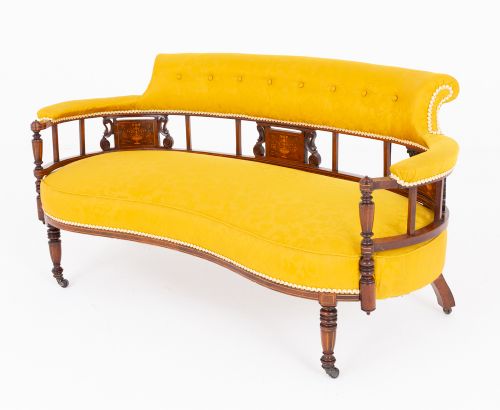


Vintage Inlaid Parlour Bench
A vintage inlaid parlour bench brings character to a room through fine marquetry and rich timbers.
Vintage Inlaid Parlour Bench
A vintage inlaid parlour bench comprises seating designed for reception rooms, commonly encountered as settees, sofas, and multi-piece salon suites. These pieces date principally from the Edwardian period, alongside examples from the late nineteenth and early twentieth centuries.
The selection here encompasses mahogany frameworks embellished with contrasting satinwood and boxwood inlay, as well as Chinese export hardwood suites and rosewood constructions. Certain items retain their original velvet upholstery, while others await re-upholstery to suit individual interiors.
How they were made
Cabinetmakers constructed these frames primarily in mahogany and rosewood, incorporating delicate marquetry and linear stringing in boxwood and satinwood. These decorative elements were precision-set into the timber surfaces to define panels, borders, and motifs.
Seating sections were upholstered using traditional stuffing techniques, often finished with velvet materials designed to complement the polished wood tones and inlaid details of the frame.
Several settees wait patiently for fresh velvet, proving that even century-old parlour furniture appreciates a wardrobe update.
What varies in quality
The refinement of the timber and the precision of the marquetry dictate the distinction between standard and superior examples. Crisp execution in satinwood and boxwood stringing signals careful workshop production.
Integrity of the structural frame and the presence of harmonious proportions further elevate a piece. Greater care in carving and timber selection marks out the finest parlour seating.
The Vintage Inlaid Parlour Bench Glossary
- Marquetry
- Decorative veneer work forming pictorial or geometric patterns on a wooden surface. Craftsmen cut contrasting woods to fit precisely within the background timber.
- Satinwood
- A lustrous, yellowish timber utilised for fine cabinetmaking and contrasting inlay work. It brings a bright reflective quality to Edwardian furniture.
- Settee
- A medium-length upholstered seat with a back and arms designed for multiple occupants. These forms dominate formal parlour and salon arrangements.
- Stringing
- Thin lines of contrasting wood inlay used to outline panels and structural edges. This technique highlights the geometric form of the furniture.
Vintage Inlaid Parlour Bench: Frequently Asked Questions
Where did these benches sit?
These pieces traditionally occupied formal reception rooms, drawing rooms, and parlours where hosts entertained visitors. They provided refined seating for guests during social calls.
Their decorative framing and inlaid details ensured they functioned as ornamental focal points within the interior scheme as much as practical furniture.
How do I date an Edwardian settee?
Dating relies on stylistic markers, timber choices, and construction methods characteristic of the late nineteenth and early twentieth centuries. Edwardian pieces often combine lighter mahogany frames with delicate satinwood inlay.
Art Nouveau influences or specific period proportions also help distinguish these items from earlier Victorian heavy revival styles or later mass-produced furniture.
Can I use them every day?
These vintage frames suit regular domestic use provided the underlying timber and joints remain secure. Many survive from the Edwardian era with sturdy mahogany construction.
Upholstery condition varies, with some items requiring renewed padding or fabric to support daily sitting comfortably in a modern living space.
What is salon furniture?
Salon furniture encompasses matched suites and individual seating designed for refined entertaining spaces. These items prioritised aesthetic elegance and lighter proportions over robust utility.
They frequently include decorative inlay, exposed polished wood, and fine fabric coverings suited to formal domestic gatherings.