

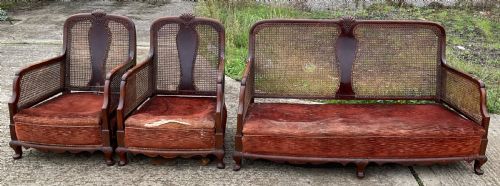



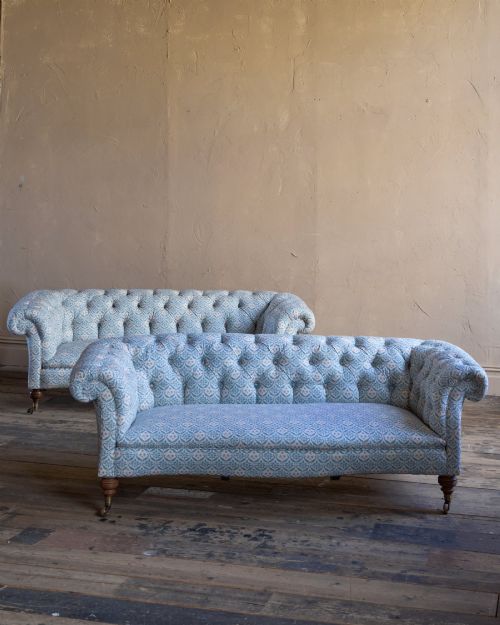

Pair of Sofas
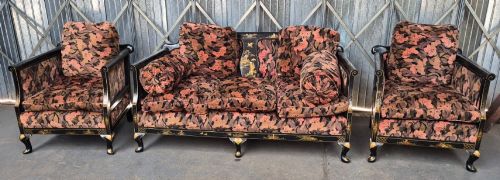
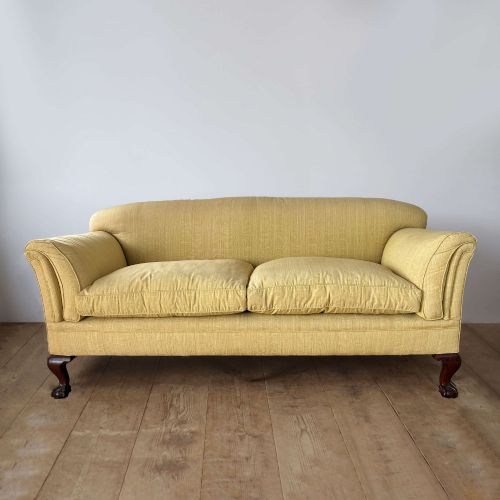
A pair of sofas offers a matching duo of seating, bringing symmetry and proportion to large drawing rooms and formal sitting spaces.
Pair of Sofas
A search for a pair of sofas reveals matched sets designed to sit opposite or alongside one another within a grand interior. These twin pieces emerge primarily from the nineteenth and early twentieth centuries, spanning periods from Victorian and Edwardian to Art Deco.
Buyers encounter diverse iterations, from deep-seated country house designs and traditional Chesterfield models to buttonback frame configurations and scroll arm variants. Many examples utilise traditional upholstery fabrics including leather, linen, velvet, and calico.
The selection ranges across distinct stylistic revivals, including Chippendale style, Queen Anne influences, and French Napoleon III or Louis XVI aesthetics. These items provide unified seating arrangements intended for spacious domestic settings.
Materials and construction methods
Timber frames form the structural backbone of these seats, utilising hardwoods such as mahogany, walnut, oak, and rosewood, alongside ebonised wood and bamboo. Skilled cabinetmakers shaped these timbers into scrolled arms, exposed show-wood legs, and supportive internal frameworks.
Upholstery techniques involve traditional stuffing methods, employing materials like feather down and wool stuffing secured beneath heavy leather hides, velvet, linen, and burlap. Buttoning and hand-tack work finish the exterior surfaces of many Edwardian and Victorian examples.
Pair of Sofas Retail Price Guide 2026
Typical asking prices for pair of sofas among the pieces listed under this phrase on Sellingantiques today, from the lower quarter to the upper quarter. They describe what is for sale here now, not the wider market.
Some nineteenth-century settees were specifically built narrow so gentlemen could sit without crushing their voluminous tailcoats.
Distinctions in craftsmanship and condition
The standard of a twin seating set rests upon the integrity of the timber frame and the precision of the joinery beneath the upholstery. Superior examples exhibit tightly jointed hardwood frames that remain rigid, whereas lesser pieces suffer from structural looseness over time.
Upholstery execution dictates longevity, distinguishing masterwork hand-tied spring systems and traditional feather padding from inferior modern replacements. Original surface patinas on exposed wood and surviving period textiles elevate the standing of an antique set.
Howard and Sons·Gilbert Rohde·Gillows
The Pair of Sofas Glossary
- Chesterfield
- A traditional couch style characterised by deep buttoned upholstery and arms of the same height as the back. This form appears frequently in nineteenth and twentieth-century leather iterations.
- Knole sofa
- An early upholstered seating form featuring adjustable or hinged sides that can be tied upright or left down. These pieces often utilise heavy traditional textiles and elaborate trimmings.
- Show-wood
- Exposed timber framework on an upholstered seat that displays the grain and carving of the material. Walnut, mahogany, and rosewood frequently serve this decorative function.
- Buttonback
- An upholstery method where depressions are created across the backrest using deep-set buttons secured through the padding. This technique provides structural tension and distinct visual patterning.
- Country house style
- An aesthetic descriptor for relaxed, comfortable seating prioritising deep cushioning and loose feather down fillings. These items usually wear worn leather, linen, or velvet coverings.
Pair of Sofas: Frequently Asked Questions
Where should a pair of sofas be placed?
These twin seating pieces suit large drawing rooms or formal reception spaces where symmetrical layouts create balance. Placing them opposite one another around a central fireplace or table encourages conversation.
Alternatively, positioning them at right angles creates an intimate seating zone within an open-plan interior. Their matching proportions require adequate floor space to maintain visual harmony.
How do I identify a Victorian set?
Victorian examples often feature heavy walnut or mahogany frames with elaborate carvings, button-backed upholstery, and robust scroll arms. Look for dense horsehair stuffing and darker timber tones characteristic of the nineteenth century.
Construction details such as hand-cut screws and traditional joinery help confirm the period. Examining the underside reveals the ageing of the internal webbing and frame timbers.
Are Edwardian sofas different from earlier ones?
Edwardian seating generally exhibits lighter proportions, simpler lines, and brighter wood finishes compared to heavy Victorian furniture. Upholstery fabrics from this era frequently include lighter linens, chintz, or tailored leather.
Makers of this period often embraced country house comfort with deeper seat cushions and relaxed feather fillings. The frames tend to be less ornate, favouring functional elegance over excessive carving.
How do I care for antique leather upholstery?
Maintaining antique leather requires regular dusting with a soft, dry cloth and occasional treatment with appropriate conservation balms. Avoid placing these pieces in direct sunlight or near heat sources to prevent the hide from drying and cracking.
Preserving the natural patina involves minimal intervention rather than aggressive cleaning. Professional restorers should handle any structural repairs to the underlying springs and padding.