

Vintage Inlaid Lamp Table
A vintage inlaid lamp table brings warmth and decorative precision to a room, offering a sturdy surface for task lighting alongside fine cabinet work.
Vintage Inlaid Lamp Table
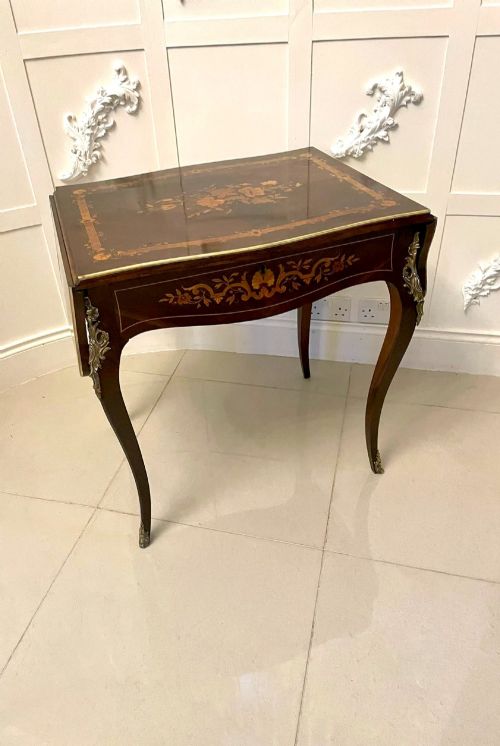
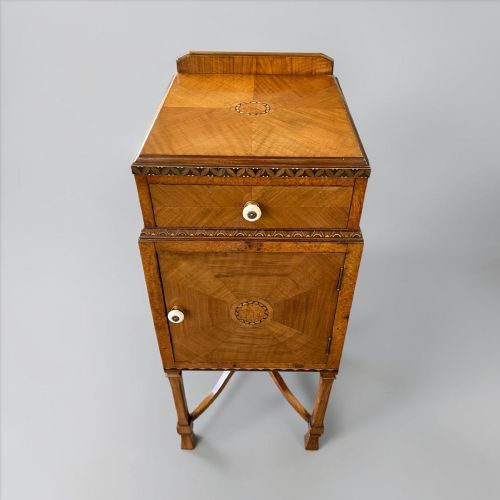
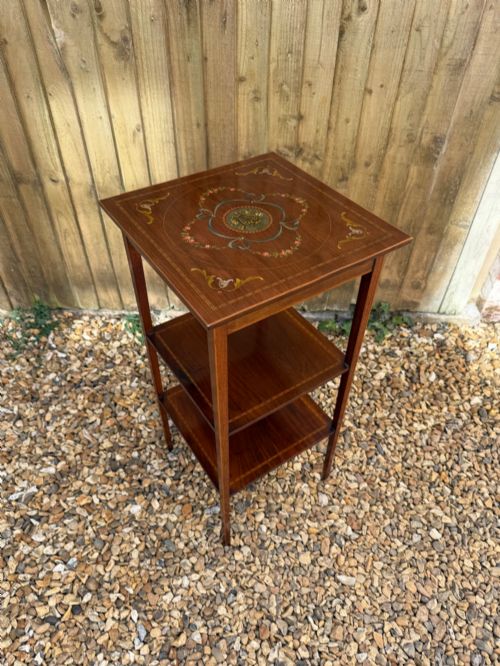
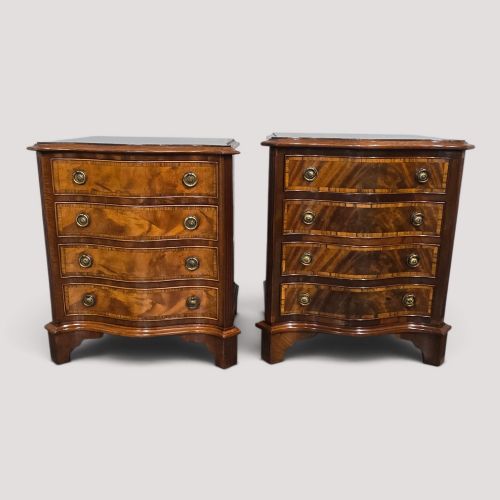
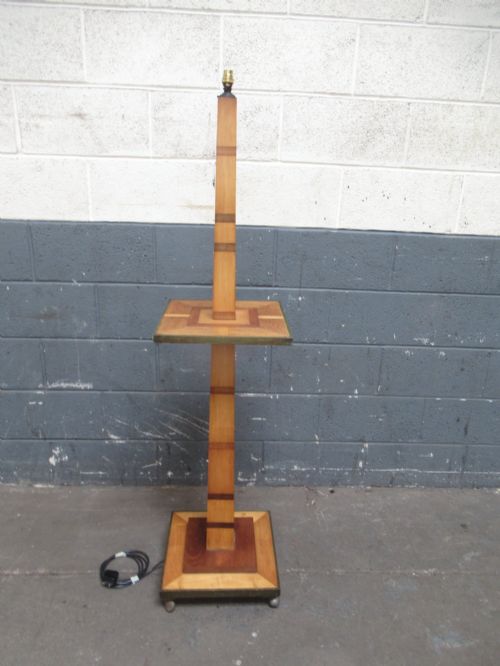
A vintage inlaid lamp table sits beside seating or beds to hold illumination, taking the form of side tables, occasional tables, bedside cabinets, and small pedestals. These pieces emerge predominantly from the Edwardian era and Victorian periods, extending into Art Deco designs of the 1930s.
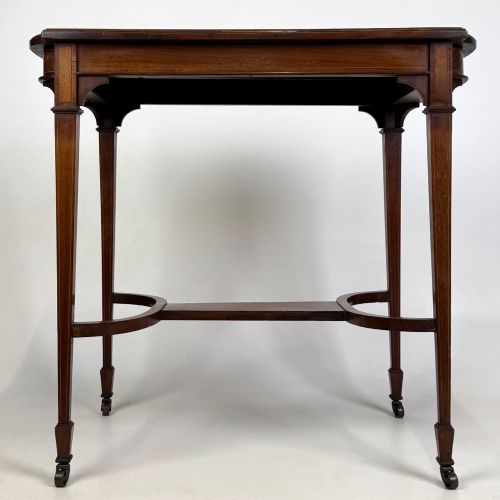
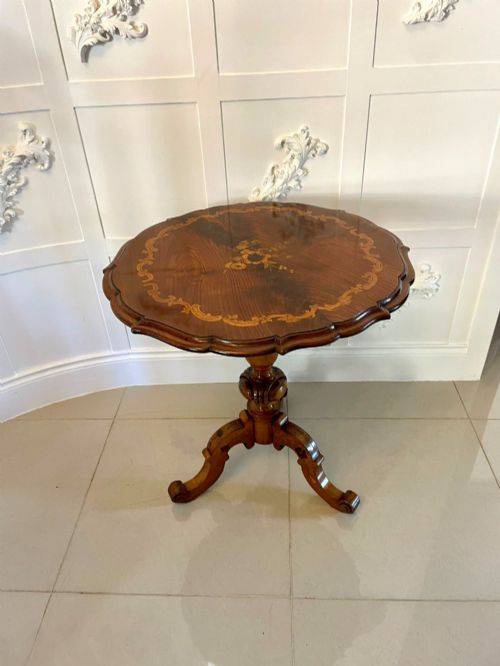
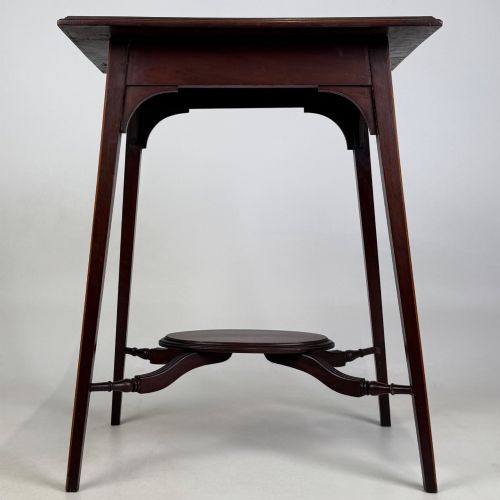
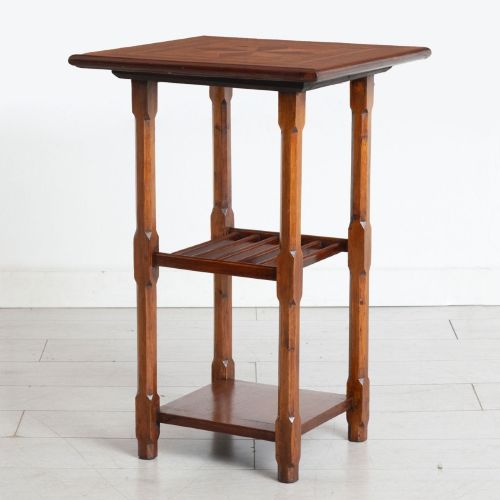
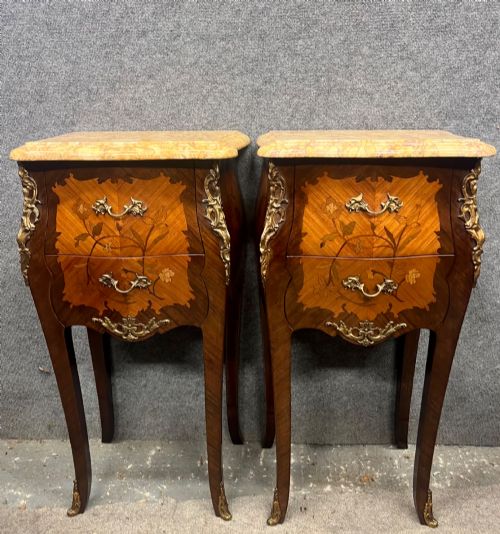
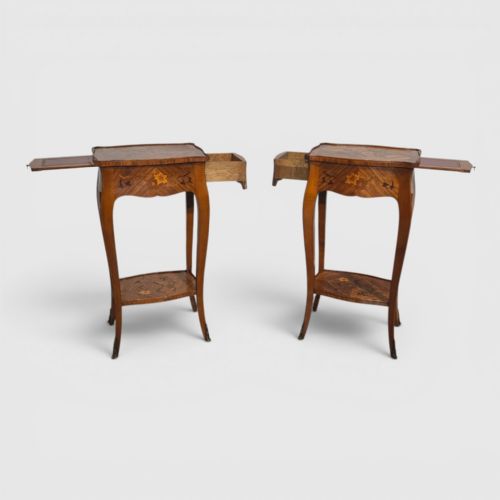
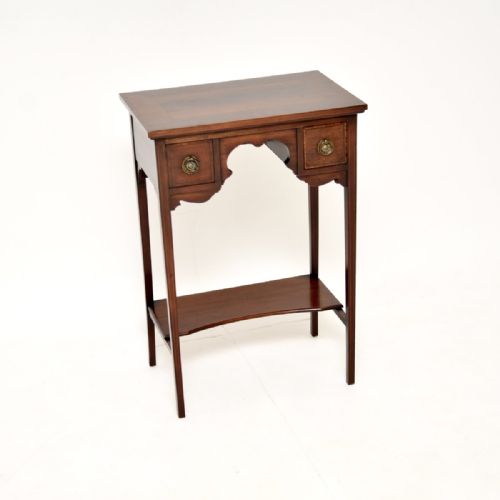
The most common version met on this page is the Edwardian mahogany occasional table, frequently featuring delicate contrasting wood stringing or marquetry motifs. Alongside these stand French pieces in rosewood and walnut, plus geometric Art Deco iterations.
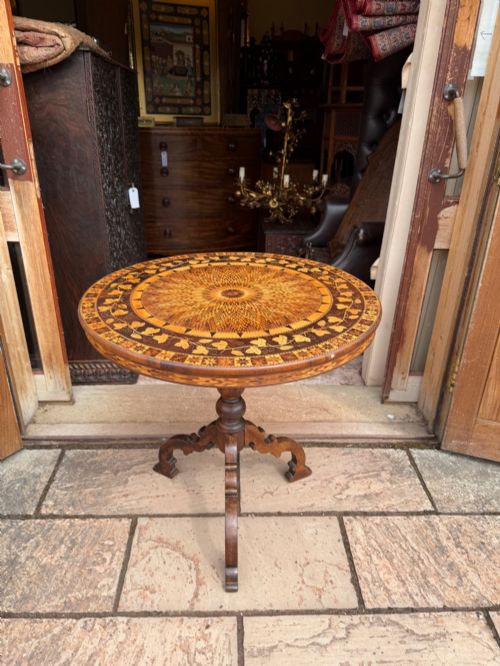
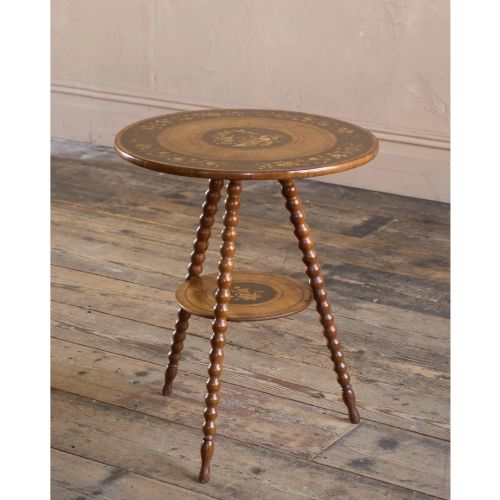
Forms vary from circular and octagonal tops to serpentine chests of drawers and drop-leaf variations, serving practical needs in drawing rooms and bedrooms alike.
Materials and construction
Cabinet makers constructed these tables using a carcase of mahogany, walnut, rosewood, or satinwood, often applying burr veneers to larger surface areas. They integrated contrasting timbers such as boxwood and satinwood for decorative stringing and pictorial marquetry.
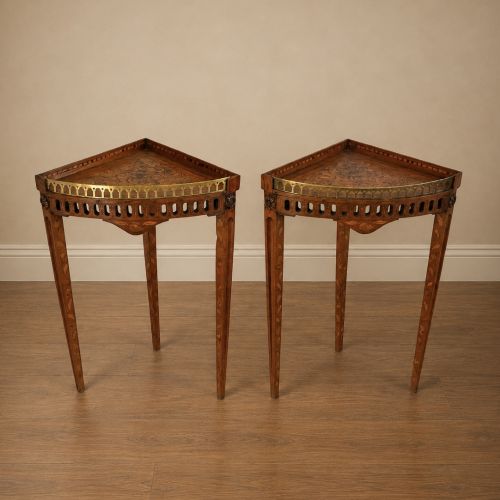
Details such as brass galleries, occasional marble tops, and turned bobbin legs appear across Victorian and Edwardian examples. Joinery relied on traditional mortise and tenon methods, whilst marquetry panels required precise hand-cutting of fine wood veneers into fitted recesses.
A few clever Edwardian work tables included hidden silk baskets beneath lift-up tops, storing sewing alongside the evening reading lamp.
Variations in quality
Quality rests upon the crispness of the marquetry and the choice of primary timbers, where dense burr walnut or figured rosewood outshines plain secondary woods. The integration of finer details, such as cast brass galleries and well-figured satinwood banding, elevates a piece above standard utilitarian output.
Structural integrity of the legs and the stability of the veneered surfaces distinguish superior workshops from mass-produced output. A well-balanced frame and flush, tight joints indicate skilled execution during construction.
The Vintage Inlaid Lamp Table Glossary
- Marquetry
- Decorative patterns formed by fitting together thin slices of wood veneer into a design. It differs from inlay by covering the entire surface rather than being set into pre-cut channels.
- Parquetry
- Geometric mosaic woodwork used for floors and tabletops. Makers arrange small pieces of timber in repeating triangular or square motifs.
- Stringing
- Thin lines of contrasting wood inlaid into the surface of furniture. It creates fine borders around table tops and drawer fronts.
- Satinwood
- A durable hardwood with a natural golden sheen and smooth grain. It provides bright contrast in marquetry and stringing.
- Etagere
- A set of open shelves for displaying small objects. These tiered stands often serve decorative display functions in sitting rooms.
Vintage Inlaid Lamp Table: Frequently Asked Questions
How do I use a lamp table?
These tables function as bedside stands, corner supports, or beside armchairs to hold reading lamps and small personal items. Their compact footprints allow them to occupy tight corners without crowding a room.
Many designs include lower shelves, drawers, or drop leaves to increase utility while maintaining a decorative presence in living spaces.
What periods do these tables come from?
The selection spans the nineteenth and twentieth centuries, with a strong representation of Edwardian and Victorian pieces alongside 1930s Art Deco examples. Earlier Victorian items often showcase heavy walnut and rosewood marquetry.
Edwardian pieces tend toward lighter mahogany frames with delicate satinwood stringing, reflecting the Sheraton Revival taste popular at the turn of the century.
How do I care for inlaid wood?
Protect the polished wooden surfaces from direct sunlight and excessive moisture by using coasters and avoiding placement near radiators. Regular dusting with a soft, dry cloth preserves the finish.
Applying a traditional beeswax polish occasionally helps nourish the timber and maintains the natural lustre of the veneer without building up heavy chemical layers.
What is the difference between a side table and a lamp table?
While the terms often overlap in listings, lamp tables specifically prioritize a stable surface area suited for lighting fixtures, sometimes incorporating lower tiers for books. Side tables serve broader general purposes along room perimeters.
Both forms share similar heights and proportions, making them interchangeable depending on the layout of a room.