
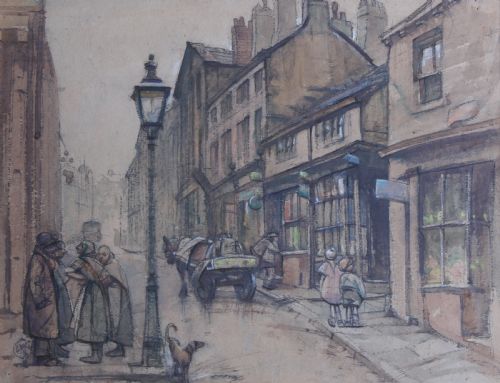
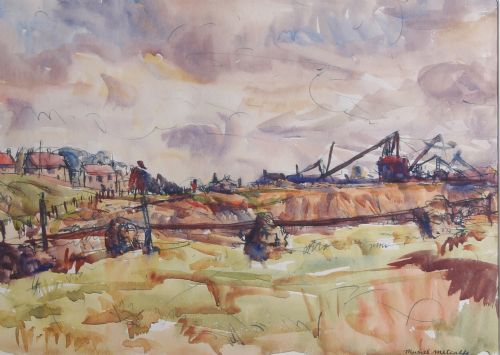
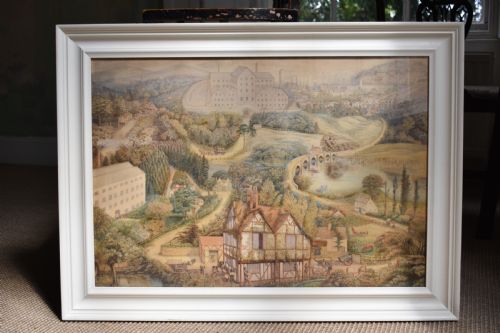
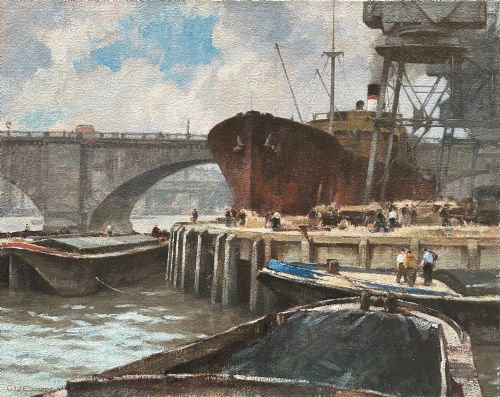




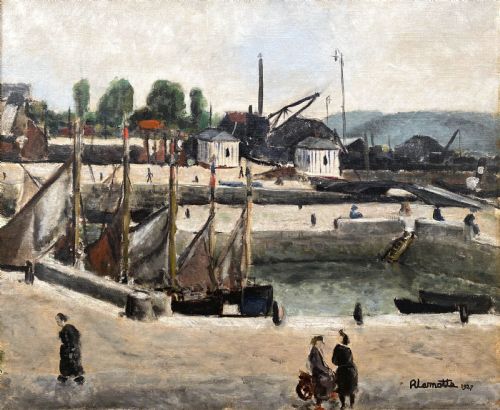


Vintage Industrial Landscape Painting
These vintage industrial landscape painting examples capture heavy factories, quarries and docks with direct observation.
Vintage Industrial Landscape Painting
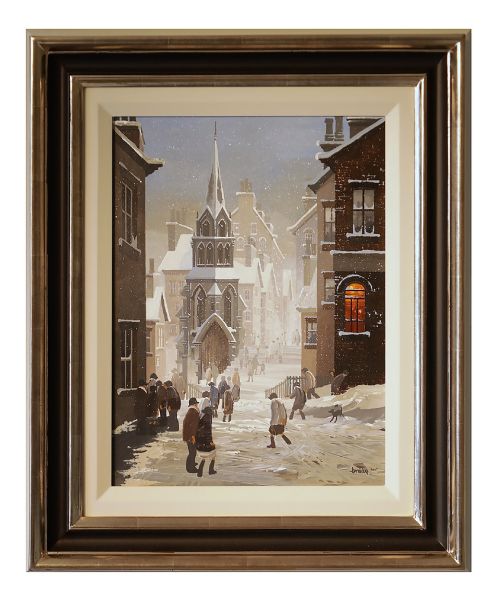
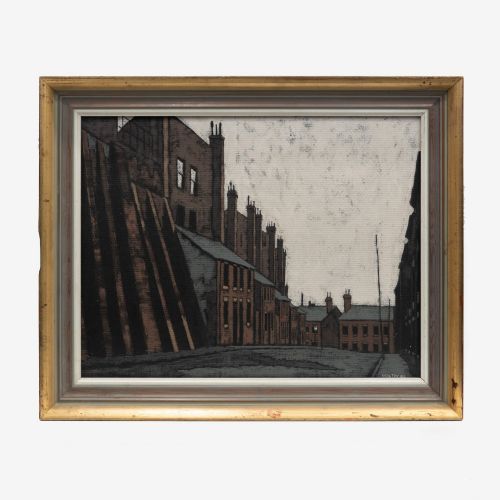
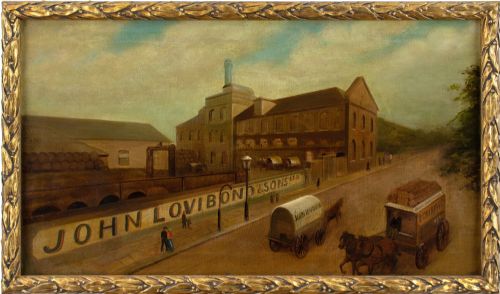
A vintage industrial landscape painting depicts factories, breweries, docks, quarries and urban centres through the lens of nineteenth and twentieth century artists. Buyers seeking this phrase encounter works ranging from nineteenth century British school watercolours to mid twentieth century oil on canvas and board depictions of northern towns and shipyards.
The aesthetic bridges rural topography and heavy industry, recording the working environment of ports, construction sites and manufacturing hubs. Pieces span early twentieth century topographical views up to later modernist and constructivist interpretations.
Materials and Construction
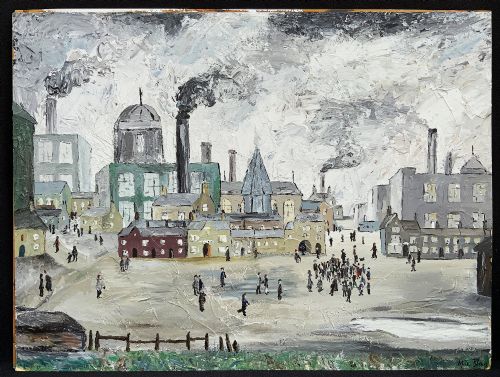
Artists record these industrial and urban subjects primarily using oil paint on canvas and board or watercolour pigment on paper. Heavier impasto techniques appear in mid twentieth century works to build texture on factory walls and dockside machinery.
Support materials vary from stretched canvas and wooden board to heavy watercolour paper and glass framed pastels. Frames frequently consist of wood moulding that complements the period of the painting.
Assessing Quality and Execution
Quality rests upon the handling of light and atmosphere within heavy industrial settings, separating casual topographical records from accomplished artistic interpretations. Stronger works demonstrate confident brushwork and tonal control when depicting smoke, water and stone.
The distinction also lies in the strength of composition and the clarity of provenance attached to named artists or recognised regional schools. Works that convey the grit and scale of factories and docks with conviction stand out above routine topographical illustration.
Brian Shields Braaq·Stuart Walton·Fred Lawson·Herbert John Finn·James W Booth
The Vintage Industrial Landscape Painting Glossary
- Impasto
- Paint applied thickly to a canvas or board, creating a textured surface that stands out from the plane. This technique adds physical depth to smoke, machinery and architectural elements.
- Constructivism
- An artistic approach emphasising geometric forms, industrial materials and structural clarity. In landscape work, it translates factories and docks into disciplined planes of colour and line.
- Watercolour Pigment
- Finely ground colour suspended in a water soluble binder and applied to paper supports. It permits translucent washes that suit atmospheric depictions of river mists and smoke.
- Staithes Group
- A collective of artists associated with the fishing port of Staithes in Yorkshire who painted local maritime and industrial scenes. Their output combined plein air observation with robust handling of coastal subjects.
Vintage Industrial Landscape Painting: Frequently Asked Questions
What defines a vintage industrial landscape painting?
These works focus on human made working environments such as docks, factories, breweries and quarries rather than purely rural scenery. They date from the nineteenth century through to the mid twentieth century and employ media including oil, watercolour and pastel.
The imagery reflects the economic life of British and European towns, capturing the visual impact of heavy industry, shipping and urban expansion on the natural landscape.
How do I care for works on paper and canvas?
Watercolours and pastels require protection from direct sunlight and high humidity to prevent fading and paper degradation. Framing behind glass with acid free mounts ensures proper preservation.
Oil paintings on canvas or board benefit from stable indoor temperatures away from direct heat sources. Dusting gently with a soft, dry cloth keeps the surface clean without damaging the paint layer.
Where were these industrial scenes typically painted?
Subjects originate from active industrial regions, ports and urban centres across Britain and France. Common locations include northern towns, London docks, shipbuilding rivers and industrial hubs like Bradford and Stalybridge.
Artists often worked on location to capture the gritty atmosphere of working waterways, freight yards and manufacturing districts firsthand.
How can I tell the period of a painting?
Stylistic clues and materials help date each piece, ranging from nineteenth century watercolour traditions to mid twentieth century constructivist and post impressionist approaches. Palette choices and subject matter often reflect the aesthetic priorities of their specific decade.
Signatures, framing details and artist documentation further clarify the historical context in which the work was produced.